If your knees hurt when you walk, climb stairs, stand for too long, or get up after sitting, you already know how frustrating knee osteoarthritis can be. The stiffness may be worse in the morning, the pain can flare after activity, and even simple things like taking a short walk can start feeling like a chore.
That is why more people are looking beyond traditional pain-management options and asking about light-based therapies. Red light therapy for osteoarthritis, also called photobiomodulation, has received attention for its potential to help reduce pain and support better movement. But does it actually help with knee osteoarthritis, or is it just another wellness trend?
The short answer is: there is some promising evidence, but it is not a miracle treatment. Research suggests that photobiomodulation may help reduce pain and disability in people with knee osteoarthritis, although researchers still disagree on the ideal wavelength, dosage, and treatment schedule. A 2024 systematic review of 10 studies involving 542 people found that photobiomodulation reduced pain at rest compared with placebo, but the researchers rated the overall certainty of evidence as very low.
That makes infrared and light-based therapy worth considering as part of a broader approach to knee care, especially when combined with heat and gentle massage.
What Is Red Light Therapy for Osteoarthritis?
Red light therapy uses specific wavelengths of light to deliver light energy to targeted areas of the body. It is often grouped under the broader term photobiomodulation, or PBM.
The idea is fairly simple. Light is directed toward tissue, where it may influence cellular processes involved in inflammation, circulation, and pain. Research into photobiomodulation for knee osteoarthritis has reported improvements in pain in some studies, although results vary depending on the light source, wavelength, dose, treatment duration, and other factors.
There is an important distinction here, though. Red or near-infrared light therapy should not be presented as a way to regrow damaged cartilage or reverse osteoarthritis. Current research does not establish that consumer light devices can rebuild an arthritic knee.
The more realistic goal is symptom management. Less discomfort and easier movement can make a difference in how you get through the day.
Can Infrared Therapy Help With Knee Osteoarthritis?
Infrared therapy is another area being studied for pain management. Depending on the device, infrared light may be used alongside heat and other forms of therapy to target the tissues around the knee.
Some research on low-level light therapy has found reductions in pain and disability among people with knee osteoarthritis. A 2019 meta-analysis of randomized placebo-controlled trials found that low-level laser therapy reduced pain and disability in certain treatment protocols. At the same time, other reviews have found mixed results, which is why light therapy is better viewed as a complementary option rather than a replacement for established osteoarthritis care.
That distinction matters. Knee osteoarthritis is a long-term joint condition, and there is no single gadget that fixes everything.
Exercise, strengthening, weight management when appropriate, physical therapy, and other treatments recommended by a healthcare professional remain important parts of managing symptoms. The American Academy of Orthopaedic Surgeons strongly recommends self-management, strengthening, low-impact aerobic exercise, and physical activity for people with symptomatic knee osteoarthritis.
Where Does a Knee Massager Fit In?
This is where a device such as Kneeflow becomes interesting.
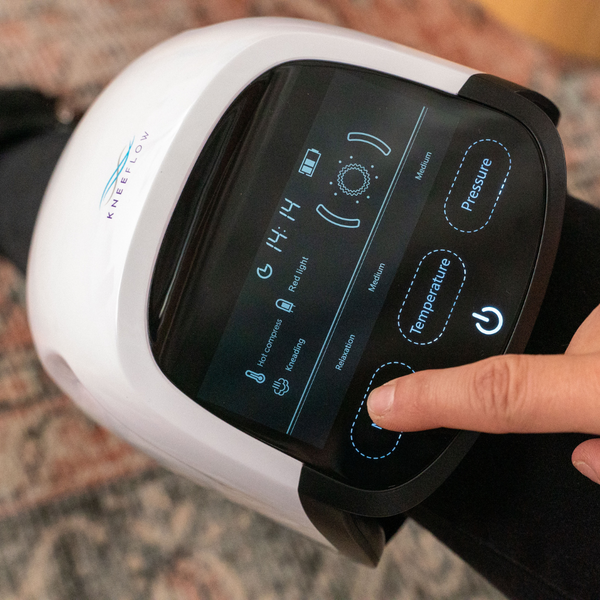
Instead of relying on one type of therapy, the Kneeflow infrared knee massager combines three features in one portable device: infrared light, heat therapy, and soft airbag massage.
The goal isn't to pretend that one 15-minute session can undo years of joint wear. It is much more practical than that. The device is designed to provide targeted comfort when your knees feel stiff, sore, or tired.
The soft airbags wrap around the knee and provide gentle compression, while the heating function adds warmth to the area. The infrared light component adds another layer of light-based therapy.
Kneeflow also lets you customize the therapy, with three heating levels ranging from 45°C to 55°C and adjustable massage and infrared settings. The device automatically shuts off after a 15-minute therapy cycle.
Why Combine Heat, Light, and Massage?
Each feature serves a slightly different purpose.
Heat can feel particularly useful when your knee feels stiff or the surrounding muscles feel tight. Massage provides gentle pressure around the knee, which may be relaxing after activity. Light therapy is being studied for its potential effects on pain and inflammation.
Putting these features together does not guarantee a particular result. Your response can depend on the cause and severity of your knee symptoms. Still, having several comfort-focused options in one device can make it easier to build a consistent self-care routine.
If you want to understand more about what a knee massager can offer beyond basic pain relief, read our guide on 10 Surprising Benefits of Using a Knee Massager for Joint Health and Mobility.

Could a Heated Knee Massager Help With Stiffness?
Heat is nothing new when it comes to sore joints. Many people naturally reach for a heating pad when their knees feel stiff, especially after sitting for a long time or during colder weather.
A best-heated knee massager adds massage and other features instead of providing warmth alone.
For someone comparing products, it is worth looking beyond the word “heated.” Check how much of the knee the device covers, whether the heat level can be adjusted, whether massage pressure can be controlled, and whether there is an automatic shut-off.
Kneeflow offers whole-knee coverage through its soft airbag design, three heat levels, infrared light, adjustable straps, and a 15-minute automatic shut-off.
Explore the Kneeflow Heated Knee Massager.
What Benefits Might You Notice?
Results are not identical for everyone, but people using a knee massager may be looking for practical improvements such as:
- Less noticeable knee discomfort
- Reduced feeling of stiffness
- More comfortable movement after sitting
- Relaxation of tight muscles around the knee
- Comfort after walking, hiking, running, or exercise
- A convenient way to use heat and massage at home
Research on photobiomodulation gives some reason to be interested, but it is important not to turn promising research into guaranteed results. A 2024 review found pain improvements with photobiomodulation but did not find clear evidence that it improves function in every case, and the certainty of evidence remained low.
In other words, think of light therapy as one tool in the toolbox.
Is an Infrared Knee Massager Better Than a Heating Pad?
It depends on what you actually want from the device.
A heating pad mainly provides warmth. A knee massager can combine warmth with compression or massage, depending on the model. A device such as Kneeflow adds infrared light to that combination.
That makes it a more multi-purpose option for someone who wants a short, targeted routine rather than sitting with a heating pad for an extended period.
The best knee massager with heat is not necessarily the one with the highest temperature, either. More heat does not automatically mean better results. Adjustable settings, comfortable coverage, ease of use, and automatic shut-off can be just as important.
Can a Knee Massager Machine for Arthritis Replace Medical Treatment?
No, and this is worth saying clearly.
A knee massager machine for arthritis should be considered a complementary wellness and symptom-management tool, not a replacement for medical care.
Osteoarthritis can range from mild discomfort to severe pain and functional limitations. Your treatment plan may include exercise, physical therapy, medication, injections, weight management, or surgery depending on the situation.
A massager may fit alongside those approaches, particularly when your goal is to manage stiffness or discomfort at home. If you have significant swelling, a recent knee injury, recent surgery, unexplained pain, numbness, or another diagnosed condition, speak with your healthcare provider before using heat or massage.
How Often Should You Use Infrared Therapy?
Follow the instructions provided with the specific device you use. With Kneeflow, the therapy cycle is designed for 15 minutes, with customizable heat, massage, and infrared settings.
You do not need to chase longer sessions to get better results. Consistency is generally more sensible than overdoing it.
You can use a session when your knees feel stiff, after physical activity, or as part of an evening relaxation routine. Pay attention to how your body responds. If a setting feels uncomfortable rather than soothing, turn it down or stop using the device.
Who May Want to Try a Heated Knee Massager?
A heated knee massager may appeal to people who experience occasional or ongoing knee discomfort and want a convenient home option.
It can be especially useful for someone who stays active and wants a simple recovery routine after walking, cycling, hiking, running, or workouts. It may also appeal to people dealing with everyday stiffness associated with osteoarthritis.
That said, the cause of knee pain matters. Not every sore knee is caused by osteoarthritis. Meniscus injuries, tendon problems, ligament injuries, bursitis, and other conditions can produce similar symptoms.
If you do not know why your knee hurts, getting the right diagnosis should come before buying any device.
Is Kneeflow Worth Considering for Knee Osteoarthritis?
If your main goal is convenient, at-home support for knee discomfort and stiffness, Kneeflow offers several features in one device.
It combines infrared light, heat, and soft airbag massage instead of making you choose between separate products. It is cordless, weighs about 790 grams, includes a 2,200mAh rechargeable battery, and provides 15-minute therapy cycles.
It also has 19 infrared lights, adjustable heat settings, an LCD touchscreen, and an automatic shut-off feature.
None of that means it will “cure” knee osteoarthritis. It shouldn't. The more useful question is whether combining these features gives you a practical way to manage everyday discomfort and make knee care easier to stick with.
For many people, that convenience is the real selling point.
Final Thoughts
So, can red light therapy help with knee osteoarthritis? Current research suggests it may help reduce pain for some people, but the evidence is still developing. It should not be treated as a cure or a replacement for proven osteoarthritis management.
What makes light therapy more interesting is how it can be combined with other comfort-focused options. A device like Kneeflow brings infrared light, adjustable heat, and gentle airbag massage together in a short, portable therapy session.
If your knees regularly feel stiff or uncomfortable, a consistent home routine may be worth exploring. Just keep your expectations realistic and continue using the treatments recommended by your healthcare professional.
Try Kneeflow for At-Home Knee Therapy
Frequently Asked Questions
1. Can red light therapy help with knee osteoarthritis pain?
Red light therapy, or photobiomodulation, may help reduce pain associated with knee osteoarthritis in some people. Several reviews have reported potential pain-relieving effects, although the quality of evidence varies and treatment protocols are not standardized. It is best viewed as a complementary approach rather than a standalone treatment. If your knee pain is persistent or worsening, talk with a healthcare professional about the underlying cause.
2. What is red light therapy for osteoarthritis?
Red light therapy for osteoarthritis uses specific wavelengths of light to target an area affected by joint discomfort. It is commonly discussed under the term "photobiomodulation," which researchers have studied for potential effects on pain and inflammation. Evidence is promising in some areas but still developing. It should not be confused with a treatment that can reverse cartilage loss or cure osteoarthritis.
3. Does infrared therapy work for knee osteoarthritis?
Infrared therapy may provide symptom relief for some people with knee osteoarthritis, particularly when used as part of a broader comfort routine. Research on photobiomodulation has found reductions in pain in several studies, but results have not been consistent across every trial. Factors such as wavelength, dosage, treatment time, and device type can affect outcomes, so more research is still needed.
4. Is an infrared knee massager good for arthritis?
An infrared knee massager can be a convenient option for people looking for heat, gentle massage, and infrared light in one device. Kneeflow combines these three features and is designed for short home therapy sessions. However, a massager does not treat the underlying joint degeneration caused by arthritis. Think of it as a tool for comfort and symptom management rather than a cure.
5. What should I look for in the best heated knee massager?
When comparing the best heated knee massager options, look at more than the maximum temperature. Adjustable heat, comfortable knee coverage, massage settings, portability, battery life, and automatic shut-off are all useful features. It is also worth checking whether the device fits securely without creating uncomfortable pressure. A product that is easy to use consistently may be more useful than one packed with features you never use.
6. Can the best knee massager with heat reduce knee stiffness?
Heat can help your knee feel more comfortable when stiffness is related to tight muscles or general joint discomfort. Adding gentle massage may provide another relaxing effect around the knee. A device such as Kneeflow combines heat with airbag massage and infrared light. However, stiffness can have different causes, so persistent or severe stiffness should be evaluated rather than managed only with a massager.
7. How does a knee massager machine for arthritis work?
A knee massager machine for arthritis typically uses one or more forms of therapy, such as heat, compression, vibration, kneading, or light therapy. Kneeflow uses soft airbag massage, adjustable heat, and infrared light. The combination is designed to provide targeted comfort around the knee. These features may help with the sensation of stiffness or discomfort, but they do not reverse the structural changes associated with osteoarthritis.
8. Can I use a knee massager every day?
Whether you should use a knee massager every day depends on the device, your comfort level, and your individual condition. Kneeflow is designed around a 15-minute therapy cycle and automatically shuts off at the end of the session. Follow the manufacturer's instructions rather than assuming longer or more frequent sessions will work better. If daily use causes increased pain, skin irritation, swelling, or unusual discomfort, stop and seek professional advice.
9. Is heat good for knee osteoarthritis?
Heat can feel helpful when knee osteoarthritis causes stiffness or when the muscles around the joint feel tight. Warmth may make movement feel more comfortable and can be relaxing before gentle activity. However, heat is not appropriate for every situation, particularly when there is acute swelling or certain medical conditions. If you are unsure whether heat is suitable for your knee, check with a healthcare professional first.
10. Can infrared therapy repair damaged knee cartilage?
There is currently not enough clinical evidence to claim that consumer infrared or red light devices can repair or regrow damaged knee cartilage. Some laboratory and preclinical research has raised questions about possible tissue effects, but that is different from proving cartilage regeneration in people with knee osteoarthritis. The more reasonable expectation is possible symptom relief, such as reduced pain, rather than rebuilding an arthritic joint.
11. Can I use Kneeflow after exercising or walking?
Kneeflow is designed to be portable, so it can be used as part of an at-home recovery routine after activities such as walking, hiking, cycling, running, or workouts. Its combination of heat, infrared light, and gentle airbag massage can provide a convenient way to relax the knee after activity. However, if exercise causes sharp pain, significant swelling, or a new injury, do not use a massager as a substitute for proper medical evaluation.
12. Is a heated knee massager safe for people with arthritis?
A heated knee massager may be suitable for many people with arthritis, but safety depends on your individual health and the device settings. Start with a comfortable heat and massage level and follow the manufacturer's instructions. People with recent surgery, significant injuries, reduced sensation, circulation problems, or other medical concerns should ask their healthcare provider before using heat or compression around the knee.
13. Can a knee massager replace physical therapy for knee osteoarthritis?
No. A knee massager and physical therapy serve different purposes. Physical therapy can address strength, mobility, balance, movement patterns, and functional limitations, while a massager is primarily a convenient option for comfort and symptom management. Exercise and strengthening remain important parts of osteoarthritis care, so a device such as Kneeflow is better used alongside an appropriate treatment plan rather than instead of professional rehabilitation.