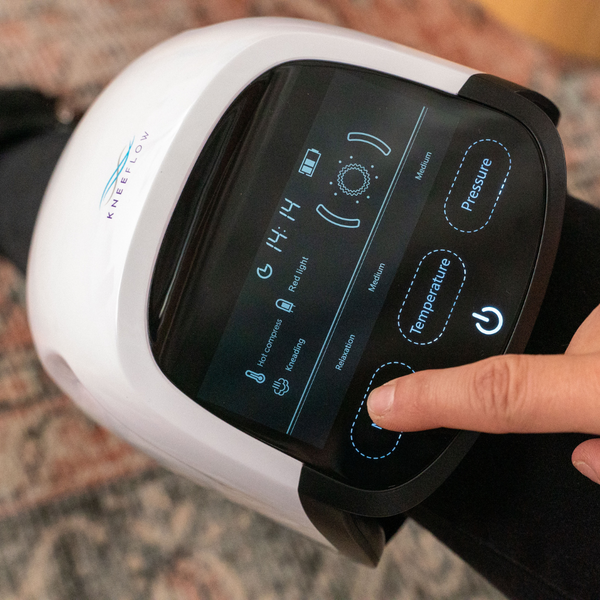
Do knee massagers work, or do they simply feel good for a few minutes? That is a fair question when knee discomfort starts interrupting ordinary movement. Stairs may feel slower. Sitting too long may make the knee stiff. Walking, standing, exercising, or trying to relax at night may come with an ache that makes you more aware of the joint than you used to be.
The honest answer is that knee massagers may support comfort, relaxation, warmth, and short-term stiffness relief for some people. They are not a cure, diagnosis, or replacement for medical care. Their value depends on what is causing the discomfort, what symptoms are present, which features the device offers, and whether the knee is safe for heat, compression, or massage.
At Flow Knee, we think knee support should feel practical, clear, and careful. A device like Kneeflow can fit into a daily comfort routine when symptoms are mild and appropriate for home care. It should not be used over severe swelling, redness, heat, infection concerns, recent injury, instability, numbness, or pain that is getting worse.
How Knee Massagers Are Designed to Help
Do knee massagers work the same way for every person? No. Most knee massagers are designed to support comfort through one or more features, such as heat, air compression, vibration, infrared or red light support, or soft massage around the joint. These features may help the knee area feel warmer, calmer, and less tense.
A knee massager does not repair cartilage, reverse arthritis, heal ligament injuries, or diagnose the reason your knee hurts. It is better understood as a comfort tool. When used appropriately, it may help surrounding muscles relax, support a soothing routine, and make mild stiffness feel less frustrating.
This distinction matters because many people buy comfort devices hoping for a complete treatment plan. A knee massager may be useful, but it should sit inside a broader routine that may include gentle movement, pacing, strength work, rest, medical guidance, and physical therapy when needed.
Do Knee Massagers Work Better With Heat?
Do knee massagers work better when they include heat? For some users, heat can make the experience feel more soothing, especially when the knee is stiff, achy, or guarded. A heated knee massager may help surrounding tissues feel more relaxed when discomfort is familiar and not linked to active swelling or injury.
Heat is usually more appropriate for chronic stiffness or muscle tension than for a newly swollen or hot knee. If the knee is red, warm, puffy, recently injured, or inflamed, heat may not be the right choice. In those situations, cold therapy or medical guidance may be safer.
For people who feel stiffness after sitting, mild tension after activity, or general knee tightness at the end of the day, controlled warmth may make a comfort routine easier to repeat. The goal is not to force the knee to move. The goal is to help the area feel more relaxed before or after gentle activity.
What Soft Massage and Air Compression May Support
Do knee massagers work better when they include air compression or soft massage? For some users, yes, because the sensation can feel more complete than heat alone. Soft pressure around the knee may help the area feel supported, especially when discomfort comes from everyday tension, fatigue, or mild stiffness.
Air compression should feel gentle, not aggressive. Strong pressure is not automatically better. If the knee is tender, swollen, bruised, or sensitive, too much compression can feel uncomfortable or inappropriate. The session should feel calming and controlled from start to finish.
Massage around the knee may also help some people become more aware of tension in the quadriceps, hamstrings, calves, and surrounding tissues. Still, it should not be used directly over unexplained swelling, open skin, severe pain, or a new injury. Comfort support should always respect what the knee is showing.
Do Knee Massagers Work for Arthritis Discomfort?
Do knee massagers work for arthritis? They may support comfort for some people with mild, familiar arthritis-related stiffness or aching, but they should not be considered arthritis treatment by themselves. Arthritis can involve joint changes, inflammation, swelling, pain, and reduced function, and it often needs a broader plan.
That plan may include medical care, exercise, weight support when relevant, medication guidance, physical therapy, injections, or other treatments depending on the person. A knee massager may fit on the comfort side of that plan, especially when warmth and gentle massage feel soothing.
The safest expectation is short-term support. A knee massager may help the knee feel less tense during a session or make daily care feel easier to maintain. It should not be expected to change the underlying condition or replace professional advice when arthritis symptoms limit daily life.
When Knee Massagers May Feel Most Useful
Knee massagers may feel most useful when symptoms are mild, familiar, and not connected to urgent warning signs. Some people use them after a long day on their feet. Others use them after sitting too long, walking more than usual, or feeling everyday stiffness around the joint.
They may also help create a consistent comfort ritual. That matters because knee discomfort can make people feel discouraged. A short session with controlled warmth and soft massage can offer a simple moment of care, especially for people who want something easy to return to at home.
The best use case is not severe pain or unexplained swelling. It is mild discomfort, stiffness, or tension that has already been reasonably assessed. If the knee keeps getting worse, looks swollen, feels unstable, or hurts sharply, a device should not be the main response.
When a Knee Massager Is Not the Right Choice
A knee massager is not appropriate for every situation. It should be avoided over open wounds, skin irritation, infection concerns, redness, unusual warmth, severe swelling, fresh injury, or areas that feel numb. It should also be avoided if the knee is unstable, locked, or suddenly painful after a twist, fall, or impact.
People with circulation problems, reduced sensation, diabetes-related nerve issues, blood clot history, implanted medical devices, recent surgery, or complex medical conditions should ask a healthcare professional before using heat, vibration, compression, or massage devices. These conditions can change what is safe.
The rule is simple: comfort tools belong in safe situations. If the knee looks or feels unusual, get clarity first. A knee massager should never delay medical care or make someone push through symptoms that need evaluation.
What Features Matter in a Knee Massager
A good knee massager should feel easy to use, adjustable, and comfortable. Heat settings matter because not every knee tolerates the same level of warmth. A secure wrap matters because poor fit can make the session uneven or frustrating. Auto shutoff can also support safer use.
Soft airbag massage may be useful for people who prefer gentle pressure instead of harsh vibration. Adjustable settings help because knee comfort changes from day to day. What feels helpful after sitting may not be the same as what feels comfortable after activity.
The Kneeflow team believes a knee massager that pairs red light therapy with heat should still feel simple to use, which is why controlled warmth, red light support, and soft airbag massage all come together in one wraparound design made specifically for knee comfort. That combination is designed to support a calmer routine without making the process complicated.
How to Use a Knee Massager More Safely
Do knee massagers work better with higher intensity? Not necessarily. A gentle setting is usually the better starting point, especially if you are new to heat, compression, or massage around the knee. The session should feel soothing, not painful, sharp, or overwhelming.
It is also better to use the device when the knee is calm. A mildly stiff knee after sitting may be a better fit than a swollen knee after an injury. A tense knee after a normal day may be more appropriate than a red, hot, or painful knee that has not been assessed.
Stop using the device if the skin feels irritated, the knee feels worse, swelling increases, pain becomes sharper, or numbness appears. A good comfort routine should leave the knee feeling calmer, not more reactive.
Knee Massagers and Daily Mobility
Knee massagers may support daily mobility indirectly by helping the knee area feel more relaxed. When the joint feels less guarded, some people feel more comfortable moving gently, walking around the house, or easing into daily tasks. That does not mean the device creates strength or restores mobility by itself.
Mobility still depends on movement, strength, balance, flexibility, and the underlying condition. A knee massager can support how the knee feels, but it cannot replace the work of keeping the body active in a safe way. That is why it pairs best with sensible habits rather than standing alone.
For people who feel discouraged by knee discomfort, this kind of support can still matter. If a short, safe comfort session makes it easier to stay consistent with gentle movement, it may have a useful place in the routine.
What Knee Massagers Should Not Promise
Do knee massagers work as a cure? No. Any claim that a massager can heal knee damage, reverse arthritis, remove inflammation permanently, or replace medical care should be treated carefully. Knee pain can come from many causes, and a device cannot identify which one is present.
Strong claims can also create unsafe expectations. Someone with swelling, instability, or injury-related pain may try to manage symptoms at home instead of getting checked. That can delay the right care and make recovery harder.
The most trustworthy way to talk about knee massagers is this: they may support comfort, warmth, relaxation, and mild stiffness relief in appropriate situations. That is useful, but it is not the same as treatment for every knee problem.
A Better Way to Decide If a Knee Massager Fits You
Do knee massagers work? They can help some people feel more comfortable, especially when the goal is daily support rather than medical treatment. They may be helpful for mild stiffness, ordinary tension, and familiar knee discomfort when there are no warning signs.
The better question is whether your knee symptoms are appropriate for home comfort. Is the pain mild or severe? Is there swelling? Is the knee hot or red? Did the pain start after an injury? Does the knee lock, give way, or feel numb? Has the problem been getting worse? These details matter more than the device itself.
At Flow Knee, we believe knee comfort should feel simple, realistic, and safe. Kneeflow may support a gentle routine with controlled warmth, red light support, and soft airbag massage around the knee. If your knee discomfort feels mild and familiar, it may be a practical way to add comfort to your day. If your symptoms feel unusual, start with medical guidance first.
FAQ
Do knee massagers work for knee pain?
Knee massagers may help some people with mild knee discomfort, stiffness, or tension by supporting warmth, relaxation, and soft pressure around the joint. They do not diagnose the cause of pain or treat every knee condition. If pain is severe, swollen, injury-related, unstable, or worsening, medical evaluation is safer than relying on a device. The safest use is when discomfort feels familiar, mild, and appropriate for home comfort.
Can a knee massager help arthritis?
A knee massager may support comfort for some people with arthritis-related stiffness or aching, especially when heat and gentle massage feel soothing. It should not replace arthritis treatment, physical therapy, exercise guidance, medication advice, or medical care. Arthritis symptoms that limit daily life should be discussed with a healthcare professional. A massager may fit into the comfort side of care, but not the treatment plan by itself.
Are knee massagers safe to use every day?
Some people may use a knee massager regularly for comfort, but daily use should stay gentle and symptom-aware. The knee should not feel worse afterward. People with circulation problems, reduced sensation, recent surgery, blood clot history, diabetes-related nerve concerns, or complex medical conditions should ask a clinician before using one regularly. Even with regular use, the session should feel calming, not intense or irritating.
Should I use heat or cold for knee pain?
Heat may feel better for chronic stiffness or muscle tension, while cold is often more appropriate for active swelling, irritation, or recent minor injury. A heated knee massager should not be used over a hot, red, swollen, or newly injured knee unless a healthcare professional says it is safe. When the knee looks inflamed or feels unusually warm, it is better to pause heat and get guidance.
When should I avoid using a knee massager?
Avoid using a knee massager over open skin, infection concerns, redness, unusual warmth, severe swelling, numbness, recent injury, unstable knee symptoms, or sharp pain. You should also pause use if symptoms worsen after a session. If the knee feels unusual or looks visibly different, get medical advice first. Comfort devices are helpful only when the knee is in a safe condition for heat, compression, or massage.
Is Kneeflow a medical treatment?
No. Kneeflow is a knee comfort device, not a medical treatment or diagnostic tool. It may support warmth, red light comfort, and soft airbag massage around the knee. It should be used as part of a sensible comfort routine, not as a replacement for professional care when symptoms need evaluation. Its role is to support comfort when the knee is appropriate for home use.
How long should I use a knee massager per session?
A knee massager should usually be used for short, comfortable sessions based on the device instructions and how your knee responds. More time is not always better. If the knee feels more painful, irritated, swollen, warm, numb, or uncomfortable after use, stop using the device and consider getting medical guidance before trying again. A session should leave the knee feeling calmer, not more reactive.
Can I use a knee massager after exercise?
A knee massager may feel helpful after exercise if the knee is only mildly tired, tense, or stiff. It should not be used as a way to push through pain or ignore symptoms. If exercise causes swelling, sharp pain, instability, heat, redness, or trouble walking, avoid massage and get the knee evaluated before continuing activity. Post-exercise comfort should support recovery, not hide a warning sign.