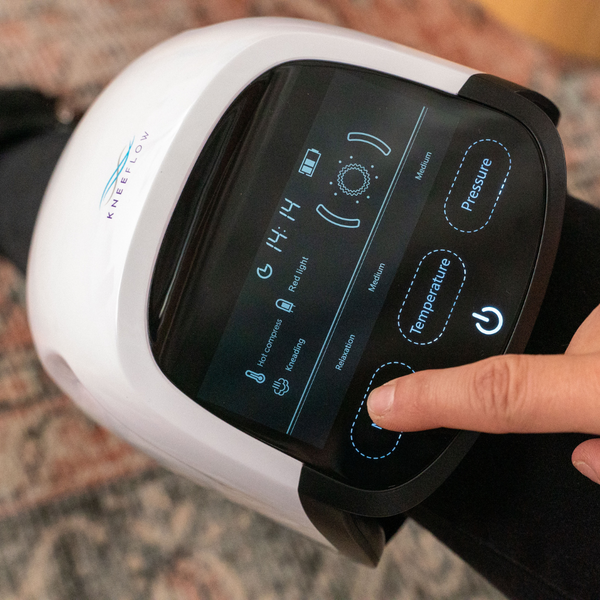
The knee usually complains before the rest of the body even wakes up. It stiffens overnight, cracks a little on the first few steps to the bathroom, then settles into a dull background ache that follows you through a workday spent mostly sitting. Somewhere around the third or fourth day of that pattern, a lot of people open a browser and start reading about a knee massager with red light therapy, less out of curiosity and more out of a quiet hope that something small and simple might actually help.
Shopping for one rarely simplifies anything. Product pages pile on feature after feature, heat, vibration, compression, red light, promising the whole stack at once without ever slowing down to explain what each piece is doing. Other pages swing the opposite direction, dressing up a basic comfort gadget in language borrowed straight from a physical therapy clinic.
Kneeflow was built to land somewhere between those two extremes. We wanted a device that leans on a handful of genuinely understood comfort tools, warmth, gentle squeeze, and red light, without stretching the truth about what any of them can accomplish on their own. Everything from here forward walks through what this kind of device can realistically add to a knee routine.
What a Knee Massager With Red Light Therapy Actually Does
Strip away the marketing and a knee massager with red light therapy is a wrap that circles the joint, delivering warmth alongside specific wavelengths of red or near infrared light straight onto the skin. Two different comfort mechanisms ride along in the same short session, heat that eases tight tissue almost instantly and light that gets absorbed further down at a cellular level.
Most models on shelves today bundle this pairing with vibration, air compression, or sometimes both, turning what used to be a single gadget into something closer to a small comfort station built around the knee. That broader appeal explains why the category now reaches far past people managing a diagnosed condition, pulling in anyone nursing stiffness after a long shift on their feet or a brutal leg day.
None of that turns the device into a stand in for medical care. Think of it as a supportive habit instead, something layered on top of whatever a person and their physician have already mapped out for that particular knee.
How Red Light Therapy Fits Into Knee Comfort
Photobiomodulation is the clinical name hiding behind red light therapy, and it works by pushing narrow bands of red and near infrared light into the tissue sitting just beneath the skin. Mitochondria inside each cell soak up that light, and the process seems to coax those cells toward slightly sharper energy output.
Scientists tie that shift to changes in local blood flow and inflammatory signaling, which explains why red light keeps popping up across joint comfort, muscle recovery, and even skincare discussions. None of the mechanism is exclusive to knees. Researchers study the same basic effect across plenty of other soft tissue.
Folded into a knee massager with red light therapy, that science plays out as an easy wraparound session rather than anything resembling a clinical procedure. Light lands on the skin and the shallow tissue surrounding the joint, nudging comfort and circulation without touching bone, cartilage, or ligament underneath.
Why Heat Matters Alongside Red Light
Heat might be the oldest trick in the comfort playbook, and pairing it with red light has less to do with novelty and more to do with covering two mechanisms in one shot. Warmth loosens tense muscle fibers around the joint, opens up surface blood vessels, and can soften stiffness within a couple of minutes.
That fast payoff tends to work hand in hand with what red light is doing more slowly beneath the surface. Heat handles the tension a person notices immediately, while red light chips away at inflammation and repair signaling across repeated sessions.
Combined inside one device, the pairing usually feels more complete than either piece running alone, which is exactly why a knee massager with red light therapy tends to lean on both rather than picking just one, especially for a knee that wakes up tight or tightens further after a long stretch of sitting at a desk.
The Role of Vibration and Compression in Knee Relief
A knee massager with heat and vibration throws a mechanical layer into the mix, using soft pulses to stir the muscles and soft tissue wrapped around the joint. Physical therapists reach for vibration often, using it to loosen guarded muscle and coax a bit more range of motion back into tissue that has been bracing against pain.
A knee massager with heat and compression takes a completely different route mechanically, inflating and releasing air in a steady rhythm around the knee. That squeeze and release pattern gets credited with easing swelling, since it nudges fluid away from the joint instead of letting it settle and pool.
Stack enough of these mechanisms together, heat, light, vibration, compression, and a knee massager with red light therapy stops chasing a single source of discomfort and starts addressing several at once inside one sitting.
What Makes a Knee Massager the Best Fit for Knee Pain
Whether something earns the label best knee massager for knee pain depends entirely on what that pain looks like on an average Tuesday. Someone whose knee locks up from sitting might care most about strong heat and a fast warm up, while someone nursing soreness from a punishing workout might chase stronger compression instead.
Fit carries just as much weight as the spec sheet. A wrap that hugs the knee snugly through movement gets reached for night after night, while one that slides or needs constant adjusting tends to land in a drawer within weeks no matter how advanced its technology sounds.
Consistency ends up mattering more than any single feature. A knee massager with red light therapy used for ten quiet minutes every night will usually beat a flashier option that only comes out once a month.
Who Tends to Benefit Most from a Knee Massager With Red Light Therapy
Anyone dealing with everyday stiffness, whether from hours behind a desk, standing on concrete all day, or the ordinary wear that comes with getting older, tends to notice the clearest difference. The relief on offer here is about comfort and easier movement, not reversing anything happening underneath the skin.
Active people coming off a rough training block or a long run often fold a knee massager with red light therapy into a wider recovery routine, treating it as one piece among stretching, rest, and proper hydration rather than a substitute for any of them.
People living with something diagnosed like arthritis can find real value here too, though the honest framing shifts toward comfort and reduced stiffness rather than any claim about slowing or reversing what is happening inside the joint, since a device like this was never built for that.
When a Knee Massager Is Not Enough
Some signals call for a clinic visit rather than a night with a comfort device. A knee that locks solid, buckles out of nowhere, swells fast and heavily, or refuses to bear weight is pointing to something heat, light, vibration, or compression cannot untangle on their own.
Fresh injuries deserve that same caution. A twist, a fall, or a sudden pop followed by pain and swelling belongs in front of a clinician before any home device enters the picture, since warmth or pressure on an unevaluated joint can sometimes hide a problem rather than ease it.
A knee massager with red light therapy earns its keep once the bigger diagnostic questions are already settled, sliding into a recovery or upkeep routine rather than acting as the first response to something new or worsening.
Building a Simple At Home Routine
A knee massager with red light therapy habit sticks best when it slides naturally into moments already carved out of your day. Ten to twenty minutes, once or twice daily, timed around whenever the knee feels stiffest, usually first thing after waking or right after a long stretch parked at a desk, tends to hit the sweet spot.
Skipping a session makes sense around broken skin, a surgical incision still closing up, numbness near the joint, or any fresh injury nobody has examined yet. Comfort tools do their best work on a knee that is already stable enough to handle gentle input.
Curious how a wraparound design blending heat, red light, and compression actually comes together in one device? Our 3-in-1 knee massager breaks down the full feature set on the product page.
Choosing a Knee Massager With Red Light Therapy That Actually Fits Your Routine
The knee massager with red light therapy worth owning is rarely the one boasting the longest spec sheet. It is the one that actually gets picked up night after night, sits comfortably during real use, and matches whatever a knee genuinely needs on a given day, be that warmth, light, gentle pressure, or some blend of all three.
At Kneeflow, we would rather someone settle into a simpler routine they actually keep than chase something more elaborate that eventually collects dust in a drawer. Comfort tools only pull their weight when someone actually uses them, and ideally on a knee that has already had its bigger questions answered by a professional.
Still unsure which mix of heat, light, vibration, or compression fits your knees best? Our team is glad to talk it through with you. Contact us and we will help you land on what actually works.
FAQ
What does a knee massager with red light therapy actually do?
It blends gentle warmth with red or near infrared light to support comfort and circulation around the joint. Heat eases tight tissue fast, while light works more gradually at a cellular level. Together they aim to soften everyday stiffness rather than treat any specific diagnosed condition on their own.
Is a knee massager with heat and vibration good for knee pain?
A knee massager with red light therapy that folds in vibration can genuinely ease stiffness tied to sitting, standing, or general overuse. Vibration adds a mechanical push that many people find loosens guarded muscle around the joint, though it works best paired with rest and movement rather than replacing either.
Can a knee massager with heat and compression help arthritis?
It may ease stiffness and support circulation, something plenty of people managing arthritis genuinely find comfortable day to day. It will not treat or reverse arthritis itself, so leaning on whatever plan a doctor already recommended tends to work better than relying on the device by itself.
How often should I use a knee massager with red light therapy?
Most people land on ten to twenty minutes once or twice daily, usually timed around whenever the knee feels stiffest. Consistency outweighs session length here, so a brief daily habit generally beats a longer session used only every once in a while.
What is the best knee massager for knee pain if I do not have a diagnosis yet?
Without a diagnosis, the smarter first move is a medical evaluation, since stiffness can trace back to several different causes that each respond to different care. Once a doctor rules out anything serious, a snug device with heat and gentle compression becomes a reasonable comfort option worth exploring.
Can red light therapy in a knee massager replace physical therapy?
No, and leaning on it as a swap tends to backfire. Physical therapy rebuilds the strength and stability a knee genuinely needs, while red light mostly supports comfort around the joint. Paired together, the massager can make physical therapy sessions feel noticeably easier to push through.
When should I see a doctor instead of just using a knee massager?
Locking, sudden buckling, heavy swelling, or genuine trouble bearing weight all call for medical attention before anything else. A knee massager with red light therapy is meant to support a knee already under proper care, not to serve as the first step in figuring out what is actually wrong.