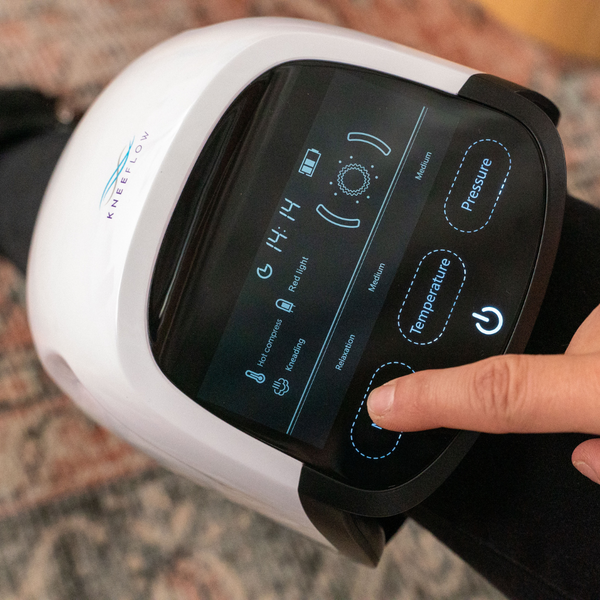
Do infrared knee massagers work, or are they just another comfort gadget with a promising name? That is a fair question, especially if your knee pain has already made simple routines feel more complicated. Sitting, standing, climbing stairs, walking after a long day, or trying to relax at night can all feel different when the knee is stiff, tense, or sensitive.
The honest answer is more balanced than most product claims make it sound. An infrared knee massager may support comfort, warmth, and relaxation around the knee, but it is not a diagnosis, cure, or replacement for medical care. Its value depends on what is causing the discomfort, how the device is used, and whether the symptoms are mild enough for home comfort support.
At Flow Knee, we think knee support should feel practical and safe. A device like Kneeflow can fit into a daily comfort routine when the goal is warmth, soft airbag massage, and gentle support. It should not be used to ignore swelling, severe pain, injury, redness, heat, instability, or symptoms that need professional evaluation.
How Infrared Knee Massagers Are Supposed to Work
Infrared knee massagers are usually designed to combine light-based warmth with direct knee support. The idea is to help the knee area feel more relaxed by using gentle heat and, in some devices, massage pressure or vibration. For people dealing with everyday stiffness or tension, that kind of support may feel easier to repeat than a complicated routine.
It helps to separate the feeling from the promise. Infrared and red light technology are often discussed in wellness spaces, but the research is still developing. Some studies and clinical discussions suggest potential benefits for comfort and tissue response, but that does not mean every device or every knee condition will respond the same way.
The more realistic expectation is this: an infrared knee massager may help the area feel warmer, calmer, and less guarded. It may support a routine around mild discomfort. It should not be presented as something that repairs arthritis, heals injuries, removes inflammation, or replaces a treatment plan.
Do Infrared Knee Massagers Work Better Than Heat Alone?
Do infrared knee massagers work better than a regular heat pad? Sometimes the difference is less about one feature being better and more about how the support is delivered. A heat pad may provide general warmth, while a knee-specific device is designed to wrap around the joint and stay positioned in a more targeted way.
Heat itself can be useful when the knee feels stiff, tight, or achy. Many people notice that warmth helps the area feel easier to move, especially when discomfort is related to chronic stiffness or muscle tension. That does not mean heat is always the right choice. If the knee is newly swollen, hot, red, or recently injured, cold and medical guidance may be more appropriate than warmth.
An infrared knee massager may feel more complete because it can combine warmth with massage modes. That combination may help some users feel more relaxed around the knee. The key is to use it for comfort, not as proof that a deeper medical issue has been solved.
Infrared, Heat, and Massage: What Each Feature May Support
Infrared knee massagers often include more than one comfort feature. Some use infrared or red light support. Some include heat. Others add air compression, vibration, or soft massage. Each feature may feel different, and each one should be understood in a realistic way.
Heat may help when the knee feels stiff or guarded. It can make the area feel more relaxed and may support easier movement before gentle activity. Massage may help surrounding muscles feel less tense, especially when the discomfort is connected to everyday strain, long sitting, or general knee fatigue.
Infrared or red light support is often marketed as deeper or more advanced, but claims should stay careful. The best use case is not fixing knee pain. It is helping create a repeatable comfort session that feels soothing, controlled, and easy to use. For many people, consistency matters more than dramatic settings.
When an Infrared Knee Massager May Feel Helpful
Do infrared knee massagers work for everyone? No. But they may feel helpful for people whose symptoms are mild, familiar, and not linked to warning signs. Someone with knee stiffness after sitting, general tiredness after walking, or occasional achiness around the joint may find that a controlled comfort routine helps the knee feel less tense.
They may also fit into an evening routine for people who want warmth after a long workday. Desk workers, older adults, people who stand for long periods, and active users who feel ordinary knee fatigue may appreciate having a device that is easy to return to. The benefit is not only the feature list. It is the ability to create a calm, repeatable moment of support.
That said, comfort is not the same as treatment. If knee pain keeps returning, worsens, limits movement, or appears with swelling, a clinician should help identify the cause. A device can support how the knee feels, but it cannot tell you whether the issue is arthritis, bursitis, tendon irritation, meniscus injury, or something else.
When a Knee Massager Is Not the Right First Step
An infrared knee massager should not be the first response to every knee problem. Pain after a fall, twist, impact, sports injury, or sudden movement deserves more caution. The same is true if the knee is swollen, red, hot, unstable, locked, numb, feverish, or difficult to bear weight on normally.
Heat and massage can be the wrong choice when inflammation or injury is active. Direct pressure over swelling can feel uncomfortable and may irritate the area more. Warmth over a hot or red knee can also be inappropriate if infection or acute inflammation is possible.
This is where safe use matters. If the knee feels unusual, looks visibly different, or hurts sharply, pause the comfort routine and seek medical advice. Flow Knee products are designed for supportive comfort, not for pushing through symptoms that need assessment.
How to Use an Infrared Knee Massager Safely
Do infrared knee massagers work better when used carefully? Usually, yes. A gentle setting is often the safest place to start, especially if you are new to heat or massage around the knee. The session should feel soothing, not intense, sharp, or overwhelming.
It may help to use the device when the knee is calm rather than actively flared. For example, mild stiffness after a long day may be a better fit than fresh swelling after an injury. Keep the session comfortable, avoid falling asleep with any heated device, and stop if the skin feels irritated, too hot, or uncomfortable.
People with reduced sensation, circulation problems, diabetes, nerve issues, skin sensitivity, recent surgery, implanted medical devices, or complex medical conditions should ask a healthcare professional before using heat, infrared, vibration, or massage devices. That extra caution helps keep a comfort routine from becoming risky.
What to Look for in an Infrared Knee Massager
A good infrared knee massager should feel simple, controlled, and comfortable. Adjustable heat settings matter because not every knee tolerates warmth the same way. A secure wrap matters because poor fit can make the session feel awkward or uneven. Auto shutoff is also helpful because heat-based devices should not run endlessly.
Soft airbag massage or gentle compression can be useful when the goal is relaxation around the joint. The pressure should not feel harsh or painful. If a device offers multiple modes, those settings should make the experience easier to personalize, not more confusing.
Portability can also matter. A device that is easy to charge, store, and use is more likely to become part of a real routine. The Kneeflow portable knee massager with red light support was designed around that kind of repeatable comfort, combining controlled warmth, red light support, and soft airbag massage in a knee-specific wrap.
Do Infrared Knee Massagers Work for Arthritis or Chronic Stiffness?
Do infrared knee massagers work for arthritis? They may support comfort for some people, especially when stiffness and achiness are part of the daily pattern. Heat can feel helpful for stiff joints, and gentle massage may help the surrounding area feel less tense. Still, arthritis is a medical condition, and a massager should not be treated as arthritis care by itself.
The better way to think about it is support, not replacement. Arthritis symptoms may need medical evaluation, movement guidance, strength work, weight management support, medication, physical therapy, or other care depending on the person. A knee massager can only occupy the comfort side of that plan.
For chronic stiffness, consistency may be more valuable than intensity. Short, comfortable sessions may help the knee feel cared for without overloading it. If pain becomes sharper, swelling increases, or function declines, it is time to get professional guidance rather than increasing the device settings.
Choosing Between Infrared, Vibration, Heat, and Air Compression
The old question was often infrared, vibration, or heat? A better question is what your knee actually needs. If the knee feels stiff and guarded, heat may be the most noticeable comfort feature. If the surrounding muscles feel tense, soft massage or air compression may feel helpful. If you want a fuller comfort routine, a hybrid device may make more sense than choosing one feature alone.
Vibration can feel relaxing for some users, but it can feel too strong for others. Air compression may feel gentler and more controlled, depending on the device. Heat should feel warm and soothing, never burning or uncomfortable.
A hybrid knee massager may be useful because knee discomfort rarely has only one sensation. Stiffness, tiredness, tension, and sensitivity can overlap. A device that offers adjustable support gives the user more control, which is especially important when knee comfort changes from day to day.
A More Realistic Way to Think About Knee Relief
Do infrared knee massagers work? They can, when the goal is comfort and the symptoms are appropriate for home use. They may help the knee feel warmer, calmer, and less tense. They may make it easier to build a routine around daily support. They should not be expected to diagnose, heal, or correct the underlying cause of knee pain.
The strongest knee care decisions usually come from understanding the pattern first. Is the pain stiff or sharp? Does it happen after sitting, activity, kneeling, or injury? Is there swelling, heat, redness, locking, or instability? Does the knee improve with gentle care, or is it getting worse?
At Flow Knee, we believe supportive devices should be easy to understand and safe to use. Kneeflow may be a practical option for people who want controlled warmth, red light support, and soft airbag massage as part of a calm knee comfort routine. If you are unsure whether it fits your situation, contact Flow Knee and ask for guidance before adding it to your daily care.
FAQ
Do infrared knee massagers work for knee pain?
They may support comfort, warmth, and relaxation for mild knee discomfort, but they do not diagnose, cure, or replace medical care.
Is infrared better than heat for knee pain?
Not always. Heat may help stiffness, while infrared may add light-based support. The best choice depends on symptoms and safe use.
Can I use an infrared knee massager every day?
Some people use one regularly for comfort, but sessions should stay gentle. Ask a clinician if you have medical or circulation concerns.
When should I avoid using a knee massager?
Avoid use over swelling, redness, heat, injury, infection concerns, numbness, severe pain, or unstable knee symptoms unless cleared by a clinician.
Can a heated knee massager help stiffness?
A heated knee massager may help mild stiffness feel more relaxed, especially when the knee is not swollen, hot, or recently injured.
Is Kneeflow a treatment for knee injuries?
No. Kneeflow is for supportive knee comfort. Injury-related, worsening, swollen, or unstable pain should be evaluated by a healthcare professional.