You are looking at two devices that claim to reduce pain improve movement and speed up recovery. The question of Kneeflow vs LifePro BioRecover comes up a lot. Both cost the same. Both use red light therapy. Both are designed to be worn on the knee. The two devices are based on different beliefs about what the knee really needs. Those differences matter more than what the ads say.
This comparison between Kneeflow and LifePro BioRecover looks at the numbers. It checks what each device does well. It points out when one device makes more sense, than the other. Kneeflow is the device we make, so we will be direct about where it wins and where the BioRecover Pro has an edge. You deserve an honest read.
Kneeflow vs LifePro BioRecover Massager: What Each Device Is
The Kneeflow vs LifePro BioRecover massager debate starts here. Before diving into features, it helps to understand the design philosophy behind each product.
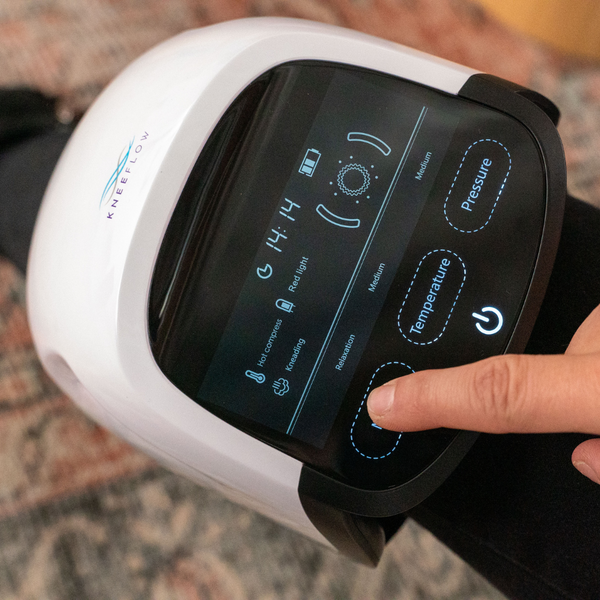
The Kneeflow knee massager combines three modalities: red light therapy at 650 nm, heat at three temperature settings, and air compression through soft airbags. Everything runs from a 2,200 mAh built-in rechargeable battery. One device, three tools, no cords required during a session. It is aimed at people who want a complete recovery routine without juggling separate gadgets.
The LifePro BioRecover Pro takes a different approach. It leads with a dense LED array: 180 lights split between 660 nm red and 850 nm near-infrared. It adds vibration and heat, runs on a corded DC adapter (no internal battery), and weighs about 0.4 lbs net. It is the lighter, cord-dependent option with a stronger light specification on paper.
Both are wearable. Both are sized for one knee at a time. Neither uses a companion app. The comparison between Kneeflow vs LifePro BioRecover massager comes down to which tradeoffs fit your life.
Red Light Therapy: How the Two Devices Compare
Wavelength and LED Count
The BioRecover Pro shows specs: 60 LEDs at 660 nm and 120 LEDs at 850 nm 180 LEDs total. It also says the irradiance is over 1.34 W/in² at the surface and the rated power is 10W. These are numbers that you can check. The device aims at tissue with red light and deeper tissue with near‑infrared a combo that has been studied in clinics. Our guide on which wavelength is red light therapy shows why the 660 nm and 850 nm split matters for a joint like the knee that has layers.
Kneeflow uses 650 nm for light and has 19 infrared lights built in but it does not give the irradiance or the total LED count on its product page. The idea is the same: photobiomodulation, at a wavelength. What is missing is the dose math. If you are someone who wants to calculate joules per session, the BioRecover Pro gives you the inputs. Kneeflow does not, at least not on the page.
In the Kneeflow vs LifePro BioRecover massager comparison, edge on light specification goes to the BioRecover Pro.
Heat
Kneeflow has three heat levels at 45°C, 50°C and 55°C. These are numbers. You choose the temperature that works best for the stage of your recovery whether you are dealing with soreness or focusing on stiffness after weeks of rehab. The BioRecover Pro has two heat settings that go up, to 130°F, which's roughly 54°C. There are no temperature values listed for each setting.
Both devices heat the knee. Kneeflow gives you more documented steps and a slightly lower ceiling on the top level. For anyone worried about heat sensitivity after surgery or with numb skin from a nerve block, precise settings matter. You want to know the number, not just “high” or “low.”
On heat precision in the Kneeflow vs LifePro BioRecover massager comparison, the edge goes to Kneeflow.
Kneeflow vs LifePro BioRecover Massager: Compression vs Vibration
This is the biggest design difference between the two.
Kneeflow uses air compression. Soft airbags gently. Deflate around the knee joint creating a rhythmic pressure that supports blood flow and mimics the sensation of a manual massage. After exercise or a long day standing compression helps reduce swelling and speeds up recovery. This method is softer and more soothing than vibration therapy. It covers the knee instead of focusing on one spot, like vibration does.
The BioRecover Pro uses vibration. The manual explains that the Vibration button moves through levels but does not list the options. Vibration works on the muscles and soft parts near the joint and not on the area itself. Some people think it helps with muscles. Others feel it is not comfortable especially if the knee is swollen or, after surgery.
In the Kneeflow vs LifePro BioRecover massager question, this edge depends on the user: compression suits recovery and swelling, vibration suits muscle soreness.
Battery, Portability and Daily Use
The Kneeflow runs on a built-in 2,200 mAh battery that lasts up to 210 minutes on a charge and recharges in about 60 minutes. A 15-minute auto shutoff protects the battery and prevents overuse. You can do sessions on the couch, in a chair at work, during travel or anywhere else without hunting for a socket.
The BioRecover Pro has no internal battery. It plugs into a DC adapter (12V-2A). You can use a compatible power bank, but that is not included, and the wattage requirement limits which banks actually work. LifePro lists the device weight at around 0.4 lbs net, but that figure does not include the adapter or any external power source. For sessions at a desk or in a fixed spot, the cord is fine. For anyone who wants to move around or travel with the device, cord management becomes a daily friction point.
The BioRecover Pro weighs less as a standalone unit. The Kneeflow is heavier at 790 g but self-contained. On portability in the Kneeflow vs LifePro BioRecover massager comparison, Kneeflow wins.
Build and Fit
Both devices wrap the knee with adjustable straps. Kneeflow measures L19 cm × W17 cm × H14 cm and uses one adjustable Velcro strap. The product page says it also works on the elbow and shoulder, giving it some versatility beyond the knee. It has an LCD touchscreen for controls and three preset modes: Relax, Recover and Repair.
The BioRecover Pro measures approximately 30.31 inches by 10.5 inches. That is a larger panel, which likely reflects the higher LED count. Details on the strap system and adjustment are limited in the available documentation.
Price, Certifications and Warranty
Kneeflow is currently listed at $119 (sale from $249). It carries CE and RoHS certifications and is FSA/HSA eligible. The warranty is one year, with replacement claims handled via email and video documentation.
The BioRecover Pro is listed at $149.99. It carries FCC, RoHS, FDA and CE certifications. FDA listing is a notable addition. The warranty terms are not stated in the product manual and point back to the LifePro website or a warranty card included with purchase.
The BioRecover Pro’s FDA certification is worth noting in the Kneeflow vs LifePro BioRecover massager comparison. It signals that the device passed a regulatory review process, which adds a layer of credibility for a medical-use claim. Kneeflow’s FSA/HSA eligibility is a practical financial advantage for buyers in the United States who have those accounts.
In the Kneeflow vs LifePro BioRecover massager comparison: BioRecover Pro leads on certifications (FDA), while Kneeflow leads on price and financial flexibility.
What Research Says About the Features They Share
Both devices use photobiomodulation, the cellular mechanism at the heart of red light therapy. How red light therapy works covers the mechanism in full, but the short version is that specific wavelengths of light are absorbed by mitochondria, which respond by producing more energy and modulating inflammation. The research on knee pain is real, if modest. A review of what red light therapy does for knee pain found reduced pain scores in multiple controlled trials, with the best results at wavelengths between 785 and 860 nm and doses between 4 and 8 joules per spot. Both devices target that general range.
Heat therapy has a long record in sports medicine and physical therapy. It increases local blood flow, relaxes muscle tension and can reduce stiffness before movement. Combining it with light therapy is a reasonable approach that the clinical literature on multimodal recovery supports.
The difference is in what each device adds to red light. Kneeflow adds compression. The BioRecover Pro adds vibration. Both have evidence bases. Neither is a cure for structural damage, and neither replaces physical therapy or clinical care for serious conditions.
Kneeflow vs LifePro BioRecover Massager: Who Should Buy Which
Choose the BioRecover Pro if:
You want the most light output and the clearest LED specification. You plan to use the device at a desk or fixed location where a cord is not a problem. You have a power bank that handles DC 12V. You prioritize FDA certification. You are comfortable without a published temperature value for heat settings.
Choose Kneeflow if:
You want air compression alongside red light and heat. You want a cordless device that you can use anywhere. You want three documented heat levels with exact temperatures. You are in the US and want FSA/HSA eligibility. You want one device that covers the knee, elbow or shoulder. You want up to 210 minutes of battery per charge.
For a broader look at what to expect from any knee massager with red light therapy before committing, the knee massager with red light therapy buying guide walks through the features that matter most.
Kneeflow vs LifePro BioRecover Massager: A Side-by-Side Summary
|
Feature |
Kneeflow |
LifePro BioRecover Pro |
|
Red light wavelength |
650 nm |
660 nm |
|
Near-infrared |
Yes (19 lights, nm unstated) |
Yes (850 nm) |
|
LED count |
Not stated |
180 (60 red + 120 NIR) |
|
Irradiance |
Not stated |
>1.34 W/in² |
|
Heat settings |
3 (45°C, 50°C, 55°C) |
2 (up to ~54°C) |
|
Additional modality |
Air compression |
Vibration |
|
Battery |
2,200 mAh, 210 min |
None (corded DC adapter) |
|
Weight |
790 g |
~0.4 lbs net |
|
Price |
$119 (sale) |
$149.99 |
|
Certifications |
CE, RoHS |
FCC, RoHS, FDA, CE |
|
FSA/HSA eligible |
Yes |
Not confirmed |
|
App |
None |
None |
Is Kneeflow Right for You?
If the Kneeflow vs LifePro BioRecover massager comparison has you leaning toward Kneeflow, the next step is to make sure it suits your specific situation. Recovery goals, knee size, lifestyle and any clinical conditions all shape which device actually helps.
When you have that clearance and want a device that combines heat, red light and compression in one wearable, explore the Kneeflow knee massager and see the full specs for yourself. If you want to talk through the details or get advice before you buy, contact the Kneeflow team and we will help you figure out whether it fits.