Knee pain has a way of making people question whether relief is supposed to feel this slow, this inconsistent, or this hard to trust. For many, that uncertainty grows after trying rest, braces, creams, or short-term comfort measures that help for a while but do not fully change the day-to-day experience. That is usually the point when the question becomes more specific. People stop asking what knee pain is and start asking whether a certain therapy actually works.
That is exactly why interest in red light therapy knee pain keeps growing. The idea sounds appealing because it offers a non-invasive form of support, but what matters is not the appeal alone. What matters is whether the research shows meaningful relief, how that relief fits into real life, and whether this type of therapy deserves a place in a practical recovery routine.
At Flow Knee, we think those questions should be answered with more clarity than hype. A useful review should not make red light therapy sound magical, but it also should not flatten the evidence into vague caution. The real value is in understanding where this therapy fits, what it may support, and why it has become part of serious conversations around knee discomfort and long-term joint care.
Why Red Light Therapy Gets So Much Attention in Knee Pain Conversations
Most people who search for alternative knee pain support are not looking for novelty. They are looking for something that feels credible enough to trust and gentle enough to use consistently. That makes red light therapy particularly interesting, because it sounds more advanced than a heating pad yet less invasive than treatments people may not feel ready for.
Part of the attention comes from the fact that red light therapy, often discussed in research as photobiomodulation, is being studied for how it may support pain reduction, inflammation control, and tissue-level recovery. A 2024 systematic review on photobiomodulation for knee osteoarthritis found that this therapy can help reduce pain and improve disability, which is one of the main reasons the topic continues gaining attention.
That context matters because it explains why red light therapy keeps appearing in the knee pain conversation. It is not simply a trend term. It has become part of the discussion because researchers and patients alike are trying to understand whether low-risk supportive therapies can help reduce the daily burden of persistent joint discomfort.
What Red Light Therapy Is Actually Meant to Do
A lot of the confusion around red light therapy comes from the way it is presented. Some descriptions make it sound purely cosmetic or wellness-oriented, while others make it sound far more dramatic than the evidence supports. That leaves many readers caught between skepticism and curiosity, which is not a helpful place to make a decision from.
In research language, photobiomodulation refers to the use of visible red or near-infrared light to stimulate biological responses without heating tissue the way a thermal therapy would. In simpler terms, it is meant to support the body’s recovery processes rather than force a temporary sensation of relief. That distinction matters because it changes how people think about the therapy. It belongs in a more serious category than many people assume.
That does not mean every red light product produces the same outcome. It means the therapy deserves to be evaluated through research and practical fit, not through exaggerated marketing language. The better question is not whether red light sounds impressive, but whether the evidence suggests it can contribute to a more supportive pain-relief environment for the knee.
What the Research Actually Says About Red Light Therapy for Knee Pain
This is where the conversation becomes more useful. The strongest answer is not based on trend-driven wellness language, but on evidence. The review on photobiomodulation for knee osteoarthritis is important because it moves the topic beyond vague claims and into measurable outcomes that matter to real people living with persistent discomfort.
At the same time, research also makes it clear that not every study is identical. Wavelength, dosage, treatment frequency, and patient condition all influence results, which means the evidence supports promise and practical relevance more than simplistic certainty. That nuance actually makes the therapy more credible, not less, because it shows the field is being studied seriously rather than casually.
That is the most grounded way to answer the core question. Yes, red light therapy can work for knee pain, especially in osteoarthritis-related contexts, but the value comes from realistic application and consistency rather than inflated expectations. The research supports it as a meaningful supportive therapy, not as a miracle shortcut.
Why This Matters So Much for People With Ongoing Knee Discomfort
Knee pain often becomes emotionally heavy before it becomes clinically dramatic. It changes how people move through the day, how long they stay active, and how much confidence they have in their own bodies. That is part of why therapies like red light matter. Even a moderate improvement in pain, stiffness, or daily function can feel significant when discomfort has already started shaping routine.
This is especially true for people dealing with osteoarthritis-related symptoms, where support usually works best when it is consistent and layered. Even though the Arthritis Foundation page here focuses on light therapy for psoriatic arthritis, it still reflects the broader medical interest in light-based therapies as part of pain and inflammation support conversations.
That is why red light therapy should be understood as part of a broader relief picture. It is not valuable because it sounds modern. It is valuable because the research suggests it may help people feel more comfortable and less limited when used as part of a realistic support routine.
Where Red Light Therapy Fits Alongside Heat and Massage
People rarely experience knee pain in a single, isolated way. Stiffness, tension, sensitivity, soreness after activity, and general heaviness around the joint often overlap. Because of that, the most useful support tools are often the ones that reflect the layered reality of discomfort instead of trying to solve everything through one narrow mechanism.
That is part of why a combined-support device makes more intuitive sense in real life. Red light therapy may help create a more supportive recovery environment, while heat can ease stiffness and massage-based support can make the area feel less tense and more comfortable. The value comes from how these elements work together, not from forcing one feature to carry the full burden of relief by itself.
At Flow Knee, that is exactly how we think about product support. The goal is not to isolate one impressive therapy and build a story around it. The goal is to create a more complete recovery experience that feels repeatable, practical, and aligned with what knee pain actually feels like from day to day.
When This Therapy Starts Feeling Worth Considering
Most people do not start with red light therapy at the first sign of discomfort. They usually arrive at it after realizing that knee pain has become recurring enough to deserve something more structured than occasional relief. That shift matters because it changes the decision from experimentation to support planning.
In that stage, what people are often looking for is not a dramatic promise but a better fit. They want relief that can happen at home, that does not require constant disruption, and that feels manageable enough to become part of a normal routine. Red light therapy begins to feel worth considering when it stops sounding like a specialty concept and starts making sense as a repeatable form of support.
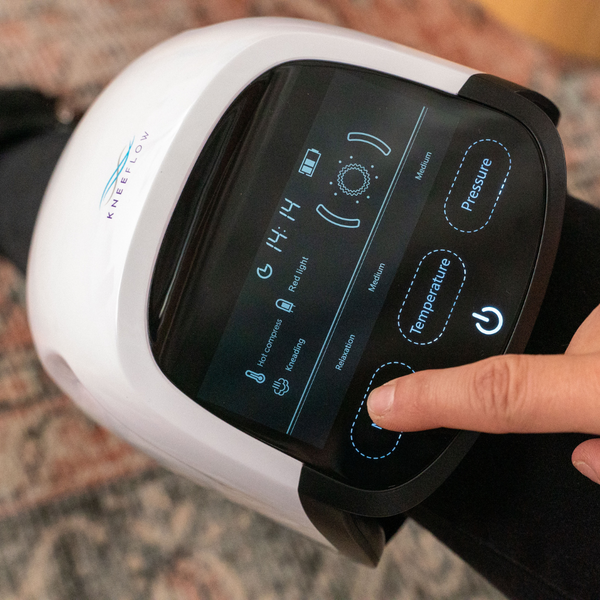
That is also where the product experience becomes relevant in a more natural way. For readers who want to see how red light support, heat, and massage come together in one place, the Kneeflow heated knee massager shows how Flow Knee approaches relief as a layered daily-use experience rather than a one-note device.
When Better Relief Starts Feeling More Evidence-Based
The hardest part of persistent knee pain is often not the discomfort alone, but the feeling that every option comes with uncertainty. Red light therapy matters because it gives people something more grounded to work with. It is not just a popular term or a category trend. It is a therapy that has been studied with enough seriousness to earn a place in real conversations about knee support, especially in osteoarthritis-related pain.
What makes the research encouraging is not that it promises perfection. It is that it supports a more believable form of progress. Red light therapy appears capable of helping reduce pain and improve function in the right contexts, which is exactly the kind of support many people are trying to build into everyday life rather than chase in one dramatic moment.
If your knee pain has started to feel persistent enough that better support matters, this is the point where a stronger next step can make sense. Flow Knee was built for people who want relief that feels more practical, more complete, and more consistent. If you want help understanding whether that kind of support fits your situation, contact our team and we’ll help you explore the right path forward.
FAQ
Does red light therapy work for knee pain?
Research suggests red light therapy can help reduce pain and improve disability in knee osteoarthritis, especially when treatment is applied consistently and appropriately.
Is red light therapy the same as heat therapy?
No. Red light therapy uses light-based stimulation, while heat therapy works through warmth and circulation support. They can complement each other.
Can red light therapy help knee osteoarthritis?
Current reviews suggest photobiomodulation may help with knee osteoarthritis pain and function, though outcomes depend on treatment parameters and consistency.
How long does red light therapy take to work on knee pain?
Research varies by protocol, so results are not identical across studies. Benefits are generally evaluated over repeated sessions rather than one-time use.
Is red light therapy enough on its own?
It is usually better understood as part of a broader support approach rather than the only answer for persistent knee discomfort.