Two cordless knee massagers, both under $120, both using red light. The Kneeflow vs Comfytemp massager question is a reasonable one to ask, because these two devices look similar from the outside. But once you open the spec sheet, they are solving the same problem with very different tools.
This Kneeflow vs Comfytemp massager comparison breaks down what each device actually offers: the light specs, the additional modalities, the battery situation and the things neither listing tells you. Kneeflow is the device we make, so we will be upfront about where the Comfytemp has a real advantage and where we think Kneeflow earns the edge. Read it through, then decide.
Kneeflow vs Comfytemp Massager: What Each Device Is
The Comfytemp model compared here is the 3D Red Light Therapy Knee Wrap. It combines 660 nm red light and 850 nm near-infrared with vibration massage in three modes and three intensity levels. It runs on a 5,000 mAh battery and connects to a companion app for timer and mode control. No air compression. No corded adapter required. It weighs 1.61 lbs and is designed primarily for the knee.
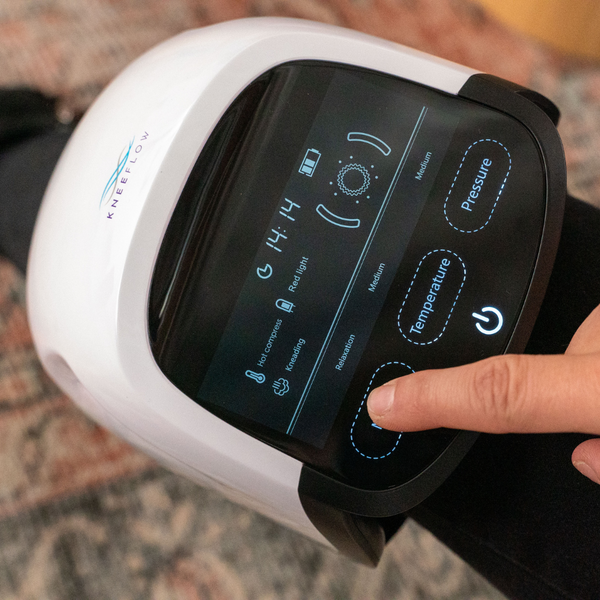
The Kneeflow knee massager combines red light at 650 nm with heat and air compression, not vibration. It runs on a 2,200 mAh battery for up to 210 minutes per charge, recharges in about 60 minutes and uses an LCD touchscreen with three preset modes. It weighs 790 g (about 1.74 lbs). No companion app. Works on the knee, elbow or shoulder.
Both are wearable, both are cordless, both target the same person: someone who wants a daily recovery tool at home. The Kneeflow vs Comfytemp massager difference comes down to which combination of therapies you actually need.
Red Light Therapy: How the Specs Compare
Wavelength
The Comfytemp 3D Knee Wrap uses two wavelengths: 660 red light and 850 nm near-infrared light. This dual-wavelength setup is backed by photobiomodulation research. Red light at 660 nm works closer to the surface of the skin. Infrared light at 850 nm goes deeper into tissue. That’s important for the knee because the knee has layers. Our guide about what wavelength is red light therapy explains why this split makes a difference and how the research defines the ideal bands.
Kneeflow uses 650 nm for light and includes 19 infrared lights. It doesn’t say what near-infrared wavelength it uses. Still both devices stay within the range. The Comfytemp publishes the cleaner spec on this point.
What Neither Device Tells You
Neither device publishes LED count or irradiance (mW/cm²) in a way that lets you calculate dose. That makes it difficult to compare light output directly. Both use the right wavelengths, but dose is what separates a therapeutic session from a placebo-level one. For anyone who wants to understand why dose matters, how red light therapy works is a good foundation before buying either.
In the Kneeflow vs Comfytemp massager comparison on light specs alone, the Comfytemp edges ahead on transparency, but both have the same gap on dose.
Heat: Documented vs Undefined
Kneeflow has three heat levels: 45°C, 50°C and 55°C. These are the temperatures you can use to plan your therapy. If you have skin from a nerve block or you are still recovering early after knee surgery you should check the number before you apply heat to the joint.
The Comfytemp 3D Knee Wrap talks about heat in its marketing but it does not give any temperature values does not list the number of settings. Does not offer any guidance, on how to adjust the heat. Reviewers confirm heat is present. The spec sheet does not help you evaluate it.
This is a meaningful gap in the Kneeflow vs Comfytemp massager comparison. Heat is not just a comfort feature. It opens blood vessels, relaxes soft tissue and, when combined with light therapy, can support the pre-session warmup. Knowing whether you are at 42°C or 55°C changes how you use it, especially for people managing inflammation or post-surgical recovery.
On heat documentation in the Kneeflow vs Comfytemp massager comparison, the edge goes to Kneeflow.
Kneeflow vs Comfytemp Massager: Compression vs Vibration
This is the design fork that matters most.
The Comfytemp uses vibration in three modes and three intensity levels. Vibration helps the muscles and soft tissue around the joint. Vibration can ease muscle tension boost blood flow and reduce stiffness that builds after hours of sitting. The app lets you set custom timers and cycle through modes without pressing any buttons on the device.
Kneeflow uses air compression. Soft airbags. Deflate rhythmically around the knee applying gentle pressure across the joint. Air compression is common in recovery devices for circulation support and post‑exercise swelling management. Air compression is usually gentler than vibration and suits people who manage swelling or who find vibration uncomfortable on an inflamed knee.
Choosing between the two depends on what you feel. In the Kneeflow vs Comfytemp massager question, compression and vibration target different problems. Vibration is better for muscle soreness and tightness. Compression is better for swelling and circulation. Our breakdown of infrared vs heat vs vibration therapy explains the mechanism differences so you can match the modality to what your knee needs.
Neither is universally superior in the Kneeflow vs Comfytemp massager comparison. Knowing which symptom you are treating makes the choice clearer.
Battery and Portability
The Comfytemp 3D Knee Wrap runs a 5,000 mAh battery, more than double the capacity of Kneeflow’s 2,200 mAh. Battery life ranges from 90 to 500 minutes depending on which modes are active. At full settings it lasts about as long as Kneeflow; at lower settings it runs much longer. If you forget to charge your device or like to use it multiple times a day without thinking about the battery, the Comfytemp has a real advantage here.
Kneeflow’s 210-minute battery is plenty for a standard 15-minute daily session over many days, and it recharges in about an hour. The 15-minute auto shutoff adds some protection against over-use. For most people, the 2,200 mAh battery is not a bottleneck. But if you run multiple sessions per day or travel without reliable charging, the Comfytemp’s 5,000 mAh is a practical edge.
On battery capacity in the Kneeflow vs Comfytemp massager comparison, the edge goes to Comfytemp.
App Control vs Simplicity
The Comfytemp connects to a companion app. You can set an auto-off timer, switch modes without reaching down to the device and build a custom routine. For someone who wants granular control or a hands-free setup once the device is on, the app is a genuine convenience.
Kneeflow has no app. You control it with an LCD touchscreen and three preset modes: Relax, Recover and Repair. That is either a limitation or a feature, depending on how you use recovery tools. If you want simplicity, no Bluetooth pairing, no phone dependency and no troubleshooting a dropped connection, the direct-control layout wins.
In the Kneeflow vs Comfytemp massager comparison, the app gives Comfytemp an edge for customization. Kneeflow has the edge for simplicity and reliability.
Price and Certifications
The Comfytemp 3D Knee Wrap is listed at approximately $94.98. Kneeflow is currently listed at $119 (sale from $249). Comfytemp is the lower-priced option, and it lists FSA/HSA eligibility in its product title, though the listing provides no additional verification of this.
Kneeflow lists CE and RoHS certifications and is confirmed FSA/HSA eligible with a dedicated checkout option. The one-year warranty is stated clearly, with replacement handled via email and video documentation.
Comfytemp’s product page lists no certifications and no warranty terms. For buyers using healthcare spending accounts, confirmed eligibility matters before you check out.
On documented safety and warranty in the Kneeflow vs Comfytemp massager comparison, the edge goes to Kneeflow.
What the Research Says About These Features
Both devices use red and near-infrared light for photobiomodulation. The clinical evidence for this combination in knee pain management is modest but real. Controlled trials have found meaningful pain reductions at the wavelengths both devices use, with effects strongest when doses land in the 4 to 8 joules per spot range. The research supports the mechanism. It also shows that dose and wavelength specificity matter more than brand name.
Heat therapy for joints has a long track record in physical therapy and sports medicine. Vibration therapy has evidence in muscle recovery and stiffness. Air compression is used across post-surgical and athletic recovery protocols. None of these features is a cure. All of them can support a consistent recovery routine when used correctly and in the right sequence.
Kneeflow vs Comfytemp Massager: Side-by-Side Summary
|
Feature |
Kneeflow |
Comfytemp 3D Knee Wrap |
|
Red light wavelength |
650 nm |
660 nm |
|
Near-infrared |
Yes (nm not stated) |
850 nm |
|
LED count |
Not stated |
Not stated |
|
Heat settings |
3 (45°C, 50°C, 55°C) |
Present, no values listed |
|
Additional modality |
Air compression |
Vibration (3 modes, 3 levels) |
|
Battery |
2,200 mAh, ~210 min |
5,000 mAh, 90–500 min |
|
App |
No |
Yes |
|
Weight |
790 g (1.74 lbs) |
0.73 kg (1.61 lbs) |
|
Price |
$119 (sale) |
~$94.98 |
|
Certifications |
CE, RoHS |
Not stated |
|
FSA/HSA |
Confirmed |
Claimed, unverified |
|
Warranty |
1 year |
Not stated |
Kneeflow vs Comfytemp Massager: Who Should Buy Which
Choose Comfytemp if:
You want a larger battery for multiple daily sessions or longer use without recharging. You prefer vibration over compression for muscle-related soreness. You want app-based control. You are working with a tighter budget and the lower price point is the deciding factor.
Choose Kneeflow if:
You want air compression alongside red light and heat. You want precise, documented heat temperatures. You need confirmed FSA/HSA eligibility with a clear checkout option. You want a stated warranty without having to contact the seller. You prefer simple, direct device controls without a phone. You also want to use the device on an elbow or shoulder, not just the knee.
The buying guide for a knee massager with red light therapy walks through the features that tend to matter most once you move past price, including what to look for in LED specifications and how to read a heat setting.
The Honest Summary
The Kneeflow vs Comfytemp massager comparison does not have a single winner. Comfytemp’s 3D Knee Wrap offers a bigger battery, a lower price and app control. Kneeflow offers air compression instead of vibration, precise heat settings, confirmed certifications, a stated warranty and FSA/HSA eligibility without guesswork.
If the Kneeflow vs Comfytemp massager question has you leaning toward Kneeflow, the full specs and purchase option are one click away. Visit the Kneeflow knee massager page to review the features and get it shipped. Still have questions before buying? Contact the Kneeflow team and we will help you decide.