Knee discomfort often makes people compare therapies before they fully understand what each one is supposed to do. Infrared therapy, heat therapy, and vibration therapy can sound like three versions of the same idea, especially when they are all presented as options for stiffness, soreness, or recovery. That confusion matters because people are not only comparing features. They are trying to understand what kind of support their knee actually needs.
That is why the topic of infrared heat vibration therapy knees deserves a clearer explanation. These therapies are often grouped together, but they do not work in identical ways. Infrared therapy is usually discussed in relation to light-based biological effects, heat therapy is more connected to warmth and circulation, and vibration therapy is often framed around stimulation and muscle response. The value is not in choosing the most impressive term, but in understanding how each one fits into real knee comfort.
At Flow Knee, we believe knee support should feel practical before it feels technical. A useful comparison should reduce confusion, not create a new layer of complicated language. The goal is to help readers understand what science suggests, where expectations should stay realistic, and why combined support can feel more complete than relying on one therapy alone.
Why Infrared, Heat, and Vibration Therapy Get Compared So Often
People tend to compare these therapies because they often appear in the same product category. A knee device may mention heat, infrared, red light, vibration, compression, or massage, and the language can start to feel interchangeable. For someone already dealing with discomfort, that creates a frustrating decision process because every feature sounds useful, but not every feature explains itself clearly.
That confusion becomes more important when the knee pain is recurring. A person with stiffness after sitting, soreness after training, or chronic joint discomfort is not shopping for a list of features. They are trying to recognize which form of support matches what they feel. That is why a therapy comparison should begin with the lived experience, not the technology.
Once the therapies are separated by purpose, the decision becomes easier. Infrared and red light therapy are usually discussed as light-based support, heat therapy as warmth-driven comfort, and vibration therapy as movement-based stimulation. Those differences help turn vague product claims into a more understandable support picture.
What Infrared Therapy Means for Knees
Infrared therapy can feel harder to understand because it is not always felt in the same direct way as warmth or vibration. People may wonder whether it is doing anything at all if the sensation is subtle. That uncertainty is normal because light-based therapy is often more difficult to judge by immediate feeling alone.
In research settings, infrared and red light approaches are often discussed under photobiomodulation, a non-invasive light-based therapy studied for pain and function in knee osteoarthritis. A 2024 systematic review on photobiomodulation for knee osteoarthritis found evidence that it can reduce pain and improve disability, which gives this therapy a more serious foundation than trend-driven wellness language.
That does not mean every device or every use case produces the same result. It means infrared and related light therapies should be understood as supportive tools with growing evidence, especially in knee osteoarthritis contexts. Their value is strongest when expectations are grounded and the therapy is treated as part of a broader comfort routine rather than a standalone promise.
What Heat Therapy Means for Knee Comfort
Heat therapy is easier for most people to understand because the effect is familiar. A stiff knee often feels better when warmth is introduced, especially after inactivity, cold weather, or repeated strain. That immediate sense of relief can make heat feel simple, but simple does not mean unimportant.
Heat therapy helps create a more relaxed environment around the knee. Warmth can ease stiffness, reduce the sense of tightness, and make movement feel less restricted. The Arthritis Foundation explains that heat therapy helps relax stiff joints, which aligns closely with how many people describe its value in daily life.
This reframes heat as more than a comfort feature. It becomes a way to reduce resistance in the body. For people who feel tightness before movement or heaviness after activity, heat can make the knee feel more approachable again.
What Vibration Therapy Means for Knees
Vibration therapy can sound more intense than it actually needs to be. Some people associate vibration with aggressive massage tools or strong mechanical stimulation, which can create hesitation if the knee already feels sensitive. That concern is understandable, especially when discomfort has made the joint feel unpredictable.
In the context of knee support, vibration is usually meant to create gentle stimulation around the joint rather than forceful pressure. The experience can help the surrounding area feel less guarded and more responsive, especially when tension has built up after activity or long periods of stillness. Its value is often tied to comfort, awareness, and the way the body responds to repeated low-level stimulation.
This makes vibration different from heat and infrared therapy. It is more sensation-based and immediate, while infrared may feel subtler and heat may feel soothing through warmth. When understood that way, vibration becomes less about intensity and more about helping the knee feel less locked into tension.
Why One Therapy Alone May Not Match Real Knee Pain
Knee pain rarely behaves like a single problem. A person may feel stiffness in the morning, soreness after walking, tightness after training, and sensitivity during stairs. Those experiences overlap, which is why a single therapy can sometimes feel helpful but incomplete.
This is where therapy comparisons become more useful. Infrared therapy may support pain and function in certain knee conditions. Heat can reduce stiffness and help the joint feel less restricted. Vibration can create a more immediate sense of comfort and stimulation around the area. Each one has a different role, and those roles are not necessarily competing.
That layered understanding helps reduce disappointment. If one therapy does not solve every part of the experience, that does not mean it has no value. It may simply mean the knee needs a broader kind of support than one feature can provide by itself.
Where Combined Knee Therapy Starts Making Sense
Combined therapy starts to make sense when discomfort has more than one pattern. A knee that feels stiff, sore, and tense is not asking for only one kind of support. It is often responding to several physical factors at once, which is why layered care can feel more aligned with real life.
When infrared, heat, and vibration are brought together thoughtfully, the goal is not to overwhelm the joint. The goal is to create a more complete support environment. Infrared can contribute to a light-based recovery conversation, heat can make the area feel more relaxed, and vibration can help reduce the sense of guarded tension around the knee.
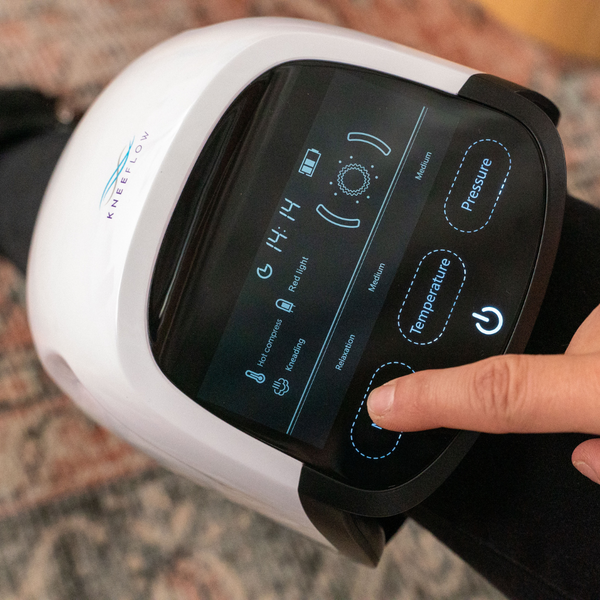
For readers comparing options, the Kneeflow heated knee massager shows how Flow Knee approaches knee support as a practical daily-use experience. The point is not to make one therapy sound superior in every case. It is to make relief feel more consistent, accessible, and easier to return to.
What Science Can Say Without Overpromising
Science is useful because it creates boundaries around claims. It helps separate promising support from exaggerated certainty. That matters in a category where people are often tired of hearing that one product or one therapy will solve everything.
The most honest reading is that these therapies have different levels of evidence and different roles. Photobiomodulation has research support in knee osteoarthritis contexts. Heat therapy has long-standing support for stiffness and comfort. Vibration therapy is more commonly understood through stimulation, comfort, and neuromuscular response, but it should still be described carefully rather than exaggerated into a cure.
That balance is important for trust. People do not need inflated promises. They need a clearer sense of what each therapy can reasonably support, how it may feel in daily use, and why consistency often matters more than intensity.
When Better Knee Support Starts Feeling More Complete
The strongest knee support decisions usually happen when people stop chasing one perfect feature and start thinking about the full experience. A knee that feels stiff, sore, reactive, or slow to recover may benefit from several types of support working together. That does not make the decision more complicated. It often makes the path forward feel more realistic.
Infrared heat vibration therapy knees is not just a technical comparison. It is a way to understand how different forms of support can address different parts of the knee discomfort experience. Infrared speaks to the research-backed light therapy conversation. Heat speaks to stiffness and comfort. Vibration speaks to stimulation and tension relief.
At Flow Knee, we believe support should feel complete without feeling complicated. If you are trying to understand whether layered knee support fits your situation, you can contact our team and explore what a more practical recovery routine could look like.
FAQ
Is infrared therapy the same as heat therapy?
No. Infrared therapy is light-based, while heat therapy uses warmth to relax stiffness and improve comfort around the knee.
Does infrared therapy help knee pain?
Research suggests photobiomodulation may reduce pain and improve disability in knee osteoarthritis, though results depend on treatment parameters and consistency.
What does vibration therapy do for knees?
Vibration therapy provides gentle stimulation that may help the knee area feel less tense, more responsive, and more comfortable during recovery.
Is heat or vibration better for knee stiffness?
Heat is usually more directly associated with stiffness relief, while vibration may help reduce tension and improve comfort around the joint.
Can infrared, heat, and vibration therapy work together?
Yes. These therapies can support different parts of the knee comfort experience when used together in a balanced, consistent routine.