Is red light therapy FSA eligible? The answer is yes, but with conditions. The IRS does not publish a fixed list of approved devices. Instead, eligibility depends on what the purchase is for and whether you can document a medical purpose. That distinction matters a lot when you are deciding whether to use pre-tax dollars from your Flexible Spending Account or Health Savings Account to cover a device like Kneeflow.
This guide explains the IRS rule that governs FSA eligibility, what documentation you need, how is red light therapy FSA eligible in practice, and how to pay with your FSA or HSA at checkout without getting a claim denied. Kneeflow is confirmed FSA and HSA eligible with a dedicated checkout option, so if you are already close to buying, there is a clear path to using your pre-tax dollars.
Is Red Light Therapy FSA Eligible? The IRS Rule That Governs It
The core rule comes from IRS Publication 502, which defines qualified medical expenses as costs “primarily for the diagnosis, cure, mitigation, treatment, or prevention of disease.” Expenses that are only beneficial to general health, without a specific medical condition behind them, do not qualify. The IRS gives examples: vitamins and health club memberships are not deductible, even when a doctor suggests them, because they primarily support general wellness rather than treating a specific condition.
When buyers ask is red light therapy FSA eligible, they are really asking whether their specific purchase and use case clears that IRS bar. Red light therapy sits in what the IRS would consider a dual-purpose category. The same device can be used to treat a diagnosed pain condition like knee osteoarthritis, or it can be used for general recovery and relaxation with no medical condition behind it. The IRS eligibility follows the purpose, not the product. So is red light therapy FSA eligible across the board? No. Is red light therapy FSA eligible when used for a diagnosed medical condition? Yes, in most cases, with the right documentation.
This is why two people can buy the same device and have different FSA outcomes. One person is treating diagnosed chronic knee pain from osteoarthritis. The other is using it for general soreness after workouts. The first use qualifies. The second does not.
What Makes a Red Light Therapy Device FSA Eligible
Knowing is red light therapy FSA eligible is only part of the answer. The more practical question is what makes your specific purchase qualify. For your purchase to meet the standard, the primary purpose must be medical. The conditions that most commonly support FSA eligibility for red light therapy include:
Chronic pain conditions such as knee osteoarthritis, tendinitis or bursitis where a physician has documented the diagnosis. Inflammatory joint conditions where red light therapy has been recommended or approved by a treating clinician. Post-surgical recovery from a documented procedure where the device is part of a care plan. Wound healing, nerve conditions, or skin conditions with a diagnosed diagnosis like rosacea, acne or eczema when treated under medical guidance.
General wellness, fitness recovery without a diagnosis, or cosmetic goals do not qualify. The FSA or HSA administrator may ask you to demonstrate that the purchase was primarily for medical care. That is where documentation comes in. As our overview of how red light therapy works explains, the therapy targets inflammation and cellular energy production, which is exactly the mechanism that supports a medical use claim for diagnosed pain conditions.
The Letter of Medical Necessity
The document that connects your diagnosis to your purchase is called a Letter of Medical Necessity, or LMN. It is not always legally required by the IRS, but most FSA and HSA plan administrators expect one for a device purchase. Without it, your claim is likely to be flagged or denied, and for HSAs specifically, an improper distribution can trigger income tax plus a 20 percent penalty.
A proper LMN should include the diagnosed medical condition by name, a recommendation that red light therapy supports your treatment or care plan, an expected duration of use, the clinician’s name, credentials and signature, and a date on or before the purchase date.
Your primary care doctor, orthopedist, physical therapist or any licensed clinician familiar with your condition can write an LMN. It does not need to be a prescription. It just needs to establish the medical purpose. If you are already working with a clinician for knee pain and are considering Kneeflow, asking for an LMN at your next appointment is a straightforward step. Our breakdown of what red light therapy does for knee pain can serve as a useful background if your clinician wants to understand the evidence before signing off.
FSA vs. HSA: What Is the Difference for This Purchase
Both accounts let you pay for qualified medical expenses with pre-tax dollars, but they work differently.
A Flexible Spending Account is offered through an employer. The 2026 FSA contribution limit is $3,400 per person per plan year, and unspent funds generally do not roll over, though many plans allow a carryover of up to $680. You do not need a high-deductible health plan to have one. FSA funds are available at the start of the plan year, so you can spend your full annual election before the money is fully contributed.
A Health Savings Account requires enrollment in a qualifying high-deductible health plan. The 2026 HSA contribution limits are $4,400 for individuals and $8,750 for families. HSA funds roll over indefinitely if unspent. The account is yours permanently, not tied to your employer.
For either account, the question of is red light therapy FSA eligible or HSA eligible comes down to the same underlying standard: does the purchase meet the IRS definition of a qualified medical expense? The documentation standards are also the same. The key practical difference is that an improper HSA distribution carries a larger penalty, which makes having an LMN especially important for higher-cost device purchases made through an HSA.
Is Red Light Therapy FSA Eligible to Buy on the Kneeflow Site?
Yes. Kneeflow confirms FSA and HSA eligibility directly on the product page. The device appears on the FSA/HSA eligible list, and there is a dedicated checkout option for using FSA or HSA cards. You do not need to pay with a personal card and submit for reimbursement, though that route is also available.
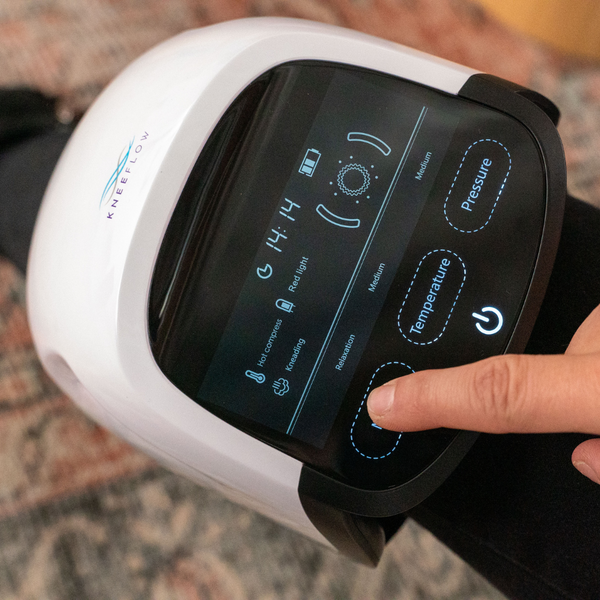
The Kneeflow knee massager combines red and near-infrared light at 650 nm with heat at three documented temperature levels and air compression in one wearable device. The combination of modalities, documented specs and medical use case makes it straightforward to establish a medical purpose under FSA rules when you have a diagnosed knee condition. The CE and RoHS certifications, while not FSA-specific, support the device’s medical-grade framing.
If you want to understand what wavelengths Kneeflow uses and why they matter for therapeutic depth, our guide to what wavelength is red light therapy covers the photobiomodulation research by wavelength band.
How to Pay With Your FSA or HSA for Red Light Therapy
Once you have confirmed is red light therapy FSA eligible for your situation, the payment process is simpler than many people expect.
Confirm the medical purpose first. Identify the diagnosed condition that supports your use of red light therapy. If you are not sure whether your condition qualifies, check IRS Publication 502 or ask your plan administrator before buying.
Get your Letter of Medical Necessity. Contact the clinician managing your knee condition, explain that you are purchasing a red light therapy device for home use, and ask for a brief LMN. This can often be completed by message or at a scheduled visit. Have the LMN dated before your purchase date.
Choose a device confirmed FSA and HSA eligible. Some retailers claim eligibility without verification. Kneeflow’s eligibility is confirmed on the product page with a dedicated FSA/HSA checkout option, which reduces the risk of a card decline at checkout. Pay at checkout using your FSA or HSA debit card. If the card is declined, pay with a personal card and submit for reimbursement with your itemized receipt and LMN.
Keep your records. Store the itemized receipt showing the product name, purchase date and amount alongside your LMN. FSA and HSA administrators may request documentation during plan year audits, and IRS substantiation requirements apply to all qualified medical expense claims.
Common Reasons FSA Claims for Red Light Therapy Get Denied
Buyers who assume is red light therapy FSA eligible across all uses are most at risk. Understanding the actual reasons for denial helps you avoid them. The most common issues are purchasing a device without a diagnosed condition on file, missing or incomplete LMN documentation, buying a device marketed primarily for beauty or cosmetic use rather than medical use, and submitting a claim after the FSA plan year ends when the account no longer covers it.
A card decline at the point of sale does not automatically mean ineligibility. Many FSA debit cards use an auto-adjudication system that flags dual-purpose items. If your FSA card is declined for a device that qualifies under your plan, paying with a personal card and filing for reimbursement is the standard workaround. If you are ready to use your FSA or HSA funds, see the full specs and use the FSA-eligible checkout on the Kneeflow knee massager page.

Is Red Light Therapy FSA Eligible? The Short Answer for Kneeflow Buyers
Yes, is red light therapy FSA eligible with Kneeflow, provided you are using it for a documented medical condition like knee osteoarthritis or chronic joint pain. The device is confirmed on the FSA/HSA eligible list, the checkout supports FSA and HSA card payment directly, and the combination of therapeutic specs and medical use case makes the documentation path clear.
Pre-tax FSA and HSA dollars can meaningfully lower the out-of-pocket cost. If you have been asking is red light therapy FSA eligible and the answer is yes for your situation, a $119 purchase like Kneeflow becomes even more accessible. At a 25 percent effective tax rate, that is roughly $30 back on the device cost alone.
Have questions before you buy? Contact the Kneeflow team and we will help you confirm eligibility and get the right setup for your situation.