
Knee pain has a strange way of sneaking into everyday life. At first, it’s just a little stiffness when you wake up. Then, climbing stairs becomes annoying. Eventually, even sitting too long makes your knees feel tight and sore.
For many people, this slow progression turns out to be knee osteoarthritis.
And if you’re dealing with it, you already know the routine. Pain in the morning. That grinding feeling when you move. A reduced range of motion (ROM) that makes simple things like walking or bending uncomfortable.
Doctors usually suggest medication, exercise, or physiotherapy. Those things definitely help. But a lot of people are also looking for something simpler they can use at home, something that helps manage chronic knee pain without depending on pills every day.
That’s where devices like a knee massage machine or an infrared knee massager come into the conversation.
So the real question is this: can a device like the Kneeflow Massager actually help with knee osteoarthritis pain?
Let’s talk honestly about it.
Understanding Knee Osteoarthritis
Before talking about devices or treatments, it helps to understand what’s actually happening inside the knee.
Knee osteoarthritis is basically a wear-and-tear condition affecting the joint. Over time, the cartilage that cushions the bones begins to break down. When that cushioning disappears, bones rub against each other.
Not surprisingly, that causes pain.
But pain isn’t the only issue.
There’s also something called synovial inflammation, which happens when the lining of the joint becomes irritated and swollen. This inflammation can increase stiffness, swelling, and discomfort.
Common knee osteoarthritis symptoms include:
- Persistent chronic knee pain
- Morning knee stiffness
- Grinding or clicking sounds during movement
- Reduced range of motion (ROM)
- Swelling and tenderness
- Functional mobility impairment, meaning everyday movement becomes harder
And once these symptoms start interfering with normal life, people begin looking for better ways to manage them.

Why Massage and Heat Therapy Matter for Knee Osteoarthritis
Massage therapy isn’t just about relaxation. When used properly, it can influence circulation, muscle tension, and inflammation.
Here’s what typically happens during knee massage therapy:
Increased Blood Circulation
Massage stimulates blood flow around the joint. Better circulation helps deliver oxygen and nutrients to damaged tissues.
Reduced Synovial Inflammation
Heat therapy can calm irritated tissues in the joint lining, which may help decrease swelling.
Less Muscle Tension
People with osteoarthritis often unconsciously tighten muscles around the knee to protect the joint. Over time, this creates additional pain. Massage helps relax those muscles.
Improved Range of Motion
Regular therapy can gradually help restore the reduced range of motion (ROM) and improve flexibility.
These effects don’t magically cure arthritis. But they can definitely make living with it more manageable.
What Is the Kneeflow Massager?
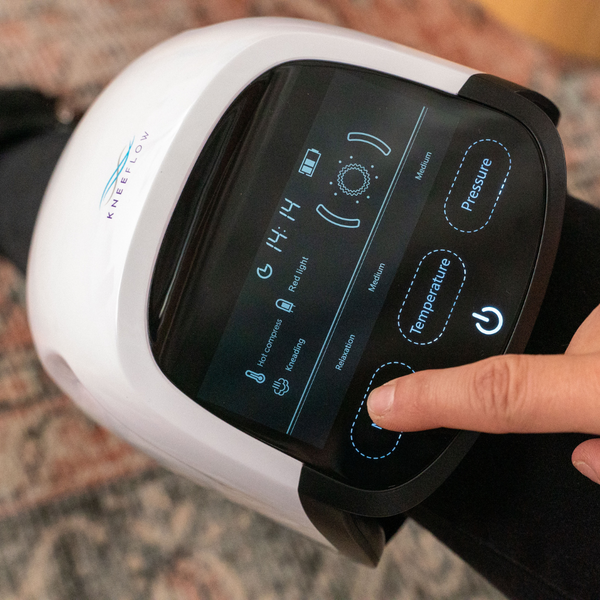
The Kneeflow is a portable device designed to deliver a combination of therapies directly to the knee joint.
Instead of relying on a single method, it combines three:
- Infrared light therapy
- Heat therapy
- Airbag compression massage
Together, these features create a short therapy session that targets inflammation, stiffness, and muscle tightness around the knee.
Many users run the device for around 15 minutes per session, which is surprisingly manageable compared to long therapy routines.
How the Infrared Knee Massager Works
Infrared therapy might sound technical, but the idea is fairly straightforward.
Infrared light penetrates slightly below the skin surface. When it reaches tissues near the joint, it can stimulate cellular activity and circulation.
This helps in several ways:
- Encouraging blood flow
- Supporting tissue recovery
- Reducing localized inflammation
- Relaxing surrounding muscles
When combined with heat and massage pressure, the therapy becomes more effective.
That’s the main reason why infrared knee massagers are becoming popular for joint discomfort.
Real Benefits People Notice with Knee Massagers
While experiences vary, users often report a few common improvements when using a knee massage machine regularly.
1. Reduced Morning Knee Stiffness
Many osteoarthritis sufferers struggle most when they wake up. Heat therapy helps loosen stiff joints before starting the day.
2. Better Mobility
By relaxing muscles and improving circulation, some users find their knees feel less tight and easier to move.
3. Relief After Activity
Walking, workouts, or long days on your feet can trigger pain. Massage sessions afterward may calm irritated tissues.
4. Temporary Pain Reduction
Massage and heat therapy can interrupt pain signals and reduce discomfort for a while.
It’s not magic. But sometimes small improvements are enough to make daily life easier.
Who Might Benefit from Using a Knee Massager?
Devices like the Kneeflow Massager are typically used by people dealing with:
- Knee osteoarthritis symptoms
- Mild to moderate joint inflammation
- Sports-related knee strain
- Post-workout recovery
- Early stages of functional mobility impairment
Athletes use them. Older adults use them. Even desk workers who sit too long sometimes find them helpful.
Why Consistency Matters More Than Intensity
One mistake people make is expecting instant results after a single session.
Joint issues like knee osteoarthritis develop over the years. Relief usually comes gradually.
Short, regular sessions often work better than occasional long ones.
Many users simply run the device once or twice a day for about 15 minutes.
Over time, that consistency may support circulation, flexibility, and comfort.
A Simple Way to Support Knee Health at Home
Living with chronic knee pain can be frustrating.
You adjust how you walk. You think twice before climbing stairs. Some days, even sitting too long feels uncomfortable.
A device like the Kneeflow Massager doesn’t promise miracles. But it does offer a convenient way to support joint care at home.
Heat, massage, and infrared therapy working together can help relieve stiffness, improve circulation, and reduce discomfort for many users.
If you’re curious to try it yourself, you can check it out now.
Sometimes, small tools can make a noticeable difference in how your knees feel day to day.
FAQs
1. Are knee massagers any good for arthritis?
Yes, many people with arthritis find that using a knee massage machine helps relieve stiffness and discomfort. Massage stimulates blood circulation around the joint, while heat therapy relaxes surrounding muscles. These effects may reduce inflammation and temporarily ease pain caused by knee osteoarthritis. While it’s not a cure for osteoarthritis knee conditions, regular sessions can support joint mobility and make everyday movement more comfortable.
2. What are the benefits of a knee massager?
A knee massager offers several benefits, including improved circulation, reduced muscle tension, and relief from chronic knee pain. Many devices also include heat and infrared therapy that help reduce synovial inflammation around the joint. Regular use may improve the reduced range of motion (ROM) and decrease stiffness after long periods of inactivity. For many people, it becomes a convenient at-home therapy for maintaining knee comfort.
3. Is vibration good for knee arthritis?
Yes, gentle vibration therapy can help people experiencing knee osteoarthritis symptoms. Vibration stimulates muscles and soft tissues around the joint, encouraging blood flow and relaxation. This may reduce stiffness and support flexibility, especially for people with morning knee stiffness. However, vibration intensity should be moderate and used according to device guidelines to avoid aggravating sensitive joints.
4. Can infrared therapy help with osteoarthritis knee treatment?
Infrared therapy is widely used in supportive osteoarthritis knee joint treatment because it may promote blood circulation and cellular repair. The light penetrates slightly below the skin and warms the tissues around the joint. This heat can reduce inflammation and relax muscles that contribute to joint discomfort. While it doesn’t reverse cartilage damage, infrared therapy can support pain management.
5. How often should I use a knee massager for osteoarthritis?
Most users benefit from using a knee massage machine once or twice daily for around 10–20 minutes. Short, consistent sessions tend to be more effective than occasional long treatments. Regular use may help maintain circulation and prevent stiffness buildup in the joint. Always follow the manufacturer’s instructions and consult a healthcare provider if symptoms are severe.
6. Can knee massagers improve mobility?
Yes, regular massage therapy may help improve mobility by reducing stiffness and relaxing tight muscles around the knee. When inflammation decreases and circulation improves, movement often becomes easier. This can be especially helpful for people experiencing functional mobility impairment caused by osteoarthritis. Over time, improved flexibility can make daily activities more comfortable.
7. Do knee massagers help with morning knee stiffness?
Morning stiffness is a common issue in people with knee osteoarthritis. Heat therapy from a knee massager can warm the joint tissues and increase blood flow, making it easier to move the knee. Many users run a quick session in the morning to loosen their joints before starting daily activities. This routine can help reduce discomfort and improve flexibility throughout the day.
8. Is there a cure for osteoarthritis knee problems?
Currently, there is no permanent cure for osteoarthritis knee conditions. Treatments focus on managing symptoms, slowing progression, and maintaining joint function. Methods include exercise therapy, medication, lifestyle adjustments, and supportive devices like knee massagers. Early management often helps prevent severe joint damage and improves long-term mobility.
9. Can a knee massager reduce synovial inflammation?
Massage and heat therapy may help calm irritated tissues around the joint, which can reduce synovial inflammation. Increased blood circulation encourages the removal of inflammatory substances while delivering oxygen and nutrients to affected tissues. This process may ease swelling and discomfort over time. However, severe inflammation should always be evaluated by a healthcare professional.
10. Who should consider using an infrared knee massager?
People experiencing mild to moderate knee osteoarthritis symptoms, athletes recovering from strain, and individuals with chronic knee stiffness may benefit from an infrared knee massager. These devices offer targeted therapy that focuses directly on the knee joint. They are especially helpful for people seeking non-invasive pain relief options. Still, individuals with serious joint injuries should consult a doctor first.
11. Can knee massagers replace physiotherapy?
No, knee massagers should not replace physiotherapy or professional medical treatment. Instead, they can complement therapy sessions by helping manage pain and stiffness at home. Many physiotherapists recommend supportive tools to maintain circulation between exercises. Using both methods together may produce better long-term results for knee joint health.
12. Is heat therapy effective for chronic knee pain?
Heat therapy is widely used to manage chronic knee pain because it relaxes muscles and improves circulation. When applied to the knee joint, warmth helps loosen stiff tissues and makes movement easier. Many osteoarthritis sufferers find that heat therapy reduces discomfort after long periods of sitting or inactivity. Combined with massage, it may enhance overall pain relief.
13. What makes the Kneeflow Massager different from regular knee massagers?
The Kneeflow Massager combines three therapies in one device: infrared light, heat therapy, and airbag compression massage. This combination targets circulation, inflammation, and muscle tension at the same time. Its portable design allows users to run quick therapy sessions at home, work, or after workouts. Many users appreciate the customizable settings that allow them to tailor treatments based on their pain level.