How often should you do red light therapy? Frequency is where most red light therapy routines fall apart. The device arrives, the first few sessions happen consistently, and then life intervenes. A missed day becomes two. Two becomes a week. The sessions resume sporadically and the results feel underwhelming, which makes it easier to skip the next one. The cycle is familiar to anyone who has tried to build a new recovery habit.
The frustrating part is that frequency is also where red light therapy delivers or does not. The cellular mechanism that makes it useful, upregulated ATP production, reduced inflammatory signaling, improved local circulation, requires consistent stimulation to produce the tissue-level changes that actually show up as less pain or faster recovery. A single session does something. Sporadic sessions do considerably less than their total hours would suggest. Regular sessions compound.
The honest answer is that it depends on what you are trying to accomplish, and the ranges that clinical protocols use for different goals are meaningfully different from each other. Kneeflow works with people building exactly this kind of structured recovery routine. If you want guidance on how to apply this to your specific situation, talk to the Kneeflow team and someone will get back to you.
Why Frequency Matters More Than Session Length
Most people intuitively think of treatment dose as session duration. Longer means more. That logic applies to some modalities. For red light therapy it is only partially correct, but how often should you do red light therapy?
The cellular effects of a single session, the ATP surge, the nitric oxide release, the downstream signaling changes, peak and then decay. They do not sustain themselves indefinitely between sessions. The tissue returns, gradually, toward its previous state. If the next session arrives before that decay is complete, the cumulative conditions in the tissue build progressively. If sessions are too far apart, each one is essentially starting from scratch.
This is why what dose-response research on photobiomodulation shows is not simply more sessions equal more benefit. There is a therapeutic frequency window for each goal, below which the effects do not accumulate and above which the tissue does not get enough recovery time between stimulation events to respond optimally. Daily sessions sit at or near the upper end of that window for most applications. Several times per week sits in the middle. Once per week produces minimal cumulative effect for most conditions.
Session duration matters within a session. Ten to twenty minutes of appropriate wavelength at adequate power density is what most clinical protocols target per treatment area. But extending a single session to forty minutes twice a week does not produce the same outcome as twenty minutes five days a week. The frequency of the stimulus, not just its total volume, shapes how the tissue responds.
How Often Should You Do Red Light Therapy For Active Injury Recovery
Someone managing an acute knee injury, recovering from surgery, or dealing with a significant tendinopathy flare is in a different situation than someone using red light therapy as part of a maintenance routine.
The tissue in active recovery needs sustained supportive conditions. Inflammation is higher. Collagen disruption is more significant. The circulatory environment the treatment creates needs to be maintained more continuously to support the repair processes running at elevated intensity. This is the context where daily sessions, once per day for ten to fifteen minutes per area, are most clearly justified by the clinical evidence and most likely to produce the timeline acceleration that people in this situation are looking for.
How often should you do red light therapy when you are in this phase? Every day is the clinical answer. Not because more is always better, but because the tissue's repair capacity in acute recovery genuinely benefits from the consistent circulatory and anti-inflammatory support that daily photobiomodulation maintains. Missing a day occasionally does not derail the process. Missing days routinely during the acute phase reduces the cumulative benefit substantially.
The typical duration of this intensive phase is four to eight weeks, depending on the severity of the condition and how the tissue is responding. After that, most people transition to the maintenance frequency described below.
For Chronic Conditions: Three to Five Times Per Week
Knee osteoarthritis. Chronic tendinopathy. Persistent joint inflammation that has been present for months rather than weeks. These conditions are not acute. They are managed rather than resolved, and the role of red light therapy in managing them is different from its role in acute recovery.
The goal here is not accelerating a defined healing process. It is maintaining a biological environment in the joint that keeps inflammatory signaling lower, supports the circulatory conditions that cartilage and tendon depend on, and reduces the day-to-day pain that chronic joint conditions produce. This is a sustained, ongoing role rather than an intensive short-term one.
Three to five sessions per week is the frequency range that produces consistent benefit for most people in this category. Daily sessions are not required because the tissue is not in active repair mode and the maintenance goal does not demand the same stimulus intensity. What it does demand is regularity. Two sessions one week and none the following week does not maintain the conditions the treatment is meant to sustain. The consistency matters more than the absolute frequency within the three-to-five range.
Most people managing chronic joint conditions find that three sessions per week on alternating days is the practical sweet spot. It is sustainable, it keeps the biological conditions from decaying significantly between sessions, and it produces the kind of long-term improvement in baseline joint comfort that occasional use cannot replicate.
How Often Should You Do Red Light Therapy For Athletic Performance and Muscle Recovery
This category is different again.
Athletes using red light therapy to reduce exercise-induced muscle damage and accelerate recovery between training sessions are not treating a pathology. They are trying to compress the recovery timeline so that the next session can begin from a higher baseline. The question of how often should you do red light therapy here is partly determined by how frequently training sessions occur.
Pre-training sessions, five to ten minutes applied to the major muscle groups before loading, prime the mitochondrial machinery for the work ahead. Post-training sessions, applied within an hour of finishing, address the cellular damage and inflammatory response before it peaks. The research comparing pre-application, post-application, and both shows that combining them produces the best outcomes for next-session performance and soreness reduction. For athletes training six days per week, that means up to twelve sessions per week across pre and post applications.
This sounds like a lot. For people who train at high intensity, it is simply a recovery tool applied to the training frequency they already have. For recreational athletes training three or four days per week, the pre and post combination on training days plus one or two additional sessions targeting any joint or tissue that needs extra support is a practical and evidence-consistent protocol.
How Often Should You Do Red Light Therapy If You Want To Do It Everyday?
Sometimes people ask how often should you do red light therapy to get better. And, is it possible to use it more than twice a week? The answer is yes, though reaching that threshold requires more than most people would naturally do.
Photobiomodulation follows a biphasic dose-response curve. Sufficient stimulus produces beneficial cellular responses. Excessive stimulus can actually reduce those responses or produce the opposite effect, a phenomenon well-documented in the research literature and one of the reasons that more is not always better. The practical concern for most people using consumer devices at home is under-dosing rather than over-dosing, but the ceiling is real.
For most devices and most applications, daily sessions of ten to twenty minutes are within the safe and effective range. Two sessions per day on the same area for consecutive weeks without breaks is where some protocols begin showing diminishing returns. The tissue needs recovery time between stimulation events just as muscle needs recovery time between training sessions.
Practical guidance: if daily sessions are being used during an acute recovery phase, one session per day is sufficient. If the temptation is to extend sessions significantly beyond twenty minutes because more feels productive, the evidence does not support that instinct for most applications.
How Often Should You Do Red Light Therapy? Building a Schedule That Actually Gets Used
The best frequency for red light therapy is the one that gets maintained. A theoretically optimal protocol that gets skipped half the time produces worse outcomes than a slightly less aggressive protocol that becomes a genuine daily habit.
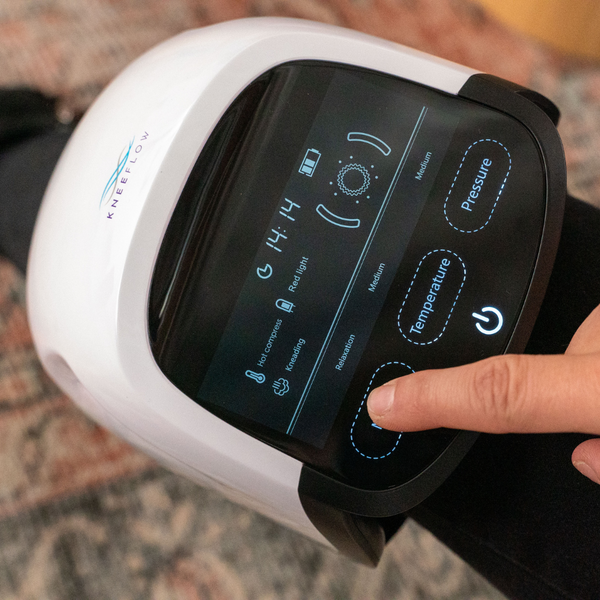
The most consistent users tend to attach the sessions to something that already happens. Morning coffee. Evening wind-down. Post-workout cool-down. The ten to twenty minutes required per session fits naturally into any of these windows without requiring a significant reorganization of the day. Red light therapy devices designed for specific body areas, including joint-targeted wearable devices, reduce the friction of each session because the user does not need to hold anything in place or actively monitor the treatment while it runs.
How often should you do red light therapy in practical terms? Start with three sessions per week if you are managing a chronic condition and see how the routine holds. Move to daily if you are in an acute recovery phase and can sustain it. Adjust based on how the tissue is responding and how well the frequency is actually being maintained. The protocol that produces results is the one that happens consistently. Kneeflow can help your process from the commodity of home, with its red light system it can be easier for any patient to make therapy whenever they want.
Closing Thoughts on Red Light Therapy Frequency
Getting the frequency right is not complicated once the goal is clear. Acute recovery needs daily sessions for a defined period. Chronic condition management needs regular but sustainable frequency, three to five times per week over the long term. Athletic performance optimization maps sessions to training frequency. None of these require precision timing down to the minute. They require enough consistency that the cellular effects accumulate rather than reset.
Kneeflow is one of the best options in knee massagers at the moment, with its famous red light system, easy mode of use and low cost, your recovery process turns into a faster dynamic. Contact our team now and learn about our benefits.