Knee pain has a way of making normal things feel like work. Walking up stairs, getting out of a chair, going for a run, or even standing around the kitchen can become uncomfortable when your knees are stiff or sore. That is why more people are looking at knee massagers as a simple way to add some relief to their daily routine.
But do knee massagers really work, or are they just another wellness gadget that sounds better than it performs?
The honest answer is that they can help, especially when discomfort is linked to muscle tightness, stiffness, poor circulation, or recovery after physical activity. They are not a magic fix for every knee condition, and they should not replace medical treatment when you actually need it. Still, the right device can be useful knee pain relief equipment for regular at-home care.
What Does a Knee Massager Actually Do?
Modern knee massagers use a combination of techniques rather than simply vibrating against the knee. Depending on the device, you may get heat, compression, kneading, infrared light, or a combination of these.
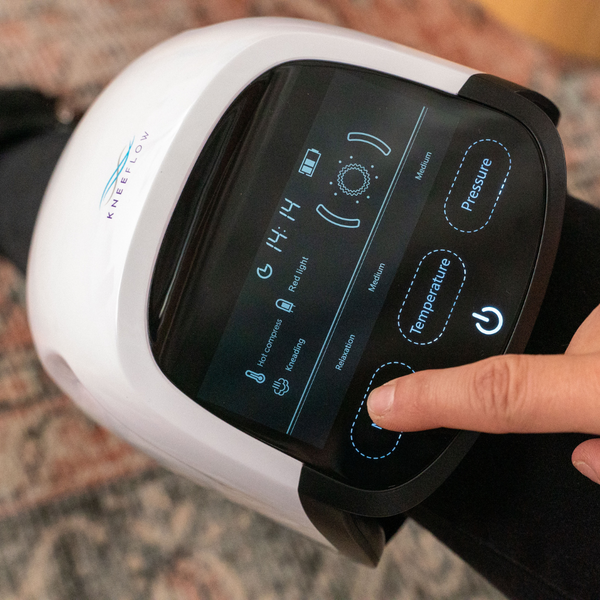
Kneeflow takes this approach with its 3-in-1 therapy system. It combines infrared light, heat therapy, and soft airbag massage in one portable device.
The idea is pretty straightforward. Heat can help relax tight muscles and make the area feel more comfortable. Gentle compression and massage can provide a soothing sensation around the knee, while infrared light technology is designed to support circulation and targeted therapy.
Kneeflow also lets you customize the therapy, so you are not stuck with one intensity for every session.
The Real Knee Massager Benefits You May Notice
One of the biggest knee massager benefits is simple: your knee may feel less stiff and more comfortable after a session.
Massage and warmth can help relax the muscles around the joint. That matters because tight muscles can make movement feel restricted, particularly after sitting for a long time or finishing a workout.
Regular massage may also support:
- Temporary relief from everyday knee discomfort
- Relaxation of tight muscles around the knee
- Improved circulation in the treated area
- Reduced feelings of stiffness
- Better comfort after exercise
- Easier movement before physical activity
- A relaxing recovery routine before bed
Results will vary, of course. One person may notice a difference quickly, while someone with a long-standing condition may need a broader treatment plan.
How Heat and Infrared Light Can Help
Heat has been used in physical therapy and home care for a long time because warmth can feel particularly good on stiff muscles and joints. It helps the surrounding muscles relax and can make movement feel less restricted.
Kneeflow adds infrared heat technology and red light therapy to the mix. The device contains 19 infrared lights and offers three heat settings: 45°C, 50°C, and 55°C.
That does not mean hotter is always better. It isn't. The right setting is the one that feels comfortable for you.
The combination of warmth, light therapy, and gentle massage is what makes a multi-function knee pain relief device different from a basic vibrating massager.

Can Knee Massagers Help With Knee Pain?
They may help manage discomfort, but it is important to keep expectations realistic.
A knee massager can be useful when your main issue is stiffness, muscle tension, post-workout soreness, or general discomfort. It can also become part of a broader routine for people managing ongoing joint problems.
For example, an athlete might use a knee massager after running or cycling. Someone dealing with everyday stiffness may prefer a short session in the evening. Others may use it before activity to warm up the area.
However, severe pain, major swelling, instability, or pain following a significant injury needs more than a gadget. Get the underlying problem assessed rather than trying to massage your way through it.
Why Airbag Massage Matters
Not every massage needs to be aggressive. In fact, with a sore knee, going too hard can be a bad idea.
Kneeflow uses soft airbags that wrap around the knee and provide gentle compression. The whole-knee design helps cover more of the area instead of concentrating pressure on one small spot.
This can make the experience more comfortable for people who do not enjoy deep or forceful massage.
The pressure can also feel useful after exercise when the muscles around your knee are tired and tight. Again, comfort is the goal. If a massage causes pain, reduce the intensity or stop.
When Is the Best Time to Use a Knee Massager?
There is no single perfect time. It depends on why you are using it.
After exercise is an obvious option. A short session can become part of your recovery routine after running, hiking, cycling, gym training, or sports.
Some people may prefer using their knee massager in the evening when the day's stiffness starts showing up. Others may use it before activity when their knees feel tight.
Kneeflow is designed around a 15-minute therapy cycle, with customizable heat, kneading, and infrared settings. That makes it fairly easy to fit into a normal day without turning recovery into a whole project.
Want to understand more about what regular knee massage may offer? Read our guide on 10 Surprising Benefits of Using a Knee Massager for Joint Health and Mobility.
What Makes Kneeflow Different?
If you are comparing knee massagers, look beyond the word "massage." The actual features matter.
Kneeflow combines three therapies in one device:
Infrared light: 19 infrared lights provide targeted light therapy around the knee.
Heat therapy: Three heat levels allow you to choose the warmth that feels right.
Soft airbag massage: Gentle compression provides coverage around the knee rather than relying on one vibrating point.
It is also cordless and weighs around 790g, with a 2200mAh rechargeable battery. The LCD touchscreen keeps the controls simple, and the device automatically shuts off after its 15-minute cycle.
There is also an adjustable strap that can be used around other areas such as the elbow or shoulder.
Is a Knee Massager the Best Knee Massager for Pain Relief?
That depends on what you need.
The best knee massager for pain relief is not necessarily the one with the most aggressive massage. Look at the therapy options, adjustability, coverage, portability, heat settings, battery life, and how comfortable the device is to use.
If you want heat alone, a basic heating pad may be enough. If you want massage alone, another device might suit you better.
But if you want several approaches in one portable device, a 3-in-1 option such as Kneeflow makes more sense.
Are Knee Massagers Safe?
For many people, gentle massage and heat can be a reasonable part of a home wellness routine. Still, "generally safe" does not mean suitable for absolutely everyone.
If you recently had knee surgery, suffered a serious injury, have significant swelling, circulation problems, or another medical condition affecting your knee, speak with a healthcare professional before using one.
Also, don't use a massager over broken or irritated skin, and stop if the device causes unusual or worsening pain.
Start gently. You can always increase the intensity later.
The Bottom Line: Do Knee Massagers Really Work?
So, do knee massagers really work?
They can. But think of them as a tool for comfort, relaxation, mobility support, and recovery rather than a cure-all for knee problems.
The biggest knee massager benefits come from combining massage with other useful features such as heat and infrared light. A device like Kneeflow gives you all three in a portable format, with settings you can adjust to your preference.
If your knees regularly feel stiff after workouts, long days, or periods of inactivity, a short home therapy session may be worth trying. And if your pain is persistent or getting worse, don't ignore it just because the massager feels good. Find out what is actually causing the problem.
If you want a convenient way to add knee massage therapy to your routine, take a look at Kneeflow. It combines heat, infrared light, and soft airbag massage into a 15-minute, customizable session designed for everyday knee comfort and recovery.
Try Kneeflow for At-Home Knee Therapy
If your knees could use a little more attention after workouts, long days, or regular stiffness, you don't necessarily need a complicated setup. Kneeflow brings infrared light, heat, and soft airbag massage together in one portable knee pain relief device.
Explore Kneeflow's 3-in-1 knee therapy system and see whether it fits into your daily recovery routine.
FAQs About Knee Massagers
1. Do knee massagers really work for knee pain?
Knee massagers can provide temporary relief from stiffness, muscle tension, and everyday knee discomfort for some people. Heat and gentle massage may help the area feel more relaxed and comfortable, particularly after exercise or long periods of sitting. They are not designed to cure every cause of knee pain. If pain is severe, persistent, or caused by an injury, professional medical advice is still important.
2. What are the main knee massager benefits?
Common knee massager benefits include relaxation of tight muscles, a soothing massage sensation, improved comfort, and support for recovery after physical activity. Heat may also help reduce the feeling of stiffness and make movement feel easier. Results vary depending on the individual and the reason behind their knee discomfort. A knee massager works best as part of a broader approach to looking after your joints.
3. What is the best knee massager for pain relief?
The best knee massager for pain relief depends on what you actually want from the device. A good option should provide comfortable massage, adjustable settings, useful heat therapy, and enough coverage around the knee. Kneeflow combines infrared light, three heat levels, and soft airbag massage in one portable device. That makes it a practical choice for people who want several types of therapy instead of massage alone.
4. Can a knee massager help with arthritis?
A knee massager may help people with arthritis manage feelings of stiffness and discomfort, particularly when used as a complementary home-care tool. Gentle warmth and massage can feel soothing around stiff joints and the surrounding muscles. However, a massager does not treat the underlying arthritis itself. Anyone with significant arthritis symptoms should discuss home therapies with their healthcare provider.
5. How does infrared heat technology work in a knee massager?
Infrared heat technology combines warmth with infrared light therapy to target the knee area. Heat can relax muscles and make stiff areas feel more comfortable, while infrared light is intended to support circulation and targeted tissue therapy. Kneeflow uses 19 infrared lights as part of its 3-in-1 system. The device also lets you switch the infrared and kneading functions according to your preferred session.
6. How long should you use a knee massager?
The appropriate session length depends on the device and its instructions. Kneeflow is designed around a 15-minute therapy cycle and automatically shuts off at the end of the session. This makes it easier to use without accidentally leaving the device running for too long. Start with a comfortable setting and follow the manufacturer's instructions rather than assuming longer sessions will produce better results.
7. Can knee massagers help after workouts?
Yes, knee massagers can be useful as part of a post-workout recovery routine. Massage and heat may help relax muscles that feel tight or tired after running, cycling, hiking, lifting, or sports. A short session can also be a convenient way to give your knees some attention after demanding activity. Kneeflow is portable and cordless, so it can be used at home or after activity without much setup.
8. Are knee massagers good for stiff knees?
They can be helpful for temporary stiffness, especially when the stiffness is associated with muscle tension or inactivity. Heat can make the area feel warmer and more relaxed, while gentle compression provides a soothing massage sensation. This may make normal movement feel more comfortable afterward. If your stiffness is sudden, severe, or accompanied by swelling or injury, it is better to have the cause checked.
9. Can knee massage therapy improve circulation?
Massage and compression can temporarily increase local blood flow and create a warming, soothing sensation around the treated area. Heat can also encourage blood vessels in the area to dilate, which is one reason warmth is commonly used for stiff muscles. Kneeflow combines these features with infrared light technology. Still, it should not be considered a treatment for serious circulation disorders.
10. Can I use a knee pain relief device every day?
Some people may use a knee pain relief device as part of a regular daily routine, provided they follow the manufacturer's instructions and tolerate the therapy well. Kneeflow uses a 15-minute automatic therapy cycle, which keeps individual sessions limited. You should not keep increasing the frequency or intensity simply because you want faster results. If daily use causes irritation, increased pain, or unusual symptoms, stop and speak with a professional.
11. Can knee massagers replace physical therapy?
No, a knee massager should not automatically be considered a replacement for physical therapy. Physical therapy can address strength, movement patterns, balance, flexibility, and the underlying factors contributing to certain knee problems. A massager can be used between sessions as a comfort or recovery tool when appropriate. Think of it as supporting your routine, not replacing professional rehabilitation.
12. What should I look for in knee pain relief equipment?
Look for equipment that is comfortable, adjustable, easy to operate, and designed for the type of discomfort you experience. Heat settings, massage intensity, knee coverage, portability, battery life, and automatic shut-off are all worth checking. Kneeflow offers three heat settings, soft airbag massage, infrared light, an LCD touchscreen, and a rechargeable battery. Those features make it easier to personalize the therapy instead of using the same setting every time.
13. Is Kneeflow a good option for people with an active lifestyle?
Kneeflow can be a convenient option for people who want to include knee care in an active lifestyle. It is designed for use after activities such as running, hiking, cycling, workouts, and sports, and its cordless design makes it easy to move around with. The 3-in-1 system combines heat, infrared light, and airbag massage in a short session. However, anyone recovering from a serious knee injury or surgery should get professional guidance before using a new therapy device.