Some knee injuries creep in slowly. This one usually does not. A knee buckles mid-stride on a hiking trail, a landing from a jump goes slightly wrong, a deep lunge sends a sharp signal through the joint, and within minutes the knee feels thicker, tighter, less trustworthy than it did an hour earlier. That sudden shift is often the moment people start typing red light therapy for meniscus tear into a search bar at midnight, hoping for an answer that does not involve a surgeon's waiting room.
Part of the frustration comes from how scattered the answers are. One website treats a small red device like a miracle, claiming it can knit torn cartilage back together in a matter of days. Another swears the whole category is nonsense dressed up as science. The truth sits closer to the middle, shaped less by marketing copy and more by how the knee itself is built.
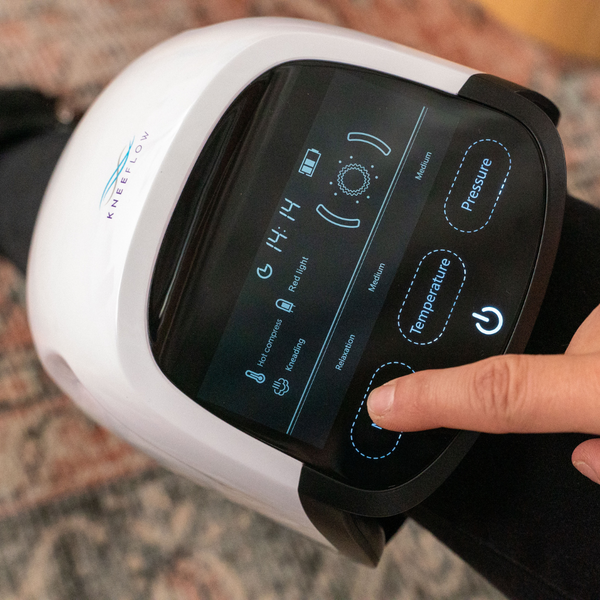
Kneeflow grew out of that middle ground. Our knee wrap pairs red light with warmth and a soft pulse of air compression, built for the discomfort that lingers around an already diagnosed knee rather than for fixing the tear underneath it. We would rather be upfront about that limit now than let anyone discover it the hard way later.
What a Meniscus Tear Actually Is
Before red light therapy for meniscus tear routines make any sense, it helps to know what is actually torn. The meniscus is a wedge of tough, rubbery cartilage tucked between the thigh bone and shin bone, one on the inner side of the knee and one on the outer side, working together like a pair of shock absorbers every time you walk, jog, or plant a foot to change direction.
Damage arrives in one of two very different ways. A forceful twist while the foot stays planted, the kind that happens on a soccer pivot or an awkward ski turn, can shear through healthy tissue in an instant. Slower wear tells a quieter story, where cartilage thins and frays with age until an ordinary squat or a rise from a low chair is enough to tear it.
Whichever path leads there, the symptoms rhyme. A pop at the exact second of injury, swelling that swells further overnight, a sensation of catching or jamming partway through a bend, and pain that traces the joint line rather than sitting in one spot. Many meniscus injuries stay manageable without an operating room, though a share of them threaten enough stability that surgery becomes the sensible path.
Where inside the tissue a tear actually sits changes everything about how it heals, a detail worth holding onto before diving into red light therapy for meniscus tear claims.
How Red Light Therapy Works Inside the Body
Curiosity about red light therapy for meniscus tear support usually leads to one simple question: what is the light supposed to be doing under the skin? Photobiomodulation, the clinical name for red light therapy, sends narrow bands of red and near infrared light into tissue, where mitochondria, the energy factories inside every cell, absorb it and appear to ramp up how efficiently they generate fuel for repair processes.
That shift in cellular energy is thought to ripple outward into circulation and the chemical signals tied to inflammation, which is why red light shows up everywhere from sports recovery clinics to skin care studios. The mechanism is not knee specific. It is studied across muscle, skin, tendon, and joint tissue alike.
Around the knee, red light therapy for knee meniscus use generally means strapping a wrap over the joint for a timed session so the light can reach the soft tissue framing the kneecap and joint line. The cellular activity is genuine, yet it plays out through inflammation and blood flow, not through stitching torn fibers back together, and that gap is the one detail worth remembering through the rest of this guide.
Does Red Light Therapy Repair a Torn Meniscus?
Straight answer: no. Red light therapy for meniscus tear support cannot reconnect torn cartilage, cannot undo a structural rupture, and cannot grow new meniscus tissue by itself. Marketing copy blurs this line constantly, and the blur matters because someone expecting repaired tissue from a nightly light session may put off the evaluation that tear actually needs.
Blood supply explains a large part of why. The outer rim of the meniscus, often nicknamed the red zone, carries enough circulation to give conservative treatment a real shot at healing. The inner two thirds, the white zone, barely receives blood at all, so tears sitting there rarely close on their own no matter what therapy surrounds them.
None of this argues against using red light therapy. It argues for describing it accurately. Feeling more comfortable and less inflamed is a real outcome, but it is a different outcome than a rebuilt meniscus, and mixing the two up sets a recovery timeline nobody can actually meet.
What Current Research Says About Red Light Therapy and Meniscus Injuries
Studies aimed squarely at red light therapy for meniscus tear cases remain scarce. Most of the available research instead targets knee osteoarthritis or general joint discomfort, and even within that narrower field the trials tend to be small, with reviewers frequently rating the overall evidence as weak to moderate at best.
What that body of research does support fairly consistently is a mild drop in pain and stiffness after weeks of steady use, along with smoother movement day to day. Red light therapy for torn meniscus discomfort tracks the same pattern, easing how the knee feels without altering the injury sitting inside it.
No published review frames red light therapy for meniscus tear cases as a treatment that stands on its own. The consistent message is that it works best bolted onto a larger recovery plan, useful mainly for making rehab exercises feel less punishing rather than replacing them outright.
Where Red Light Therapy May Help During Recovery
The place red light therapy for meniscus tear support earns its keep is the everyday grind of living with a healing knee, not the tear itself. Stiffness after a long car ride, a knee that finally cooperates before physical therapy instead of fighting the whole session, general achiness that lingers through the evening, these are the areas where gentle warmth and light tend to make a visible dent.
Better circulation may also help flush the swelling that pools after an injury, loosening a joint that otherwise feels tight and reluctant to move through its full range. That extra bit of ease often translates into sticking with the exercises a physical therapist actually assigns instead of skipping them.
None of it substitutes for rest, elevation, or a properly guided rehab program. It rides alongside those pieces, one supporting tool among several, never the main event of a red light therapy for meniscus tear recovery plan.
When a Meniscus Tear Needs Medical Attention First
Certain warning signs deserve a clinic visit before any comfort routine starts at home. A knee that locks solid, gives way without warning, or refuses to fully straighten or bend is pointing to a mechanical issue that warmth and light cannot untangle. Heavy swelling within the first day, stabbing pain along the joint line, and real trouble putting weight on the leg all fall into that same urgent bucket.
Age and activity level color the picture too. A gradual, wear related tear in an older adult often calms down with conservative care and physical therapy alone, while a sudden tear in a younger athlete more often travels with ligament damage and a higher chance of needing surgical repair.
Imaging and a hands on orthopedic exam remain the only dependable way to see what is actually torn and how stable the joint is. Assuming a red light therapy for meniscus tear session will somehow reveal that answer only stretches out the time before real damage gets addressed.
How Red Light Therapy Compares to Other Meniscus Recovery Approaches
Set red light therapy for meniscus tear support next to the rest of the recovery toolbox and the differences become obvious. Rest and scaling back activity are usually step one after a suspected tear, giving the swelling room to settle before anyone decides what comes next. Physical therapy typically takes over once the knee can bear movement again, rebuilding strength through the quadriceps and hamstrings that brace the joint from outside.
When a tear stays painful or mechanically unstable, injections or arthroscopic surgery become the more direct routes toward fixing the damage itself, something no wrap or panel worn at home can replicate.
Red light therapy occupies a different lane entirely, closer to comfort than correction. Our Kneeflow wrap was built specifically for that lane, blending red light with gentle heat and compression so the joint feels calmer in between the sessions doing the actual structural work.
Building a Safe At Home Routine Around a Healing Knee
Once a physician has signed off on how the tear is being managed, folding a red light therapy for meniscus tear habit into daily life is fairly straightforward. Ten to twenty minutes once or twice a day tends to be the sweet spot, timed around physical therapy sessions or slotted in after a day spent on your feet more than usual.
Some moments call for skipping a session entirely. Open cuts, a surgical incision still healing shut, numbness anywhere near the knee, or a fresh injury nobody has examined yet all mean waiting rather than reaching for the warmth. Comfort tools exist to support a recovery already underway, not to paper over something that still needs a professional look.
Sticking with it matters more than cranking up the intensity. A brief daily habit layered on top of the stretching and strengthening a physical therapist prescribes will typically outperform one long, sporadic session used on its own.
A Realistic Way to Approach Meniscus Recovery
Red light therapy for meniscus tear support earns its place as one piece of a much bigger puzzle, never the entire plan. It cannot stitch torn cartilage back together, and it cannot stand in for a clinician who has actually examined the knee. What it genuinely offers is a steadier, more livable stretch of recovery once the harder questions about the tear have already been settled.
We would rather have someone use Kneeflow with expectations grounded in reality than buy it hoping for a repair the device was never designed to perform. A meniscus deserves an honest diagnosis before anything else, and comfort support only earns its place once that step is behind you.
If you are still weighing whether a red light and heat routine belongs in your recovery, our team is glad to talk it through with you. Reach us through our contact page and we can figure out what actually fits where you are right now.
FAQ
Can red light therapy heal a torn meniscus?
Red light therapy for meniscus tear relief does not knit torn cartilage back together or rebuild meniscus tissue. It can ease pain and stiffness around the joint, but the tear itself still calls for a proper medical evaluation and, often, physical therapy or surgery.
How long does it take to notice results from red light therapy on a meniscus injury?
People sticking with a red light therapy for meniscus tear routine typically notice a shift after two to four weeks of daily use. What changes first is usually stiffness and ease of movement rather than the tear itself.
Is red light therapy safe right after a meniscus injury?
Jumping into a red light therapy for meniscus tear routine right away is not the safer move. Swelling, numbness, or a knee nobody has examined yet all mean waiting. Once a clinician confirms the injury is stable, gentle heat and light are generally viewed as low risk.
What is the difference between red light therapy and heat therapy for meniscus pain?
Heat mostly loosens muscle and pulls blood flow to the surface, while red light therapy operates deeper, nudging cellular energy production and inflammation. Plenty of devices, ours included, combine both since they support recovery through slightly different channels.
Can red light therapy replace physical therapy for a meniscus tear?
No. A red light therapy for meniscus tear routine cannot stand in for physical therapy, which rebuilds the strength and stability the knee actually needs. Paired together, red light sessions can simply make those physical therapy workouts easier to push through.
Does red light therapy help meniscus tears heal faster or just reduce pain?
Research around red light therapy for meniscus tear cases leans more toward easing pain and stiffness than speeding up structural healing. A torn meniscus mends, when it mends at all, through the body's own tissue and blood supply, not through exposure to light.
When should I see a doctor instead of trying red light therapy first?
Locking, buckling, serious swelling, or trouble bearing weight all call for a medical evaluation before anything else enters the picture. Red light therapy is meant to support a knee already under proper care, not to substitute for that first diagnosis.