Knee inflammation rarely feels like a single, clear problem. It tends to show up as a combination of stiffness, warmth, swelling, and discomfort that changes throughout the day. Some moments feel manageable, while others make simple movements feel heavier than they should. That inconsistency is often what makes inflammation feel difficult to deal with, even before it becomes severe.
That is why people start looking into heat therapy for knee inflammation. Not because it sounds new or complex, but because it feels familiar and accessible. Still, familiarity does not always mean clarity. Many people use heat instinctively without fully understanding what it actually does, when it helps, and how it fits into a broader approach to managing knee discomfort.
At Flow Knee, we believe even simple therapies deserve better explanation. Heat is not just about comfort. When understood properly, it becomes part of a more intentional way to support the knee, especially when inflammation begins affecting daily movement and overall ease.
Why Knee Inflammation Feels So Disruptive
Inflammation in the knee often creates a layered experience rather than a single sensation. It can feel tight, sensitive, heavy, or resistant to movement, depending on the time of day or level of activity. What makes it particularly frustrating is how it interferes with routine in subtle ways, making everyday actions feel less natural.
For many people, inflammation is not only about pain. It is about the hesitation that comes with movement. Walking, bending, or even standing for longer periods starts to feel uncertain, which changes how the body is used throughout the day. Over time, that uncertainty can feel just as limiting as the discomfort itself.
Understanding inflammation as a response rather than a failure helps reframe the experience. The body is reacting to stress, strain, or irritation, and that response can be supported in ways that reduce its intensity and make movement feel more manageable again.
What Heat Therapy Is Actually Doing to the Knee
Heat therapy is often seen as a simple comfort method, something people turn to when they want temporary relief. While it does create a soothing sensation, its role goes beyond surface-level comfort. Heat works by encouraging blood flow and helping the surrounding muscles relax, which can make the knee feel less stiff and easier to move. The Arthritis Foundation’s guidance on heat therapy helps relax stiff joints reflects why warmth remains such a trusted part of joint comfort support.
That change in circulation matters because inflamed areas often feel restricted. When the tissues around the knee begin to relax, the joint can feel less guarded and more responsive. This does not mean heat removes inflammation entirely, but it can help reduce the discomfort associated with it.
The key shift is understanding that heat supports the body rather than overrides it. It creates conditions where the knee can move more freely, which is often what people are really looking for when inflammation starts interfering with daily life.
Why Heat Can Feel More Effective Over Time
Many people expect immediate results from any form of relief. When it comes to inflammation, though, the experience is often more gradual. Heat therapy tends to feel more effective when it is used consistently rather than occasionally, because the body responds better to repeated signals than to isolated moments of support.
This is especially true for people dealing with recurring inflammation. The knee may feel stiff in the morning, more sensitive after activity, or tight after long periods of sitting. Heat can become part of how those moments are managed, helping reduce the intensity of discomfort without requiring a complete change in routine.
Over time, this consistency can create a different relationship with pain. Instead of reacting only when discomfort peaks, people begin supporting their knee in a way that feels more stable and predictable.
When Heat Therapy Is Most Helpful
Not all knee discomfort responds to heat in the same way, which is why context matters. Heat tends to feel most helpful when stiffness and tension are the dominant sensations. In those cases, warmth can make movement feel smoother and less restricted.
There are also moments when the body feels tight rather than actively swollen or irritated. During those times, heat can help ease the surrounding muscles and reduce the sense of resistance that often comes with inflammation-related discomfort.
Understanding these patterns allows people to use heat more intentionally. Instead of applying it randomly, it becomes part of how they respond to specific sensations in the knee, which makes the experience feel more controlled and less uncertain.
How Heat Fits Into a Broader Recovery Approach
Knee inflammation is rarely solved by a single method. It is usually managed through a combination of support strategies that work together over time. Heat plays a role in that process, not as a standalone solution, but as part of a larger environment that encourages comfort and mobility.
Other forms of support, such as gentle movement, rest, and massage-based relief, often complement heat in a natural way. Together, they create a more complete approach that reflects how the body actually experiences discomfort. This layered understanding helps people avoid relying too heavily on one method while still recognizing the value each one provides. Orthopedic guidance on arthritis of the knee also helps explain why pain, stiffness, and swelling can become such an important part of ongoing knee support conversations.
At Flow Knee, this is how we approach recovery. The goal is not to isolate one feature, but to support the knee through multiple forms of relief that feel cohesive and usable in daily life.
Where Heat Therapy Becomes Part of Daily Life
One of the biggest advantages of heat therapy is how easily it fits into everyday routines. It does not require a dramatic change in behavior or a complex setup. It can be used while resting, sitting, or winding down, which makes it easier to return to consistently.
That accessibility matters because inflammation often requires ongoing attention rather than one-time intervention. A method that feels easy to use is more likely to become part of a routine, and routine is what often makes the biggest difference over time.
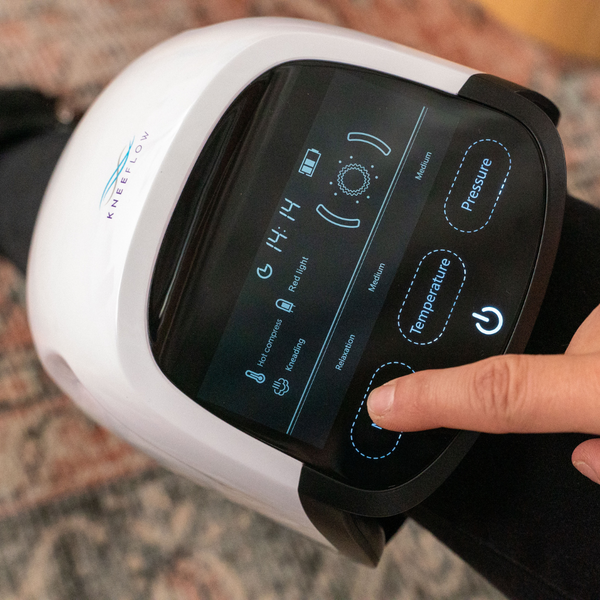
For those exploring more integrated options, the Kneeflow heated knee massager shows how heat can be combined with massage-based support in a way that feels natural and repeatable at home.
When Relief Starts Feeling More Manageable
Knee inflammation can feel overwhelming when it interrupts normal movement without clear warning. What changes that experience is not always eliminating discomfort entirely, but making it easier to respond to it in a consistent and supportive way.
Heat therapy helps shift that experience by reducing stiffness, easing tension, and making movement feel more accessible. When used regularly, it can help the knee feel less reactive and more supported, which changes how people approach daily activity.
That shift is often what makes relief feel more manageable. It is not about dramatic transformation, but about reducing the friction between discomfort and everyday life.
When Comfort Becomes Something You Can Return To
Knee inflammation often creates a sense that relief is temporary or unpredictable. What makes heat therapy valuable is that it offers something people can return to without overthinking the process. It becomes part of how they support their body rather than something they rely on only when things feel worse.
At Flow Knee, we see this as the difference between occasional relief and consistent support. When heat, massage, and daily usability come together, the experience of managing inflammation starts to feel more stable and less reactive.
If your knee discomfort has reached a point where you are looking for something that feels easier to rely on, this is where a better solution can start to make sense. Flow Knee was built to support real routines, not ideal scenarios. If you want to understand how that kind of support fits your situation, you can contact our team and explore what relief could look like in a more practical way.
FAQ
Does heat therapy help knee inflammation?
Heat therapy can help reduce stiffness and improve comfort, especially when inflammation is associated with tension and restricted movement.
When should you use heat for knee pain?
Heat is often most helpful when the knee feels stiff or tight rather than acutely swollen or irritated.
Is heat better than ice for knee inflammation?
Heat and ice serve different purposes. Heat supports relaxation and movement, while ice is often used for more immediate swelling or acute irritation.
How long should you use heat therapy on your knee?
Many people use heat therapy in short sessions, especially as part of a consistent routine rather than a one-time approach.
Can heat therapy be used every day?
Heat therapy can often be used regularly, especially when it fits comfortably into a daily recovery routine.