Spring is finally here — and for runners, that means lacing up and hitting the pavement again after months of winter inactivity. But jumping back into your running routine too quickly is one of the most common causes of knee pain. Whether you're training for a 5K or simply enjoying the warmer weather, protecting your knees this season should be a top priority.
Why Spring Running Increases Knee Injury Risk
After a winter of reduced activity, your muscles, tendons, and ligaments lose some of their conditioning. When you suddenly increase your mileage or intensity in spring, your knees absorb the impact before your supporting muscles are ready. Common spring running injuries include:
- Runner's knee (patellofemoral pain syndrome) — aching pain around or behind the kneecap
- IT band syndrome — sharp pain on the outer knee, especially on downhill runs
- Patellar tendinitis — pain just below the kneecap, often called "jumper's knee"
5 Tips to Prevent Knee Pain While Running This Spring
1. Ease Back In Gradually
Follow the 10% rule: never increase your weekly mileage by more than 10% from the previous week. If you ran 10 miles last week, cap this week at 11. This gives your joints and connective tissue time to adapt.
2. Strengthen Your Hips and Quads
Weak hips and quadriceps force your knees to compensate, leading to misalignment and pain. Add exercises like squats, lunges, clamshells, and glute bridges to your routine 2–3 times per week.
3. Warm Up and Cool Down Properly
Never skip your warm-up. Spend 5–10 minutes doing dynamic stretches — leg swings, high knees, and hip circles — before each run. After your run, cool down with static stretches targeting your quads, hamstrings, and calves.
4. Choose the Right Running Surface
Hard surfaces like concrete put more stress on your knees than grass, dirt trails, or rubberized tracks. When possible, opt for softer terrain, especially as you rebuild your spring mileage.
5. Use Recovery Tools After Every Run
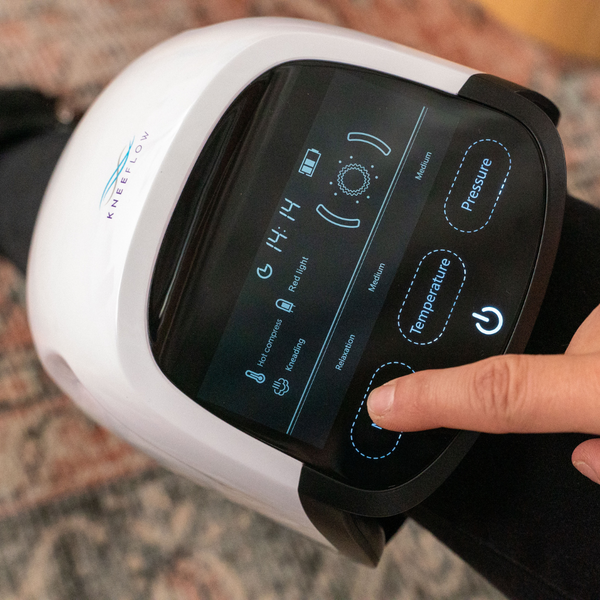
Post-run recovery is just as important as the run itself. Heat therapy and vibration massage can significantly reduce knee soreness and stiffness after a hard workout. The Kneeflow Knee Massager combines infrared heat, vibration, and compression to target deep knee tissue — helping you recover faster and get back on the road sooner. Many runners use it for 15–20 minutes after long runs to reduce inflammation and improve circulation.
When to Rest vs. When to Push Through
Not all knee discomfort is the same. Mild muscle soreness after a run is normal. However, sharp pain, swelling, or pain that worsens during a run are warning signs to stop and rest. If pain persists for more than a few days, consult a healthcare professional.
Build a Spring Running Routine That Protects Your Knees
A smart spring running plan balances training load with recovery. Here's a simple weekly structure:
- Monday: Easy run (30 min) + strength training
- Tuesday: Rest or cross-training (cycling, swimming)
- Wednesday: Moderate run (45 min)
- Thursday: Strength training + knee recovery session with the Kneeflow massager
- Friday: Rest
- Saturday: Long run
- Sunday: Active recovery — light walk, stretching, and 20 min with the Kneeflow massager
Final Thoughts
Spring running is one of life's great pleasures — don't let knee pain sideline you. By easing back gradually, strengthening supporting muscles, and prioritizing recovery, you can enjoy the season pain-free. And when your knees need extra care after a tough run, the Kneeflow Knee Massager is your best recovery partner.
Ready to run pain-free this spring? Explore the Kneeflow Massager →