Knee injuries tend to become confusing the moment people realize not every ligament problem means the same thing. Some injuries feel dramatic right away, with swelling, instability, and a sharp sense that something serious has changed. Others feel quieter at first, but still leave the knee feeling unreliable, tense, or harder to trust during normal movement.
That is why the topic of MCL ACL recovery matters so much. People are not just trying to learn anatomy. They are trying to understand what recovery actually looks like, how one injury differs from another, and what kind of support makes sense when the knee no longer feels stable or comfortable. Behind the comparison is usually a very practical concern about healing well, moving safely, and not making the situation worse.
At Flow Knee, we believe recovery content should lower confusion, not add to it. A good guide should make the distinction between MCL and ACL injuries clearer, explain why recovery timelines and therapy options can differ, and help people see where daily support fits into the bigger picture.
Why MCL and ACL Injuries Get Mixed Up So Easily
Most people do not begin with a clear understanding of knee ligaments. They begin with pain, swelling, and a feeling that the knee is no longer working the way it should. When those symptoms show up after a twist, landing, or sudden change in direction, the immediate concern is rarely whether the medial collateral ligament or anterior cruciate ligament is involved. It is whether the knee will feel normal again.
That confusion is understandable because both injuries can affect stability, confidence, and everyday movement. Yet the ligaments do different jobs. The ACL sits inside the knee and helps control forward motion and rotational stability, while the MCL runs along the inner side of the knee and helps resist inward stress. That difference is one reason the recovery path can feel very different even when both injuries happen in the same joint.
Once people understand that these injuries are related but not interchangeable, the entire recovery conversation becomes easier to follow. The goal stops being to guess blindly and starts becoming a clearer assessment of what kind of support the knee actually needs.
What an ACL Injury Usually Feels Like
ACL injuries are often associated with a sudden, unmistakable moment. Many people hear or feel a pop, followed by swelling, pain, and a sense that the knee may give way when trying to move or bear weight. Orthopedic guidance on anterior cruciate ligament injuries explains why swelling and instability often become two of the most immediate signs after injury.
What makes ACL injuries especially disruptive is not just the pain, but the loss of trust in the knee. Even after the first shock passes, people often notice that the joint feels unreliable during turning, pivoting, or returning to activity. That instability can affect both athletes and non-athletes because the issue is not only performance, it is confidence in movement itself.
This is why ACL recovery is often discussed in more intensive terms. Depending on the person’s activity level, severity of the tear, and stability demands, treatment may involve rehabilitation alone or surgery followed by rehab. The key point is that recovery is not only about healing tissue, it is about restoring control and confidence in the knee.
What an MCL Injury Usually Feels Like
MCL injuries often create a different kind of experience. Because the MCL runs along the inner side of the knee, pain and tenderness there can become one of the clearest signs. MedlinePlus notes that collateral ligament injuries can involve stretching or tearing, with severity ranging from partial to complete tears.
In many cases, an MCL injury feels more localized than an ACL injury. The knee may still feel painful and unstable, but the pattern is often less about a dramatic pop and more about pain along the inner knee, stiffness, or discomfort when the joint is stressed in certain directions. That difference can make the injury feel less alarming at first, even though it still deserves proper care.
This matters because MCL injuries are often approached with a different recovery mindset. Many cases improve with bracing, reduced stress on the joint, and structured rehabilitation, especially when the tear is not severe. That does not make the injury minor, but it does mean the therapy path may look less surgical and more focused on steady functional recovery.
Why MCL ACL Recovery Does Not Follow One Timeline
One of the biggest mistakes people make after a knee injury is assuming recovery should move in a straight line. In reality, MCL ACL recovery depends on what was injured, how severe the damage is, whether other structures are involved, and what the knee needs to return to. A mild MCL injury and a complete ACL tear do not ask the same things of the body. Combined ligament injuries can make the process even more complex.
That is why timeline questions can feel frustrating. People want clarity, but the more honest answer is that recovery is shaped by function as much as by time. Swelling, range of motion, pain, strength, and stability all matter. Mayo Clinic’s overview of ACL injury diagnosis and treatment reinforces how central rehabilitation is, whether surgery is involved or not.
A better way to think about recovery is not to ask how fast the knee can be rushed back, but how well it is regaining comfort, control, and trust. That frame reduces the pressure people often place on themselves in the early phases of healing.
Why Therapy Options Matter So Much After Ligament Injury
After the initial injury, the biggest challenge is often what happens next. Pain and swelling may be obvious, but what creates longer-term frustration is the sense that the knee no longer responds normally. This is where therapy stops being an abstract idea and becomes the bridge between injury and usable movement.
For ACL injuries, therapy often plays a major role before and after surgery, focusing on reducing swelling, restoring range of motion, and rebuilding strength and stability. For MCL injuries, therapy may be even more central when surgery is not needed, because progress depends heavily on how well the knee regains support and control over time. AAOS also notes that conditioning programs after knee injury or surgery help people return to daily activities and recreational movement more safely.
That makes therapy options important not because they sound technical, but because they give recovery structure. The knee improves more confidently when healing is supported by repeatable work rather than guesswork.
Where Heat, Comfort, and Daily Support Fit Into Recovery
Ligament recovery is often discussed in high-level medical terms, but day-to-day healing also has a much simpler side. The knee can feel stiff, tense, guarded, and uncomfortable long before a person is thinking about full return to sport or full recovery milestones. That daily discomfort matters because it shapes how the person moves, rests, and responds to the healing process.
This is where supportive comfort tools begin to matter. They are not replacements for medical care or formal rehabilitation, but they can help reduce the friction around everyday recovery. When the knee feels less tense and more supported, it often becomes easier to rest, move carefully, and stay consistent with the broader recovery plan.
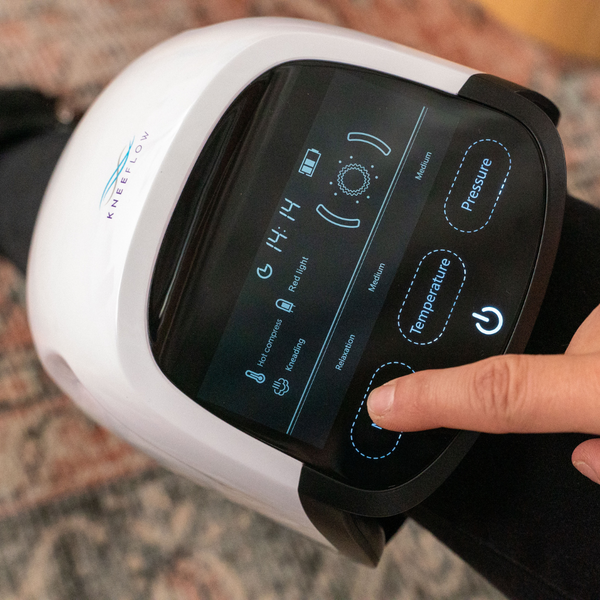
For people looking for at-home support that feels practical during the recovery process, the Kneeflow heated knee massager can fit naturally into a daily comfort routine. It reflects how Flow Knee approaches support, not as a dramatic claim, but as a more manageable way to bring heat and massage-based comfort into the rhythm of healing.
Why Combined Injuries Deserve More Respect
Some of the hardest recoveries are the ones people underestimate at first. A combined ACL and MCL injury can create a more complicated path because multiple stabilizing structures are involved. AAOS notes that combined ligament injuries may require early surgery in certain cases and often need more careful planning because of the complexity of the damage.
That matters emotionally as much as physically. When the knee feels unstable in more than one way, it can be harder to trust recovery, especially if progress feels uneven. People may compare themselves to simpler injury stories and assume they are falling behind when the real issue is that their knee is asking for a different process.
This is why recovery content should leave room for nuance. Not every MCL or ACL story looks the same, and combined injuries deserve a more patient, better-supported approach from the start.
When the Right Recovery Mindset Starts Making a Difference
The most helpful shift in ligament recovery often comes when people stop measuring progress only by how quickly they can return to normal. Speed matters less than quality. A knee that regains strength, stability, range of motion, and trust in a steady way is on a better path than one pushed forward before it is ready.
That mindset does not make recovery shorter, but it usually makes it less chaotic. People begin paying attention to what the knee is tolerating, how it responds to therapy, and what kind of support makes the process feel more sustainable. That is the difference between reacting to the injury and actually recovering from it.
If your knee is dealing with the uncertainty that follows an MCL or ACL injury, this is the point where better support can start to matter. Flow Knee was built for people who want daily comfort to feel easier and more consistent during the recovery journey.
When Knee Recovery Starts Feeling More Understandable
MCL and ACL injuries feel similar at first because both disrupt movement, confidence, and routine. What changes the recovery experience is understanding how the injuries differ and why their healing paths are not identical. Once that becomes clearer, the knee stops feeling like one vague problem and starts feeling like something that can be approached more intelligently.
MCL ACL recovery works best when people respect both the medical side and the daily side of healing. Therapy, stability, range of motion, and structured progress matter, but so does comfort, consistency, and support that fits real life. Recovery becomes easier to trust when it feels organized instead of overwhelming.
At Flow Knee, we believe support should make healing feel calmer, not more complicated. When the knee is recovering from instability, strain, or surgery-related disruption, relief matters most when it is practical enough to return to again and again.
If you want help understanding whether that kind of support fits your situation, contact our team and continue the conversation in a more practical way.
FAQ
What is the difference between an MCL and ACL injury?
An ACL injury affects a ligament inside the knee that controls stability and rotation, while an MCL injury affects the inner knee ligament that resists inward stress.
Is ACL recovery usually longer than MCL recovery?
ACL recovery is often longer and may involve surgery plus rehabilitation, while many MCL injuries are treated more conservatively depending on severity.
Can an MCL injury heal without surgery?
Many MCL injuries can heal without surgery, especially partial tears managed with bracing and rehabilitation.
Do ACL injuries always need surgery?
No. Some ACL injuries are managed with rehabilitation, though surgery may be recommended depending on instability, activity level, and associated injuries.
What helps during MCL ACL recovery?
Structured rehabilitation, careful progression, and daily comfort support all help recovery feel more manageable and consistent.