Knee pain can feel especially discouraging when it stops being occasional and starts becoming part of everyday life. What once felt like minor stiffness after a long day can slowly turn into discomfort while walking, standing, bending, or even resting. For many people, that shift creates a deeper kind of frustration, because the pain does not always arrive dramatically. It settles in gradually and begins changing the way the body is used from one day to the next.
That is why the search for knee osteoarthritis treatment is rarely just about finding information. It usually begins at the point where discomfort starts affecting confidence, routine, and independence. People are not simply asking what osteoarthritis is. They are trying to understand what actually helps, what makes day-to-day movement feel more manageable, and what kind of relief can fit into real life without making recovery feel overwhelming.
At Flow Knee, we understand that treatment conversations are not only about medical terminology or symptom lists. They are also about how people live with joint pain, what support feels realistic, and how better relief becomes possible through consistency. A useful guide on knee osteoarthritis treatment should do more than describe the condition. It should make the path forward feel clearer, steadier, and more human.
Why Knee Osteoarthritis Feels So Hard to Manage
Knee osteoarthritis often feels difficult to manage because it changes slowly enough to create uncertainty. Many people do not notice a single defining moment when the problem begins. Instead, they become aware of stiffness in the morning, discomfort after walking, or a sense that the knee no longer moves as smoothly as it once did. That gradual progression can make the condition feel vague at first, even while its impact keeps growing.
The challenge becomes even heavier because osteoarthritis is not only about pain. It also affects rhythm, confidence, and predictability. Movement starts requiring more thought. Activities that used to feel automatic begin to feel conditional. According to the Arthritis Foundation’s overview of osteoarthritis of the knee, the condition is tied to cartilage breakdown, inflammation, and progressive joint changes, which helps explain why discomfort can feel persistent rather than isolated.
When people understand knee osteoarthritis this way, treatment begins to make more sense. It stops being about chasing one dramatic fix and starts becoming about reducing strain, improving comfort, and supporting the body in ways that feel sustainable over time. That shift is important because it turns treatment from a guessing game into something more grounded and manageable.
What Knee Osteoarthritis Treatment Really Means
The word treatment can create unrealistic expectations when it is understood too narrowly. Many people hear it and immediately imagine a single intervention that should solve the whole problem. That expectation often leads to disappointment, especially with chronic joint issues where relief tends to come from layered support rather than one isolated step.
In reality, knee osteoarthritis treatment usually means creating a more supportive environment for the joint. That can include approaches that help reduce stiffness, ease pain, improve daily comfort, and make movement feel less guarded. The goal is not always perfection. Very often, it is about helping the knee feel more stable, more supported, and less disruptive to everyday life.
This reframing matters because it reduces the pressure people place on themselves and on every solution they try. Treatment becomes more meaningful when it is understood as a combination of symptom support, recovery habits, and tools that encourage consistency. That perspective makes space for forms of relief that may feel modest in the moment but valuable over time.
Why Daily Support Matters More Than Occasional Relief
People with knee osteoarthritis often learn that discomfort has its own rhythm. Some days feel more manageable, while others feel heavier for reasons that are not always obvious. That inconsistency can lead people to respond only when the pain becomes hard to ignore, which often creates a cycle of reactive relief rather than steady support.
What changes the experience is not always intensity, but regularity. A knee that feels stiff, inflamed, or overloaded tends to respond better when support becomes part of everyday life rather than something reserved for the worst moments. This is one reason why treatment works best when it aligns with normal routines instead of demanding constant disruption.
That is also where supportive tools begin to feel more relevant. A treatment approach that can be repeated easily at home tends to feel more realistic for people living with ongoing joint discomfort. The more naturally it fits into rest, recovery, and daily rhythm, the more likely it is to become part of the body’s long-term support system.
How Heat and Massage Fit Into Knee Osteoarthritis Treatment
Heat and massage are often treated as simple comfort measures, which can make them seem less important than they really are. For someone living with knee osteoarthritis, though, the difference between temporary comfort and repeatable symptom relief matters a great deal. Even small improvements in stiffness and ease of movement can change how a day feels.
Heat can help the knee feel less tight and less resistant to movement, especially during periods of stiffness. Massage-based support contributes to that experience by helping the surrounding area feel less tense and more relaxed. Research on massage therapy for knee osteoarthritis points to short-term improvements in pain, stiffness, and function, which helps explain why these forms of support continue to matter in real treatment conversations.
This does not mean heat and massage should be framed as a cure. It means they deserve to be understood as part of a realistic treatment environment. For many people, those forms of support help bridge the gap between discomfort and daily function in a way that feels practical rather than extreme.
What People Are Usually Looking For When They Search This Topic
When someone searches for knee osteoarthritis treatment, they are often looking for more than a clinical explanation. They are looking for reassurance that the situation can still be managed, that movement can still feel more comfortable, and that relief does not have to depend on constant trial and error. Behind the keyword is usually a person trying to preserve quality of life, not simply gather information.
That is why treatment content should speak to lived experience as much as symptom language. People want to understand what daily management can realistically look like. They want support that feels usable at home, not only in theory. They want options that fit the pace of their life, especially when pain has already made that pace feel more fragile.
At Flow Knee, that is the lens we care about most. The treatment conversation becomes more meaningful when it recognizes that chronic knee discomfort affects how people walk through the day, not just how they describe pain on a scale.
Where a Support Device Can Belong in the Treatment Picture
Support devices tend to make the most sense when the condition has already begun shaping routine. At that point, people are not necessarily looking for dramatic language or exaggerated promises. They are looking for something that helps the knee feel more cared for in a repeated, accessible way. That is where a home-based support device can begin to feel relevant.
A device that combines heat and massage fits most naturally into treatment when it reduces the gap between discomfort and relief. It offers a way to respond to stiffness and soreness without having to overcomplicate the process. For someone living with recurring symptoms, that kind of consistency can matter more than novelty ever could.
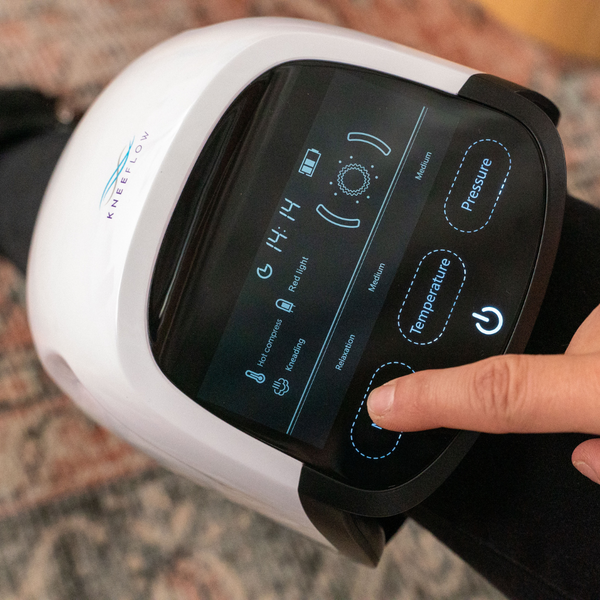
This is where the Kneeflow heated knee massager becomes part of the treatment conversation. It is not presented as a replacement for care, but as a practical form of support that can help people build more regular comfort into their day-to-day routine.
Why the Best Treatment Approach Usually Feels Layered
One reason people stay frustrated with knee osteoarthritis is that they often evaluate every option as though it must carry the whole burden of relief by itself. When a single approach does not solve everything, it is easy to assume it is not helping at all. But joint conditions like osteoarthritis usually respond better to layered care than to isolated expectations.
That layered view makes treatment feel more realistic. It leaves room for education, supportive movement, symptom management, heat, massage, and practical at-home tools to all play different roles. Instead of demanding that one piece do everything, it allows each form of support to contribute in a way that feels honest and sustainable.
This perspective also makes the decision process clearer. A support device is easier to trust when it is understood as part of a broader treatment picture rather than a miracle promise. Flow Knee fits naturally into that understanding because our role is not to oversimplify the condition, but to help support comfort and recovery in a way that feels consistent and usable.
When Better Relief Starts Feeling More Possible
Knee osteoarthritis can make the future feel narrower when everyday movement starts carrying more tension, hesitation, or discomfort than it used to. What helps restore confidence is not always a dramatic breakthrough. More often, it is the steady feeling that relief can become part of normal life again, even if the process happens gradually.
That is why the most helpful treatment approach is often the one that supports the body repeatedly and realistically. When pain relief feels easier to return to, people stop relating to treatment as a constant disruption. They begin relating to it as part of how they care for themselves, which changes not just the knee, but the emotional weight around the condition.
For anyone trying to understand whether that kind of support makes sense for their situation, it can help to contact our team. Sometimes the clearest next step is simply having a more direct conversation about what daily support can look like when osteoarthritis has already begun affecting quality of life.
A More Grounded Way to Think About Knee Osteoarthritis Treatment
The hardest part of knee osteoarthritis is often not the diagnosis itself, but the feeling that relief has become uncertain. That uncertainty can make every option feel smaller than the problem. What changes that experience is a more grounded understanding of treatment, one that values consistency, practicality, and support that fits everyday life.
Knee osteoarthritis treatment works best when it reflects the real nature of the condition. Osteoarthritis is gradual, layered, and often persistent, so the support around it needs to be just as thoughtful. Heat, massage, and repeatable at-home comfort matter because they help reduce the friction between pain and daily movement.
At Flow Knee, we believe that good support should feel realistic before it feels impressive. When treatment becomes something that can be returned to naturally and consistently, relief starts feeling less like guesswork and more like something the body can actually trust over time.
FAQ
What is the best treatment for knee osteoarthritis?
The best treatment for knee osteoarthritis usually involves a combination of symptom support, lifestyle adjustments, and practical ways to reduce stiffness and discomfort over time.
Can heat help knee osteoarthritis?
Heat can help knee osteoarthritis feel more manageable by easing stiffness and making the joint area feel more relaxed and comfortable.
Does massage help knee osteoarthritis?
Massage can help support short-term relief by easing tension and improving comfort around the knee, especially when symptoms feel persistent.
Is knee osteoarthritis treatment always medical?
Knee osteoarthritis treatment can include medical care, but many people also rely on supportive daily approaches that help them manage comfort more consistently.
Can a knee support device help with osteoarthritis symptoms?
A knee support device can help some people manage symptoms more comfortably when it fits naturally into their daily recovery and relief routine.