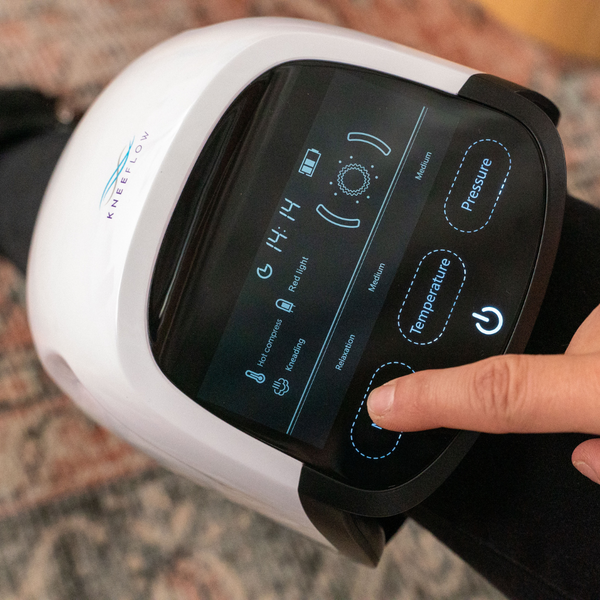
Does ice help arthritis in knees? People with knee arthritis tend to develop strong opinions about cold and heat with surprisingly little information to support them. One person keeps a frozen gel pack in the freezer and reaches for it every evening. Another wraps a heating pad around their knee before getting out of bed every morning. Both are probably doing something useful. Neither fully understands why, which means both are also probably using their method in situations where the other one would serve them better.
The short answer is yes, at the right time. Kneeflow knows that heat also helps, at a different time, for different reasons. The longer answer requires understanding what each one is actually doing to the joint, because that understanding is what turns two blunt instruments into a genuinely useful daily management tool.
Two Different Problems, Two Different Solutions
Knee arthritis is not one fixed state. It moves between phases, and the phases require different responses, and our question starts with; does ice help arthritis in knees?
On a typical day, the dominant experience is chronic stiffness and a dull, persistent ache. The joint is not dramatically inflamed. It is simply less fluid, less mobile, and more uncomfortable than it would be without the condition. On other days, usually following unusual activity, a weather shift, or for reasons that are not always clear, the joint becomes acutely inflamed. It feels warmer than usual. It may swell visibly. The pain has a different quality, sharper and more reactive rather than the familiar background ache.
These two states call for opposite interventions, and applying the wrong one to either makes the situation worse rather than better. Cold during chronic stiffness without active inflammation reduces local circulation in a joint that already suffers from inadequate synovial fluid distribution. Heat during acute inflammation amplifies blood flow and can deepen the inflammatory response rather than calming it. The mechanism behind each thermal modality is the key to using them correctly.
What Cold Is Actually Doing
Does ice help arthritis in knees through a single mechanism? The effect is simpler and more specific than most people realize. Cold causes vasoconstriction: blood vessels in the tissue beneath the skin narrow, blood flow decreases, and two things happen as a result.
First, fluid accumulation in the joint space slows. When the arthritic synovial membrane is producing excess fluid in response to activity or irritation, cold applied over the knee limits how much of that fluid can pool before the body's own processes begin clearing it. This directly reduces the pressure that accumulated fluid places against the joint capsule, and that pressure is a significant contributor to the sharper, more reactive pain that characterizes acute flares and post-activity swelling.
Second, nerve conduction velocity decreases in the cooled tissue. Pain signals travel more slowly, and the brain receives fewer of them per second. This produces the analgesic effect that people notice when ice dulls the intensity of post-activity joint discomfort. It is temporary and entirely dependent on the tissue staying cold, but in the window after demanding activity or during the acute phase of a flare, it is a genuine and meaningful form of relief.
What ice does help arthritis in knees starts with the synovial fluid becoming more viscous at lower temperatures, not less. A joint that was already stiff before the ice pack went on will be at least as stiff afterward, often more so, because the tissue has cooled and the fluid that lubricates the cartilage surfaces has thickened further. Applying ice to a knee that is stiff but not swollen and not warm to the touch rarely improves the situation and frequently makes standing up more difficult immediately after.
What Heat Is Actually Doing
Heat works through the opposite pathway and solves the opposite problem. Vasodilation increases local blood flow, and that increased circulation does several things simultaneously for an arthritic knee.
Synovial fluid becomes less viscous when tissue temperature rises. It moves more freely through the joint space, reaching more of the cartilage surfaces more efficiently, delivering the nutrients that cartilage depends on and carrying away the metabolic waste the tissue produces.
For someone managing the morning stiffness that is one of the most consistent and disruptive features of knee osteoarthritis, heat applied before getting out of bed or before beginning the day's movement shortens the duration of that stiffness noticeably because it starts the fluid redistribution process ahead of the mechanical stimulation that walking would eventually produce.
Heat also relaxes the muscular tension that accumulates around the knee under daily load. The quadriceps, hamstrings, and the connective tissue of the joint capsule all tighten under sustained mechanical demand, and that tightness contributes to the aching that builds through the afternoon. Heat in the evening after an active day addresses this tension directly, preparing the joint for the recovery that sleep is supposed to provide rather than sending it to bed already wound tight.
Does ice help arthritis in knees the way heat does for this kind of chronic stiffness management? No. Cold tightens tissue. It contracts blood vessels. It reduces circulation. Everything it does is the opposite of what a stiff, achy but not acutely inflamed arthritic knee needs.
Does Ice Help Arthritis In Knees? Reading the Joint Before Choosing
The decision between ice and heat does not require a clinical assessment. It requires paying attention to what the knee is telling you at any given moment, and two signals do most of the work.
Temperature is the primary signal. Place a hand against the side of the knee and against the skin several inches above it. If the joint feels noticeably warmer than the surrounding tissue, active inflammation is present. Ice is the appropriate response. If the temperatures feel similar and the knee is simply stiff and uncomfortable without that localized warmth, heat is the better choice.
Swelling is the secondary signal. Visible fullness or tightness around the joint that was not present earlier in the day, or that developed during or after activity, indicates fluid accumulation from an acute inflammatory response. Ice slows further accumulation and reduces the pressure that existing fluid creates. A joint that aches without any visible change in appearance or fullness does not have that acute component, and ice has nothing specific to offer it.
Does ice help arthritis in knees when neither signal is present? It provides temporary numbing that some people find comfortable, but it is not addressing any underlying mechanism the joint currently needs addressed, and the post-ice stiffness that often follows is a real cost.
Does Ice Help Arthritis In Knees: Getting the Application Right
Understanding does ice help arthritis in knees also means using it in a way that produces the benefit without the risks that poor application creates.
Cold should never contact the skin directly. A cloth, a thin towel folded once, or a purpose-made cold pack cover between the ice and the skin prevents the superficial damage that sustained direct cold contact causes, damage that looks and feels more like a burn than a cold injury and heals just as slowly. Fifteen to twenty minutes is the effective session duration. Below ten minutes, the tissue temperature change in the deeper joint structures is insufficient to produce meaningful vasoconstriction.
Beyond twenty-five minutes, the body initiates a protective counter-response, a reflexive vasodilation to prevent tissue injury, that reverses some of the therapeutic effect and makes the session less efficient. Two to three sessions in a day during an active flare or after particularly demanding activity is reasonable. Each session should allow the skin to return fully to its normal temperature before the next application.
Heat is more forgiving but not without its considerations. Moist heat, from a warm bath, a damp warm cloth, or a steam-based application, tends to penetrate more effectively than dry heat at the same surface temperature. Twenty to thirty minutes before or after activity produces the circulation and tissue relaxation effects that make heat useful for daily arthritis management. Heat before bedtime supports the recovery processes that sleep is supposed to allow. Heat pads used overnight carry burn risk and are best avoided in favor of a deliberate pre-sleep session followed by removal.
Does Ice Help Arthritis In Knees? Building a Routine That Uses Both Well
Does ice help arthritis in knees most when it appears as part of a structured daily approach rather than a reactive grab when things feel bad? Consistently yes, and the same is true for heat.
A reasonable framework for most people managing knee arthritis actively: heat in the morning to prepare the joint for the day's movement, especially during periods of significant stiffness. Ice after activity if swelling developed, nothing if the joint simply feels tired without acute inflammation. Heat in the evening to support overnight recovery and reduce the accumulated tension from the day. Ice during a flare's acute phase, transitioning back to heat once the warmth and swelling have settled.
That sequence does not require a clinical degree to follow. It requires honest observation of what the joint is telling you and the discipline to respond to that signal rather than defaulting to whichever tool is closest.
If you want support building a daily knee arthritis management routine that covers thermal therapy alongside the other variables that influence joint health, reach out through the contact page and the Kneeflow team will respond to you directly.