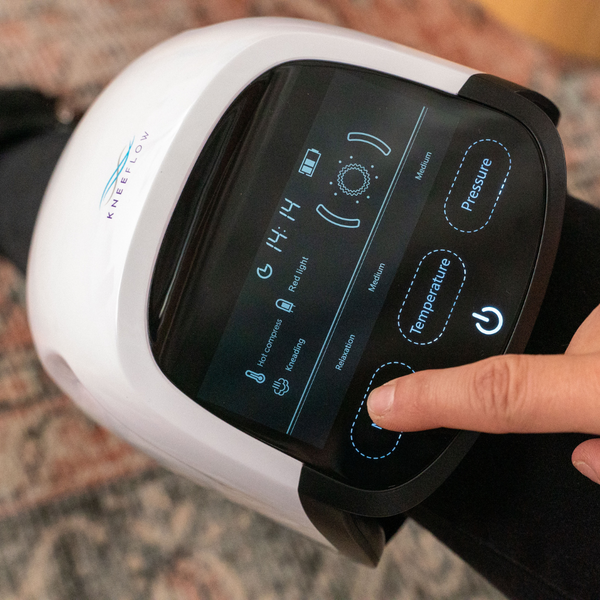
Using a knee massager after surgery can sound helpful when the knee feels stiff, sore, or difficult to trust again. After an operation, people often want anything that makes recovery feel easier. The problem is that post-surgery knees need more caution than everyday knee discomfort.
A knee that has recently been operated on may still be swollen, healing, sensitive, or affected by changes in circulation and movement. That is why the safest answer is not simply yes or no. A knee massager may fit later in recovery for some people, but only when the surgeon or physical therapist says it is appropriate.
At Flow Knee, we believe recovery support should feel practical and responsible. Kneeflow can support comfort once home care is safe, but it should never replace post-surgical instructions, physical therapy, or medical follow-up.
Why Doctor Clearance Matters Before Using a Knee Massager After Surgery
Post-surgery recovery is different from ordinary soreness because the knee is healing from a medical procedure. The incision, swelling, joint movement, circulation, and pain level all matter. Even gentle pressure or heat may be inappropriate if the knee is still in an early or irritated stage.
Doctors and physical therapists usually focus first on safe movement, swelling control, wound care, and gradual return of function. AAOS guidance on activities after knee replacement notes that swelling can be moderate to severe in the first days or weeks, and mild to moderate swelling may last for months. It also recommends elevation and ice for swelling, while advising patients to tell a doctor about new or severe swelling because it may signal a blood clot.
That is why a knee massager should come after medical clearance, not before. The question is not only whether the device feels good. The question is whether the knee is ready for heat, pressure, vibration, or massage-based support.
What Doctors Usually Prioritize First
In the first stage after knee surgery, recovery usually centers on controlled movement and swelling management. Physical therapy is often a key part of restoring strength, range of motion, and confidence. The goal is not only to reduce discomfort, but to help the knee regain safe function over time.
This matters because a massager cannot replace the work of rehabilitation. Surgery recovery is not only about feeling less sore. It is about helping the knee rebuild trust through movement, strength, circulation, and gradual progress.
A knee massager may eventually support comfort around the recovery routine, but it should not become the main recovery plan. The foundation should still come from the surgeon’s instructions and the physical therapist’s program.
Why Ice Often Comes Before Heat After Surgery
Many people reach for heat when the knee feels stiff, but post-surgery swelling changes the conversation. Early after surgery, cold therapy is often recommended because it can help manage swelling and pain. A recently operated knee may not respond to heat the same way as a knee dealing with ordinary stiffness.
That does not mean heat is always wrong forever. It means timing matters. A knee that is still swollen, warm, or freshly irritated may not be ready for heat, especially if heat makes swelling feel worse.
This is why doctor guidance matters before adding a heated device. A knee massager after surgery may make sense later, but early recovery usually requires a more cautious approach focused on swelling control, healing, and approved movement.
When a Knee Massager May Fit Later in Recovery
A knee massager may make more sense later in recovery, when the incision has healed, swelling is controlled, and the healthcare team says gentle support is safe. At that point, the goal is usually comfort, not treatment. The device may help the knee area feel less tense after approved movement or physical therapy.
This is where expectations matter. A knee massager should not be used to force mobility, speed healing, or push through pain. If the knee feels swollen, hot, unstable, or sharply painful, that is not the right moment for massage-based support.
The Kneeflow heated knee massager is best understood as a comfort tool for the appropriate stage of recovery. Once cleared, heat, red light support, and soft airbag massage may help make at-home knee support feel calmer and easier to repeat.
Signs You Should Not Use a Knee Massager Yet
There are times when a knee massager should wait. If the knee is newly swollen, severely painful, red, hot, draining, unstable, or difficult to bear weight on, home massage is not the right next step. Those symptoms should be discussed with a medical professional.
New or severe swelling is especially important after surgery. A knee that suddenly feels more swollen, painful, hot, or difficult to use may be signaling that recovery needs closer attention. That is not the moment to experiment with heat, pressure, or massage.
It is also wise to avoid massaging directly over an incision unless a clinician has cleared that area for touch. Healing tissue needs time, and even gentle pressure may feel wrong if the knee is not ready.
What to Ask Your Doctor or Physical Therapist
The best way to know whether a knee massager after surgery is appropriate is to ask directly. The question should be specific because “Can I use a massager?” may be too broad. A better conversation includes timing, heat, pressure, session length, and where the device should or should not touch the knee.
You might ask whether heat is safe yet, whether massage around the knee is allowed, whether compression-like pressure is appropriate, and whether the device should be avoided after therapy sessions. These details help turn a vague idea into a safer recovery choice.
This conversation is especially important after knee replacement, ligament repair, meniscus surgery, or any procedure with ongoing swelling. Recovery plans differ, and the person who knows the surgical details should guide the decision.
How to Use a Knee Massager Responsibly After Clearance
Once a healthcare professional says massage-based support is safe, the routine should stay gentle. Short sessions, mild settings, and close attention to how the knee feels afterward are usually more sensible than intense use. Recovery is not the time to chase the strongest sensation.
The Arthritis Foundation’s knee replacement aftercare tips emphasize practical recovery habits like icing breaks, following therapy guidance, and calling the doctor when pain, swelling, or other symptoms become concerning. That kind of aftercare framing supports the idea that comfort tools should fit the recovery plan, not replace it.
Kneeflow is designed for comfort, but responsible use still matters. A device can support the right routine, but it should not override medical instructions.
Where Kneeflow Fits Into Post-Surgery Comfort
Kneeflow fits best as a later-stage comfort tool, not an early post-surgery intervention. Its role is to help support daily knee comfort after the user has been cleared for heat and gentle massage-based support. That distinction protects the recovery process while still giving people a practical option when the time is right.
For someone moving through post-surgery recovery, confidence often comes from small signs of progress. The knee feels less guarded. Sitting feels easier. Approved movement feels less intimidating. A gentle routine can help support that experience without pretending to replace rehabilitation.
At Flow Knee, the goal is not to make recovery feel more complicated. It is to make the right kind of support easier to understand. When the knee is ready, Kneeflow can help comfort feel more practical and repeatable.
A Knee Massager Should Support Recovery, Not Rush It
A knee massager after surgery should never be used to rush the process. Surgery recovery depends on healing time, physical therapy, swelling control, and medical follow-up. Comfort tools can help, but they should stay in the right role.
The safest approach is simple: follow your surgeon’s instructions first, use ice and elevation when recommended, complete physical therapy as directed, and ask before adding heat or massage. Once cleared, a knee-specific device can become part of a calmer home support routine.
If you are unsure whether Kneeflow belongs in your recovery plan, contact Flow Knee and speak with your doctor or physical therapist before using it. The right support should fit your stage of healing.
FAQ
Can I use a knee massager after surgery?
Only after your surgeon or physical therapist clears it. Early recovery may require ice, elevation, wound care, and physical therapy first.
Is heat safe after knee surgery?
Heat may not be appropriate early after surgery, especially with swelling. Ask your healthcare team before using a heated device.
Can massage reduce swelling after knee surgery?
Massage should not be used for new, severe, hot, or concerning swelling. Report unusual swelling to your doctor.
When can I use Kneeflow after surgery?
Use Kneeflow only when your clinician says heat and gentle massage-based support are safe for your recovery stage.
Should I use a knee massager after physical therapy?
Ask your physical therapist. Some people may benefit later, but timing and intensity should match your recovery plan.