Using HSA or FSA funds for a knee massager can feel confusing because the rules are not always explained in everyday language. People often know their account can cover medical expenses, but they may not know whether a heated knee massager qualifies, whether they need documentation, or how checkout works.
That is why this HSA FSA knee massager guide focuses on the practical steps. The goal is not to turn a simple purchase into a tax lesson. The goal is to help you understand when Kneeflow may qualify, how the process works, and what to keep on file after purchase.
At Flow Knee, we believe knee support should feel easier, not more complicated. Kneeflow can be purchased with HSA/FSA funds when eligibility requirements are met, especially when the device is being used for a qualifying medical condition rather than general wellness.
Is the Kneeflow Massager HSA/FSA Eligible?
Yes, the Kneeflow Knee Massager may be HSA/FSA eligible when it is used to address a qualifying medical condition. Flow Knee’s HSA/FSA page states that knee massagers are eligible when used to treat a diagnosed condition such as arthritis, chronic knee pain, injury recovery, post-surgical rehabilitation, or diagnosed knee inflammation. General relaxation or wellness use without a medical diagnosis does not qualify under standard IRS guidelines.
That distinction matters because eligibility is based on medical purpose, not simply the product category. A knee massager used for comfort after a long day may not be treated the same as a knee massager used to support a diagnosed condition. The product can be eligible, but the reason for use still matters.
Kneeflow has partnered with Flex to make this easier at checkout. Flow Knee notes that eligible customers can complete a brief verification at checkout, and purchases that require documentation may include a short chat-based telehealth consult to document medical necessity.
Why Medical Use Matters More Than General Wellness
HSA and FSA funds are designed for health-related expenses, not every product that makes someone feel better. That difference matters because a product used for general relaxation may not be viewed the same way as a product used for a documented medical need.
For a knee massager, the strongest case is usually tied to a diagnosed condition. Arthritis, chronic knee pain, injury recovery, and post-surgical rehabilitation create a clearer medical purpose than general relaxation. This does not mean every person must already know the paperwork process before buying, but it does mean the purchase should connect to a real health need.
A calmer way to think about eligibility is this: HSA/FSA support is usually strongest when the device is part of care for a specific condition. It is weaker when the purchase is only for comfort, wellness, or convenience.
Step 1: Confirm You Have an HSA or FSA Account
Before thinking about the product itself, it helps to understand which account you are using. HealthCare.gov explains that a Flexible Spending Account lets people set aside pre-tax money through job-based coverage to pay certain out-of-pocket health care costs. That matters because FSA funds are tied to specific account rules and plan timing.
An HSA is different because it is typically connected to a high-deductible health plan, and unused funds can roll over year after year. FSAs are usually employer-based, while HSAs follow a different structure. The checkout process may feel similar, but the account rules can differ.
This is why your HSA or FSA administrator still matters. They may have their own documentation requirements, reimbursement process, or card approval rules. Knowing which account you have makes the next steps easier to understand.
Step 2: Check Whether Your Knee Condition May Qualify
The next step is understanding whether your use case is medical rather than general wellness. Flow Knee lists several examples that may qualify, including osteoarthritis, chronic knee pain, ACL or MCL injury recovery, post-surgical rehabilitation, and diagnosed knee inflammation.
This does not mean you should guess or self-diagnose. A diagnosis or medical need gives the purchase stronger eligibility support. If you are unsure, it is better to check with your healthcare provider, HSA/FSA administrator, or the checkout verification process before assuming coverage.
For many people, this step brings the most clarity. The question is not only “Can I buy this with my card?” The better question is “Am I buying it for a qualifying medical need?”
Step 3: Add Kneeflow to Your Cart
Once you understand your account and medical use case, the purchase itself becomes simpler. You can start on the Kneeflow heated knee massager product page and add the device to your cart.
This part should feel familiar because it works like a normal online purchase. The difference comes during checkout, when you choose the HSA/FSA payment option instead of only using a standard credit or debit card.
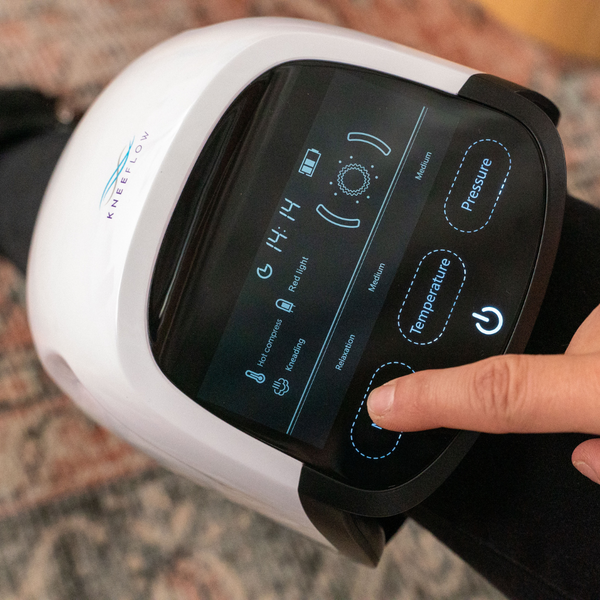
Kneeflow’s role is to make knee support easier to access when the purchase qualifies. The product itself brings together heat, red light support, and soft airbag massage in a knee-specific design made for daily comfort.
Step 4: Select Flex at Checkout
At checkout, Flow Knee says customers can choose “Flex | Pay with HSA/FSA” as the payment method. This helps connect the purchase to the eligibility verification process before payment is completed.
This step matters because some products may require a Letter of Medical Necessity, also called an LMN. That document helps show that the product is being used for a medical purpose, not only for general wellness.
The process is meant to make the purchase easier, not more intimidating. If verification is needed, Flex can guide the documentation step during checkout.
Step 5: Use Your HSA/FSA Card or Submit for Reimbursement
Some customers may be able to pay directly with an HSA/FSA debit card. Others may pay with a regular card and submit documentation afterward. FSAFEDS explains that Health Care FSA funds can be used for eligible health care products and services, which is why documentation and plan rules matter.
This is useful because card declines do not always mean the product is not eligible. Sometimes the issue is insufficient funds, administrator rules, missing documentation, or how the transaction is coded. Your HSA/FSA administrator can clarify why a payment did not go through.
A practical approach is to keep everything organized from the start. Save your itemized receipt, any LMN, and any emails from Flex or your account administrator.
What Should You Keep After Buying?
Documentation matters because HSA/FSA purchases may need to be verified later. A receipt alone may not always be enough if your administrator asks for proof that the purchase was medically necessary.
The safest habit is to save a copy of your itemized receipt, your LMN if one was provided, and any reimbursement confirmation. These records help show that the purchase was tied to a medical need, not general wellness.
This is not about making the purchase feel stressful. It is about keeping the process clean. A few saved documents can make the difference between a simple reimbursement and a frustrating follow-up.
When Should You Contact Flow Knee or Your Account Provider?
Some questions are better answered before checkout. If the Flex option does not appear, Flow Knee says the item in the cart may not be recognized as HSA/FSA eligible, and customers can contact Flow Knee if they believe there is an error.
Your HSA/FSA administrator is still the best source for plan-specific rules. They can confirm your balance, reimbursement process, required documentation, and whether your account needs additional proof. Flow Knee can help with product and checkout questions, but your administrator controls account approval.
Paying With HSA/FSA Should Feel Clearer, Not Harder
Using HSA or FSA funds for Kneeflow can be straightforward when the purchase is tied to a qualifying medical need. The key is understanding that eligibility depends on the reason for use, the documentation required, and the rules of your account.
Kneeflow may qualify when used for conditions such as arthritis, chronic knee pain, injury recovery, post-surgical rehabilitation, or diagnosed knee inflammation. Flex helps make checkout easier by supporting HSA/FSA payment, eligibility verification, and reimbursement documentation when needed.
If you are unsure where to start, you can contact Flow Knee for product guidance and then confirm plan details with your HSA or FSA provider. If knee discomfort has made daily movement feel harder to trust, Kneeflow can make at-home support feel more accessible.
FAQ
Is Kneeflow HSA/FSA eligible?
Yes, Kneeflow may be HSA/FSA eligible when used for a qualifying medical condition, and the required documentation is completed.
Can I use my HSA card to buy Kneeflow?
Yes, eligible customers can select Flex at checkout and use an HSA/FSA card when approved.
Do I need a Letter of Medical Necessity?
Some purchases may require one. Flex can guide eligible customers through a brief chat-based verification if needed.
Can I get reimbursed if I do not use my HSA/FSA card?
Yes. Some customers may pay with a regular card and submit eligible documentation for reimbursement.
Does general knee comfort qualify?
General wellness or relaxation use without a medical diagnosis usually does not qualify under standard eligibility rules.