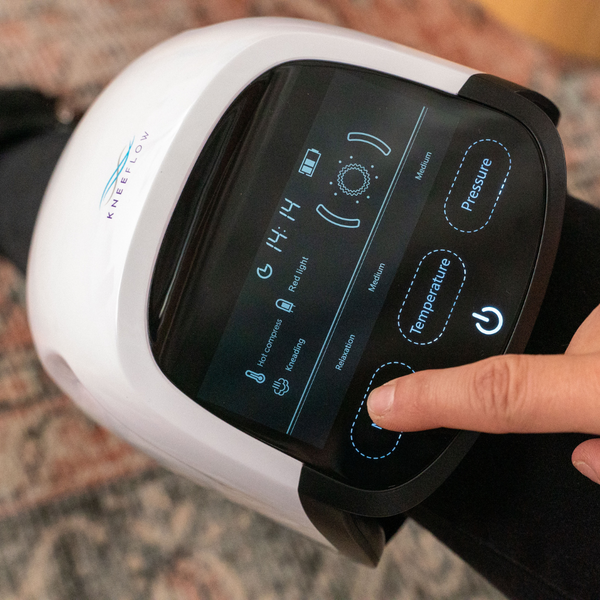
Choosing between a heated knee massager vs cold therapy can feel confusing because both can help with knee discomfort in different situations. Heat may feel better when the knee is stiff, tight, or achy. Cold may make more sense when the knee feels swollen, inflamed, or irritated after activity or injury.
The important part is matching the support to what the knee is feeling. A stiff knee after sitting is not the same as a swollen knee after a twist, fall, or intense workout. That difference matters because the wrong type of support may feel less helpful, even if the tool itself is useful.
At Flow Knee, we believe knee comfort should feel practical, not confusing. A heated knee massager is not a replacement for medical care, and cold therapy is not a cure for injury. Both can be useful when they are used with realistic expectations and the right symptoms in mind.
Heated Knee Massager vs Cold Therapy: The Simple Difference
Heat and cold support the knee in different ways. Heat is usually associated with stiffness, tightness, and achy discomfort. Cold is usually associated with swelling, tenderness, and irritation after activity or injury.
That makes the choice less about which one is “better” and more about timing. Heat often feels more appropriate when the knee feels guarded or stiff. Cold often fits better when swelling, irritation, or fresh soreness is the main concern.
A clinical review on thermotherapy for osteoarthritis describes heat and cold as different approaches, with heat often linked to circulation and muscle relaxation, while cold is commonly used for pain and swelling. A helpful way to think about it is this: heat supports relaxation, while cold supports calming irritation.
When a Heated Knee Massager Makes More Sense
A heated knee massager may make more sense when the knee feels stiff, tense, or achy without major swelling. This is common after sitting for a long time, waking up with stiffness, or moving through a normal day with recurring discomfort.
The value of a heated knee massager is that it can combine warmth with gentle massage-based comfort. That combination may help the knee feel less guarded and easier to relax during rest. For many people, the benefit is not dramatic relief, but a calmer comfort routine that feels easier to repeat.
The Kneeflow heated knee massager fits this kind of need because it is built around knee-specific support. It gives people a way to use warmth and massage-based comfort in a more targeted routine than a general heating pad.
When Cold Therapy Makes More Sense
Cold therapy may make more sense when the knee feels swollen, inflamed, or recently irritated. Johns Hopkins explains that cold can reduce swelling and inflammation, while also helping numb the affected area and reduce tenderness.
That makes cold especially useful when the knee feels hot, puffy, or reactive after strain. It may also be the more reasonable option after a new injury, as long as symptoms are not severe enough to require urgent medical attention. Cold is usually about calming the knee down, not loosening it up.
This distinction matters because swelling changes the type of support the knee may need. A swollen knee often benefits from a more cautious approach than a stiff knee. Cold therapy can help create that calmer starting point when irritation is the main issue.
Heat Is Better for Stiffness, Cold Is Better for Swelling
Most people make the wrong choice when they think only about pain. The better clue is the type of discomfort. A stiff, tight knee may respond better to warmth. A swollen, irritated knee may respond better to cold.
This distinction matters because stiffness and swelling are different experiences. Stiffness can make the knee feel hard to bend or slow to loosen. Swelling can make the knee feel full, warm, tender, or difficult to use.
That is why a heated knee massager vs cold therapy decision should begin with what the knee feels like, not with the tool someone already has nearby. If the knee feels locked, tight, and achy, heat may fit the moment. If the knee feels puffy, hot, or freshly irritated, cold may be the better first step.
What About Arthritis Knee Discomfort?
Arthritis can make the heat or cold decision feel less obvious because symptoms can shift. Some people feel stiff after rest and prefer warmth. Others may have periods where the knee feels swollen or irritated, and cold feels more appropriate.
That shifting pattern is one reason people with arthritis often need a more flexible comfort routine. A stiff morning may call for warmth. A reactive knee after too much activity may call for cold. The right choice can change depending on what the joint is doing that day.
This does not mean arthritis support has to feel complicated. It means the knee’s current signal matters. Heat can support stiffness-focused comfort, while cold can support swelling-focused comfort.
When You Should Pause Home Care and Get Medical Guidance
Heat and cold can support comfort, but they should not be used to ignore warning signs. Severe pain, sudden swelling, inability to bear weight, instability, fever, redness, warmth, or pain after a clear injury should be treated more carefully.
This matters because a home routine is only appropriate when the symptoms fit home care. A heated knee massager can feel helpful for stiffness, and cold can feel helpful for swelling, but neither should be used as a way to push through serious symptoms.
A safer mindset is simple: use home support for mild, familiar, manageable discomfort. Get professional guidance when the knee feels unusually painful, swollen, unstable, hot, or difficult to use.
How to Choose the Right Option Today
The best choice depends on what your knee is asking for. If the knee feels stiff, tight, and slow to loosen, heat may be the better place to start. If it feels swollen, irritated, or inflamed, cold may be more appropriate.
A heated knee massager can be especially useful when the knee needs warmth and gentle massage-based comfort. Cold therapy fits better when the knee needs to calm down after swelling or fresh irritation. Both approaches can have a place, but they do different jobs.
At Flow Knee, we see comfort as a repeatable routine, not a one-time fix. Heat, massage-based support, and cold therapy can all have a place when used thoughtfully. The goal is to help the knee feel supported without ignoring what it may be trying to say.
The Right Choice Should Match the Knee, Not the Habit
A heated knee massager vs cold therapy decision should not become a guessing game. Heat tends to relieve stiffness and achy tension. Cold tends to fit swelling, inflammation, and fresh irritation. The best choice is the one that matches the knee’s current signal.
That flexibility is important because knee discomfort does not always follow the same pattern. A person may prefer heat on a stiff morning and cold after a warm afternoon. The body gives useful feedback when people slow down enough to notice it.
If your knee discomfort is mild and stiffness is the main issue, Kneeflow can help make daily warmth and support easier to repeat. If you are unsure whether your symptoms call for heat, cold, or professional guidance, you can contact Flow Knee and ask for help choosing the next step.
FAQ
Is heat or cold better for knee pain?
Heat often fits stiffness and achy tension. Cold often fits swelling, inflammation, or fresh irritation.
When should I use a heated knee massager?
Use heat when the knee feels stiff, tight, or guarded, and there is no major swelling or injury.
When should I use cold therapy for knee pain?
Cold may help when the knee feels swollen, inflamed, tender, or irritated after activity or injury.
Can I use heat and cold on the same day?
Yes, but match each one to symptoms. Use cold for swelling and heat for stiffness.
Should I use heat on a swollen knee?
Cold is usually more appropriate for swelling. Heat may feel less helpful when the knee is inflamed.