Knee cracking and popping causes can feel hard to understand because the sound may be dramatic even when the knee does not hurt. You may hear a click when standing up, a crack when climbing stairs, a pop during a squat, or a grinding sound when bending the knee. Sometimes it happens once and disappears. Other times it becomes part of nearly every movement.
That uncertainty can make a noisy knee feel more serious than it is. A crack, pop, or click can sound like something is wearing down, shifting out of place, or about to give way. In many cases, knee sounds are common and not automatically dangerous, especially when they are painless, occasional, and not paired with swelling or instability.
At Flow Knee, we approach knee comfort carefully. A knee massager may support warmth, relaxation, and daily comfort when symptoms are mild and properly understood, but it should not be used as a way to ignore painful popping, sudden swelling, locking, injury-related sounds, or a knee that feels unstable.
1. Normal Joint Movement Is One of the Most Common Knee Cracking and Popping Causes
Knee cracking and popping causes are not always signs of damage. Joints can make noise when gas bubbles shift in the joint fluid, when tendons glide over nearby structures, or when the knee changes position after being still. The sound may be loud enough to notice but still harmless when it is not painful.
This type of noise often feels random. It may happen when you stand, stretch, squat, walk upstairs, or change direction. The knee may sound noisy without feeling weak, swollen, or limited. That difference matters because sound alone is not always a medical problem.
A painless pop or crack that comes and goes usually does not need panic. The knee is a complex joint, and movement is not always silent. The better question is whether the sound comes with pain, swelling, catching, locking, heat, redness, or a change in how the knee functions.
2. Knee Crepitus Can Feel Like Grinding, Crackling, or Rough Movement
Knee crepitus often describes a crackling, grinding, popping, or creaky sensation when the knee moves. Some people hear it clearly. Others feel it under the kneecap or deeper inside the joint. It may happen during stairs, squats, standing from a chair, or bending and straightening the leg.
Crepitus does not always mean something serious. Some knees are noisy because of normal movement, soft tissue gliding, or age-related changes. However, crepitus that comes with pain, stiffness, swelling, warmth, or reduced function deserves more attention because the sound becomes part of a larger symptom pattern.
For some people, knee cracking and popping causes may be associated with cartilage changes, arthritis, kneecap tracking issues, or irritation around the patellofemoral joint. That does not mean every crackling knee has arthritis. It means symptoms should be read together instead of judging the sound alone.
3. Why Does My Knee Crack When I Stand Up?
Why does my knee crack when standing up? Often, the answer is simple movement after the joint has been still. When the knee bends for a while, then straightens under body weight, soft tissues and joint surfaces may shift. That can create a click, crack, or pop that feels surprising but not necessarily harmful.
This may be more noticeable after long sitting, desk work, driving, or watching a movie. The knee has been held in one position, then suddenly has to support standing, straightening, and walking. If the sound is painless and the knee feels stable, it may simply be part of normal joint movement.
The pattern changes if standing up causes pain, pressure, swelling, or a feeling that the knee catches. A crack with discomfort may point to irritation around the kneecap, cartilage, tendons, or joint lining. If it keeps happening with symptoms, it is worth getting evaluated rather than trying to guess.
4. A Popping Sound in Knee After Injury Needs More Caution
A popping sound in knee movement is more concerning when it happens at the moment of injury. If you twist, fall, land awkwardly, change direction quickly, or feel a sudden pop with immediate pain, the knee should be treated carefully. That kind of pattern can sometimes be linked to ligament injury, meniscus injury, kneecap instability, or another structural problem.
The sound itself is not enough to diagnose the injury. What happens afterward matters. Swelling, trouble bearing weight, instability, sharp pain, locking, or inability to fully bend or straighten the knee are all reasons to seek medical guidance. A knee that suddenly feels different after a pop should not be forced through activity.
Home comfort tools should wait in this situation. Heat, massage, or repeated movement may not be appropriate right after an injury. The safer step is to protect the knee, avoid pushing through pain, and get professional evaluation if symptoms are significant.
5. Knee Clicking Can Come From Tendons or Soft Tissue Movement
Knee clicking may happen when tendons, ligaments, or soft tissues move across bony areas during motion. This can sound like a small snap or click rather than a deep joint crack. It may be more noticeable during repeated bending, walking, cycling, squatting, or stair climbing.
When knee clicking is painless, occasional, and not associated with swelling, it is often less concerning. The knee is full of moving parts, and some clicking can come from the normal mechanics of soft tissue gliding around the joint. A sound does not automatically mean the structure is damaged.
Clicking becomes more important when it feels like catching, blocking, or slipping. If the knee clicks and then locks, gives way, swells, or hurts sharply, the symptom should be checked. That pattern can suggest something more than harmless soft tissue movement.
6. Arthritis Can Be One of the Knee Cracking and Popping Causes
Knee cracking and popping causes may include arthritis when sounds come with aching, stiffness, swelling, or reduced motion. Arthritis can change the smoothness of the joint surfaces, which may make grinding, creaking, or popping more noticeable during movement.
This type of sound may be more consistent than a random painless pop. The knee may feel stiff in the morning, after sitting, or after activity. It may also feel swollen, warm, weak, or less flexible than it used to. The sound becomes part of a larger pattern rather than a standalone symptom.
A noisy knee does not automatically mean arthritis. Many people have knee sounds without significant joint disease. Still, if cracking or popping is paired with recurring pain, swelling, or function loss, a clinician can help determine whether arthritis, cartilage changes, or another issue is involved.
7. Meniscus Irritation Can Cause Popping, Catching, or Locking
Knee cracking and popping causes may also include meniscus irritation or injury. The meniscus helps cushion and stabilize the knee. When it is irritated or torn, the knee may pop, click, catch, lock, or feel like it does not move smoothly.
Meniscus-related symptoms often become more noticeable with twisting, squatting, pivoting, or deep bending. Some people feel sharp pain along the joint line. Others notice swelling, a catching sensation, or a feeling that the knee is blocked from moving normally.
This is one area where caution matters. A painless click is very different from a pop that comes with swelling, locking, or sharp pain. If the knee catches, locks, gives way, or hurts after a twist, medical evaluation is safer than treating it as ordinary noise.
8. Weakness, Tightness, and Poor Support Can Make Knee Sounds Louder
Why does my knee crack more when I have not been moving much? Sometimes the issue is not the sound itself, but the way surrounding muscles are supporting the joint. Tight quadriceps, hamstrings, calves, or hips can change how the knee feels during movement. Weakness around the hip or thigh can also make the knee feel less controlled.
When the knee is not moving smoothly, small sounds can become more noticeable. The kneecap may track less comfortably. Tendons may feel more reactive. The joint may sound louder during stairs, squats, or standing up from a chair. The sound may be a clue that the knee could use better support from the muscles around it.
Gentle movement, strength work, and stretching may help some people, but the approach should match the symptoms. If the noise is painless, the goal may simply be better mobility and support. If the noise is painful or paired with swelling, the cause should be checked first.
When Knee Cracking and Popping Causes Should Be Checked
Knee cracking and popping causes should be evaluated when the sound comes with pain, swelling, warmth, redness, locking, instability, weakness, numbness, or trouble bearing weight. A loud pop during an injury is also a warning sign, especially if the knee swells or feels unstable afterward.
You should also consider medical care if the sounds are new and persistent, if the knee feels blocked, or if daily activity becomes harder. A clinician or physical therapist can help identify whether the issue is arthritis, meniscus irritation, tendon movement, kneecap tracking, ligament injury, or another cause.
This matters because the right response depends on the pattern. Painless popping may need reassurance and movement. Painful grinding may need evaluation. A pop during injury may need urgent care. Listening to the sound is useful, but listening to the whole knee is more important.
Where Gentle Knee Comfort Support May Fit
A knee massager is not a treatment for knee cracking and popping causes. It cannot diagnose why a knee clicks, correct a meniscus problem, repair cartilage, or stabilize an injured ligament. Its role is more limited and more realistic: comfort support when the knee has been reasonably assessed and symptoms are mild.
If knee sounds come with general tension, mild stiffness, or everyday discomfort, gentle warmth and soft massage may help the surrounding area feel calmer. It should not be used over swelling, heat, redness, recent injury, numbness, or sharp pain. Comfort should never cover up warning signs.
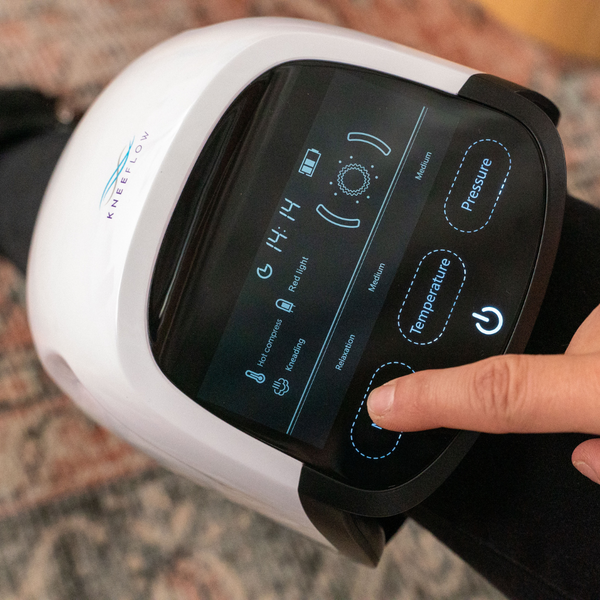
Kneeflow knee massager combines controlled warmth, red light support, and soft airbag massage in a wraparound design made for knee comfort. For people whose knees feel noisy, tired, or tense after normal use, it may support a calmer routine around the joint when symptoms are appropriate for home care.
A Calmer Way to Think About a Noisy Knee
Knee cracking and popping causes can range from harmless movement to symptoms that deserve medical attention. The sound alone does not tell the whole story. A painless crack during a stretch is different from a painful pop during an injury. A soft click during movement is different from locking, swelling, or instability.
The best first step is to notice the pattern. Does the sound hurt? Is the knee swollen? Does it feel unstable? Did the sound happen during an injury? Is movement blocked? Does the sound come and go, or is it consistent and worsening? Those details help separate normal noise from warning signs.
At Flow Knee, we believe knee support should help people respond with more confidence, not more fear. Kneeflow may fit into a gentle comfort routine when the knee is safe for warmth and soft massage. When the sound comes with pain, swelling, locking, or instability, the better next step is to get the knee checked before relying on any home device.
FAQ
Why does my knee crack when I move?
Your knee may crack because gas bubbles shift in joint fluid, tendons move over nearby structures, or the joint changes position during motion. If the sound is painless, occasional, and not linked to swelling or instability, it is often not serious. If cracking comes with pain, locking, swelling, weakness, or a change in movement, it should be evaluated.
What is knee crepitus?
Knee crepitus is a crackling, grinding, popping, or creaky sensation during knee movement. It can be harmless, especially when painless, but it can also appear with arthritis, cartilage changes, kneecap tracking issues, or inflammation. The sound becomes more important when it comes with pain, swelling, stiffness, warmth, or reduced function.
Is knee clicking normal?
Knee clicking can be normal when it is painless, occasional, and does not affect movement. Soft tissues can move over bony areas and create a small click. However, clicking that feels like catching, locking, slipping, or sharp pain may point to a meniscus, tendon, ligament, or joint issue that should be checked.
What causes a popping sound in knee during injury?
A popping sound in the knee during injury may happen with ligament damage, meniscus injury, kneecap instability, or other structural trauma. The sound alone does not confirm the diagnosis, but swelling, severe pain, instability, or trouble bearing weight afterward are warning signs. In that situation, professional evaluation is safer than home treatment.
Does knee cracking mean arthritis?
No, knee cracking does not automatically mean arthritis. Many people have noisy knees without joint disease. Arthritis becomes more likely when cracking or grinding is paired with aching, swelling, stiffness, warmth, reduced motion, or symptoms that worsen over time. A clinician can help determine whether arthritis or another condition is involved.
Can a knee massager help knee cracking?
A knee massager may support comfort if the knee feels mildly tense, tired, or stiff, but it does not treat the cause of cracking or popping. It should not be used over swelling, heat, redness, recent injury, numbness, instability, or sharp pain. If the sound comes with warning signs, medical evaluation comes first.
Why does my knee pop when I bend it?
Your knee may pop when you bend it because tendons, ligaments, or soft tissues move around the joint as it changes position. It can also happen when small gas bubbles shift in the joint fluid. If the popping is painless and does not affect movement, it may not be a concern. If it comes with pain, swelling, locking, weakness, or instability, it should be checked.
How do I know if knee popping is serious?
Knee popping may be more serious when it happens after an injury or comes with swelling, sharp pain, locking, giving way, reduced motion, or trouble bearing weight. A harmless sound is usually painless and brief. A painful or sudden pop with symptoms afterward may suggest a joint, ligament, tendon, or meniscus issue that needs medical evaluation.