Learning how to reduce knee swelling can feel urgent because swelling changes the way the knee looks, feels, and moves. The joint may feel puffy, full, heavy, tight, warm, or harder to bend. Sometimes the swelling appears after a twist, fall, workout, long walk, or hard day on your feet. Other times it builds slowly, which can make the cause harder to understand.
Swelling is not the same as stiffness. Stiffness usually means the knee feels harder to bend, straighten, or move through its normal range. Swelling usually points to fluid buildup, inflammation, or visible puffiness in or around the joint. They can happen together, but they do not always need the same response.
At Flow Knee, we approach knee swelling carefully. A knee massager may support comfort after symptoms have settled, but it should not be used directly over a swollen, hot, red, newly injured, infected-looking, or severely painful knee. Swelling is a signal. The first step is to understand what the knee is trying to tell you.
1. How to Reduce Knee Swelling Starts With Knowing the Cause
How to reduce knee swelling starts with knowing that swelling is a response, not a diagnosis. The knee can swell because of injury, overuse, arthritis, bursitis, infection, gout, meniscus irritation, ligament strain, or fluid buildup inside the joint. A swollen knee may look puffy around the kneecap, feel full behind the knee, or make bending feel restricted.
That is why swelling deserves more attention than ordinary tiredness. The body may be sending fluid to the area because tissues are irritated, inflamed, or damaged. In some cases, swelling is mild and temporary. In others, it is connected to a condition that needs medical evaluation.
The pattern matters. Swelling after a long day of activity may need a different response than swelling after a fall, twist, or sudden pop. A mildly puffy but stable knee is different from a knee that is hot, red, severely painful, unstable, or difficult to bear weight on. Those details help separate safe home care from symptoms that should be checked.
2. Rest the Knee Without Freezing Your Life
How to reduce knee swelling often begins with rest, but rest should be strategic. The goal is not to stop all movement forever. The goal is to reduce the activity that is feeding the swelling. If stairs, squats, kneeling, running, long walks, or standing for hours clearly make the knee puffier, the knee may need a quieter period.
This kind of rest gives irritated tissue room to calm down. It also helps break the cycle of swelling, pushing through, swelling again, and losing confidence in movement. If swelling is mild and the knee feels stable, gentle walking around the house may still be appropriate. If the knee is painful, unstable, or injury-related, activity should be limited until a clinician gives guidance.
The key is not to keep testing the knee just to see if it still hurts. Swelling often responds better to consistency than to repeated experiments. Give the joint a calmer environment, then reintroduce activity gradually as symptoms improve.
3. Use Cold Therapy When Swelling Feels Active
Cold therapy is one of the most common early steps in swollen knee treatment because it may help calm pain and swelling after activity or minor injury. A cold pack can make the area feel less irritated, especially when the knee looks puffy or feels warm after use. The cold should be wrapped in a towel, not placed directly on the skin.
Timing matters. Cold is usually a better fit when swelling feels active, recent, or irritated. Heat may feel pleasant for stiffness, but it can be the wrong choice when the knee is swollen, hot, red, or newly injured. In those cases, warmth may make the area feel more reactive.
A short, controlled cold session is usually better than leaving ice on too long. The knee should feel cooler and calmer, not numb, painful, or skin-irritated. People with circulation problems, reduced sensation, diabetes-related nerve issues, or skin sensitivity should ask a healthcare professional before using ice or heat.
4. How to Reduce Knee Swelling With Elevation
How to reduce knee swelling can also involve positioning. Elevation helps because fluid often responds to gravity. Resting with the knee supported and raised may reduce the sense of pressure around the joint, especially after activity or a long day standing.
The most helpful position usually raises the leg above the level of the heart when possible. A pillow under the calf or heel may feel more comfortable than pressure directly behind the knee. The position should feel supported, not forced, and the knee should not be locked painfully straight.
Elevation is not a cure for every swollen knee, but it can be a useful part of a calm home routine. It works best with rest from aggravating activity and careful monitoring. If swelling keeps increasing despite elevation, or if the calf becomes swollen, painful, red, or unusually tight, medical guidance is important.
5. Add Gentle Compression, Not Tight Pressure
Compression may help control swelling when used properly. A light elastic bandage or knee sleeve can provide gentle support and may help limit fluid buildup. The word “gentle” matters because compression that is too tight can create more problems than it solves.
A wrap should feel snug, not painful. It should not cause numbness, tingling, color changes, throbbing, or increased swelling below the wrap. If any of those symptoms appear, the wrap should be removed. Compression should also be discussed with a clinician when there are circulation issues, blood clot concerns, skin problems, or unexplained swelling.
Compression is not the same as forcing the knee to behave normally. It is only one part of swollen knee treatment. If swelling is severe, sudden, warm, red, or related to injury, compression should not replace proper evaluation.
6. Reduce Knee Inflammation at Home With Gentle Movement
If you’re looking how to reduce knee swelling at home, don’t think about it as a pushing through a painful workout. This path usually means finding the right amount of calm movement once the knee is safe to move. Gentle range-of-motion movements, short walks, and controlled activity may help some knees feel less guarded after the first irritated stage has settled.
Movement matters because total stillness can make the knee feel stiff and weak. Still, swelling changes the plan. A swollen knee should not be forced into deep bends, heavy squats, hard stairs, or intense exercise. Movement should feel easy, light, and controlled.
If swelling increases after movement, the knee is giving feedback. That may mean the activity was too much, too soon, or not the right type. A physical therapist can help identify safe exercises if swelling keeps returning or if the knee feels weak, unstable, or limited.
7. How to Reduce Knee Swelling Without Guessing on Medication
How to reduce knee swelling may include medication guidance for some people, but it should not become guesswork. Over-the-counter pain relievers or anti-inflammatory medicines may help certain adults with pain or inflammation. They are not right for everyone, especially people with stomach issues, kidney concerns, heart conditions, bleeding risks, medication interactions, or other medical factors.
Medication can support comfort, but it does not explain why the knee is swollen. If swelling is caused by infection, injury, gout, inflammatory disease, or internal joint damage, masking pain without understanding the cause can delay the right care.
If medication is being considered, follow label directions and ask a healthcare professional when there is uncertainty. This is especially important if swelling is new, severe, recurring, or paired with warmth, redness, fever, calf symptoms, or trouble walking.
8. Know When Home Care Is Not Enough
How to reduce knee swelling fast should never mean ignoring warning signs. Some swollen knees need medical care because the cause may be more serious than mild overuse. A knee that is badly swollen, red, warm, very painful, unstable, locked, numb, or difficult to bear weight on should be checked.
You should also seek care if swelling follows a fall, twist, sports injury, impact, or sudden movement. Fever, chills, calf swelling, discoloration, drainage, spreading redness, or symptoms that keep worsening are also reasons to get medical attention. These signs can point to infection, blood clot concerns, structural injury, or inflammatory problems that need more than home care.
A practical rule is to look at the whole picture. Mild swelling that improves with rest, cold, elevation, gentle compression, and careful movement may be appropriate for home monitoring. Swelling that is severe, persistent, hot, red, injury-related, or unclear deserves professional evaluation.
Where a Knee Massager May Fit After Swelling Improves
A knee massager is not the first tool for active knee swelling. If the knee is swollen, hot, red, newly injured, or painful to touch, massage and heat should wait. Direct pressure over swelling can be uncomfortable, and warmth may not be appropriate when inflammation is active.
Once swelling has improved and urgent concerns have been ruled out, some people still feel surrounding tension or general knee discomfort. In that case, a gentle comfort routine may have a place. The goal is not to drain fluid or treat the cause of swelling. The goal is to support relaxation around the knee when it is safe.
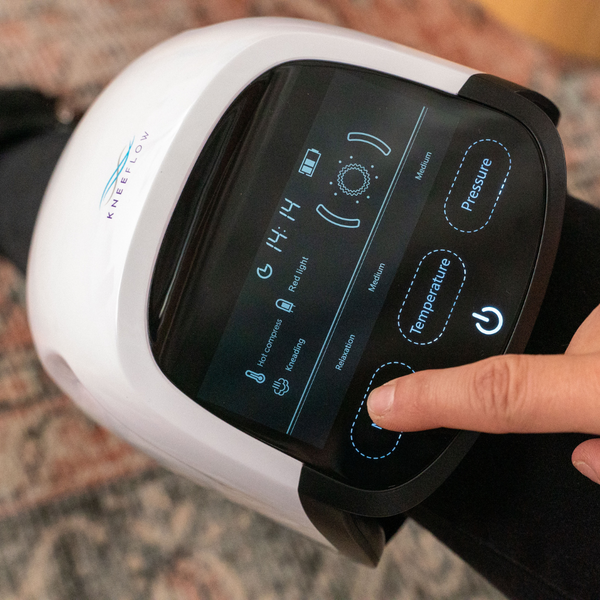
Kneeflow knee massager combines controlled warmth, red light support, and soft airbag massage in a wraparound design made for knee comfort. For someone managing mild, familiar knee discomfort after swelling has settled, it may help create a calmer routine.
A Safer Way to Reduce Knee Swelling
How to reduce knee swelling comes down to responding to the swelling, not fighting it. The knee may be asking for less load, colder support, elevation, gentler movement, and more attention to warning signs. Trying to push through swelling can turn a short interruption into a longer problem.
The best home routine is usually simple. Reduce the trigger. Use cold when swelling is active. Elevate the leg. Add gentle compression if it is safe. Move lightly when the knee allows it. Watch for symptoms that do not fit a mild pattern. Ask for medical help when swelling is severe, hot, red, injury-related, or not improving.
At Flow Knee, we believe knee support should feel thoughtful and safe. Kneeflow may support comfort once swelling has settled and the knee is ready for gentle relaxation. Start with the swelling first, respect the signs your body is giving you, and choose comfort tools only when they fit the moment.
FAQ
What causes knee swelling?
Knee swelling can happen when fluid builds up in or around the joint because of injury, overuse, arthritis, bursitis, gout, infection, meniscus irritation, or ligament strain. The swelling itself is a sign that the knee is reacting to something. The cause matters because a mildly overused knee needs different care than a hot, red, infected-looking, or injury-related swollen knee.
How do I reduce knee swelling at home?
You may be able to reduce mild knee swelling at home with rest from aggravating activity, cold therapy, elevation, gentle compression, and careful movement. The goal is to calm the knee, not force it back to normal. If swelling is severe, worsening, hot, red, injury-related, or paired with fever or trouble walking, home care should not replace medical evaluation.
Is swelling the same as knee stiffness?
No, swelling and stiffness are not the same. Swelling usually means fluid buildup, puffiness, inflammation, or visible fullness around the knee. Stiffness means the knee feels harder to bend, straighten, or move through its normal range. They can happen together, but they often reflect different problems and may need different care.
Should I use heat or ice for a swollen knee?
Ice is usually a better early choice when the knee is actively swollen, irritated, warm, or recently aggravated. Heat may feel helpful for chronic stiffness or muscle tension, but it is not always appropriate for swelling. If the knee is red, hot, newly injured, or infection is possible, ask a healthcare professional before using heat.
Can a knee massager reduce knee swelling?
A knee massager should not be used as the first step for active swelling. Massage and heat may not be appropriate over a swollen, hot, red, newly injured, or painful knee. Once swelling has settled and urgent concerns have been ruled out, a knee massager may support comfort around the joint, but it does not replace treatment for the cause of swelling.
When should I see a doctor for knee swelling?
See a doctor if the knee is badly swollen, red, warm, very painful, unstable, locked, numb, or difficult to bear weight on. You should also get care if swelling follows an injury, comes with fever, calf swelling, discoloration, drainage, or keeps worsening. These signs may point to something that needs more than home care.
Can overuse cause knee swelling?
Yes, overuse can cause knee swelling when repeated stress irritates the joint, tendons, bursae, or surrounding soft tissue. This may happen after long walks, running, squats, stairs, sports, or standing for extended periods. Mild overuse swelling may improve with rest, ice, elevation, and reduced activity, but swelling that keeps returning should be checked to understand the cause.
Can knee swelling go away on its own?
Mild knee swelling may go away on its own if it comes from minor irritation or temporary overuse and the knee is given time to calm down. However, swelling should not be ignored if it is severe, painful, warm, red, injury-related, or makes walking difficult. If it lasts more than a few days or keeps coming back, a healthcare professional can help identify what is causing it.