Knee pain after 50 rarely feels sudden, even when it becomes impossible to ignore. More often, it starts as a background discomfort that comes and goes, then slowly becomes part of everyday movement. What used to feel like minor stiffness after a walk or a long day can begin showing up when getting out of bed, climbing stairs, or standing for too long. That gradual shift is part of what makes chronic pain feel so frustrating. It does not always announce itself clearly, but it changes daily life all the same.
That is why the question of what causes chronic knee pain after 50 carries more weight than it may seem. People are not only asking for a diagnosis. They are trying to understand why the knee feels different now, why recovery seems slower, and why movements that once felt automatic now require more caution. Behind the keyword is a very human concern about comfort, confidence, and long-term mobility.
At Flow Knee, we believe this kind of topic should be handled with calm clarity. Chronic knee pain after 50 is not just a medical issue. It is also a daily experience that affects rhythm, independence, and peace of mind. The goal of a useful article is not to create alarm, but to make the causes feel easier to understand and the path forward feel more grounded.
Why Knee Pain Often Starts Feeling Different After 50
Pain after 50 often feels different because the body itself begins responding differently to strain, recovery, and repetition. Small stresses that once passed unnoticed can start leaving a longer imprint. The knee may feel slower to loosen up, more reactive after activity, or more sensitive to long periods of standing or inactivity. This can make the pain feel more persistent even when there is no dramatic injury behind it.
Part of the emotional challenge comes from the fact that many people do not feel old when the discomfort begins. They still want to stay active, move normally, and trust their body in familiar ways. When the knee starts resisting that expectation, the frustration can feel bigger than the physical pain itself. It raises questions about what has changed and whether the discomfort is now something they simply have to live with.
Understanding this stage differently helps reduce that sense of uncertainty. Pain after 50 is often connected to gradual joint changes, accumulated strain, inflammation, and reduced tissue resilience rather than one isolated event. That makes the problem easier to understand and also easier to support in a realistic way.
Osteoarthritis Is One of the Most Common Causes
One of the most common reasons for chronic knee pain after 50 is osteoarthritis. This happens when the cartilage in the joint begins wearing down over time, making movement feel less smooth and more uncomfortable. The pain is not always sharp. In many cases, it shows up as stiffness, aching, swelling, or a heavy feeling in the joint that becomes more noticeable during daily activity. The Arthritis Foundation’s overview of osteoarthritis of the knee helps explain why this is such a common source of ongoing knee discomfort.
What makes osteoarthritis especially frustrating is that it tends to develop gradually. A person may not notice a clear starting point. Instead, they may find that the knee feels less cooperative year by year, especially in the morning or after sitting for too long. That gradual progression can make the condition feel vague at first, even while it steadily becomes more disruptive.
This is why osteoarthritis often becomes part of the chronic knee pain conversation after 50. It reflects wear, inflammation, and time rather than failure. When people understand that, the pain begins feeling less mysterious and more manageable through steady support and realistic daily care.
Long-Term Wear and Repetitive Strain Also Matter
Not every case of chronic knee pain after 50 begins with arthritis alone. For many people, the pain reflects years of repetitive movement, physical work, sports history, or general wear that has accumulated quietly over time. The knee absorbs more than people often realize, and the effects of that long-term load can become more noticeable as the body’s recovery pace changes.
This kind of strain does not need to come from intense athletic activity. It can come from years of walking on hard surfaces, lifting, kneeling, climbing stairs, or carrying extra weight through the joint. Over time, these repeated patterns can make the knee feel more reactive and less forgiving, especially once the tissues around the joint no longer bounce back as quickly as they once did. Mayo Clinic’s guide to common causes of knee pain also reinforces how many different conditions and long-term stress patterns can contribute to ongoing discomfort.
Seeing chronic pain through this lens helps normalize the experience without dismissing it. The body is not suddenly breaking down. It is reflecting a longer story of use, stress, and adaptation. That perspective makes support feel more appropriate and less like an overreaction.
Inflammation and Stiffness Can Keep the Pain Going
One reason chronic knee pain feels so persistent is that it is often sustained by inflammation and stiffness, not just structural changes alone. A knee that feels irritated or inflamed tends to move differently. Muscles around the joint may tighten in response, movement becomes more guarded, and the joint can start feeling restricted in ways that make the discomfort last longer than expected.
This is where chronic pain becomes more than a symptom. It becomes a pattern. The knee feels stiff, so movement changes. Movement changes, so tension builds. Tension builds, so the joint feels even less comfortable. This cycle can make the pain feel deeper and more constant, even if the original cause was relatively gradual.
That is why relief often needs to support more than one layer of the experience. It is not only about the source of pain, but about the environment around the knee. The more stiffness, irritation, and guarded movement can be eased, the more manageable chronic discomfort can start to feel.
Why Pain After 50 Often Feels Worse During Normal Activities
A frustrating part of chronic knee pain is that it often becomes most noticeable during completely ordinary movements. Walking around the house, standing from a chair, going downstairs, or getting in and out of a car can suddenly feel like events the body now has to negotiate. That can be emotionally disorienting because the pain is no longer tied to unusual effort. It is tied to normal life.
This happens because the knee is involved in so many repeated, weight-bearing actions throughout the day. When the joint is already irritated, worn, or stiff, these everyday movements stop feeling neutral. They become reminders that something in the body needs more support than it used to.
That shift matters because it changes how people interpret their pain. They stop seeing it as occasional soreness and start seeing it as a daily obstacle. Once that happens, support needs to fit daily life too. Relief that only works in theory or only fits special moments tends to feel less useful than support that can actually become part of a normal routine.
Where Daily Support Starts Making a Difference
When chronic knee pain becomes part of life after 50, the most meaningful support is often not dramatic. It is steady. The knee tends to respond better to repeated comfort and reduced tension than to a constant cycle of ignoring the pain until it becomes impossible to overlook. This is why simple, repeatable relief methods can matter so much more than they first appear.
Daily support begins changing the experience because it shortens the distance between discomfort and care. Instead of waiting for the pain to become overwhelming, people begin responding earlier and more consistently. That makes the pain feel less like an interruption and more like something that can be managed with more confidence.
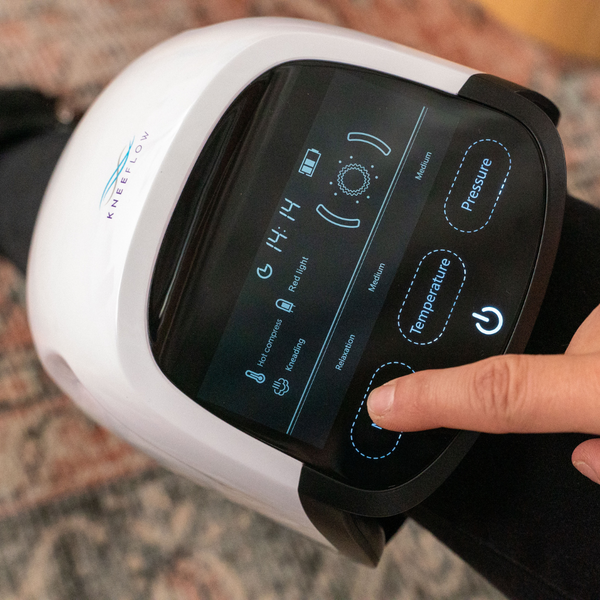
For those looking for at-home support that fits naturally into that rhythm, the Kneeflow heated knee massager reflects how Flow Knee approaches comfort after 50. The emphasis is not on dramatic claims, but on creating a relief experience that feels practical, repeatable, and easier to return to.
Why Understanding the Cause Changes the Experience
A large part of the stress around chronic knee pain comes from not knowing what to make of it. When the discomfort feels vague or inconsistent, it can create a quiet background worry that something is getting worse without explanation. That uncertainty often makes the pain feel heavier than it already is.
Once the likely causes become clearer, the emotional weight begins to change. Osteoarthritis, repetitive strain, inflammation, stiffness, and age-related tissue changes all tell a more understandable story. The knee is not simply failing at random. It is reacting to time, pressure, and the body’s changing recovery patterns. That understanding does not remove the pain, but it often reduces the fear and confusion around it.
This matters because confidence is part of pain management too. When people understand what may be contributing to their discomfort, they are more likely to seek support that fits their reality rather than chase random solutions that do not match the problem.
When Better Support Starts Feeling Like the Right Next Step
Chronic knee pain after 50 becomes especially draining when it begins shaping choices quietly in the background. People walk less, hesitate more, or adjust their routine without fully realizing how much the discomfort is steering the day. At a certain point, the issue is no longer whether the pain is real enough to matter. It is whether support has become necessary enough to stop putting off.
That is where a more practical recovery mindset begins to help. Good support does not need to promise perfection. It needs to make everyday life feel less restricted and more manageable. Heat, massage-based comfort, and consistent daily use all matter because they help reduce the friction between pain and movement in a way that feels realistic.
If knee pain after 50 has started affecting how comfortable or confident you feel from day to day, this may be the right time to explore stronger support. Flow Knee was created for people who want relief that fits real routines and real bodies. If you want help understanding what kind of support may make sense for your situation, you can contact our team and continue the conversation in a way that feels more personal and practical.
When Movement Starts Feeling More Trustworthy Again
Chronic knee pain after 50 often feels discouraging because it changes the relationship people have with ordinary movement. The body starts feeling less predictable, and that can create hesitation even before the pain itself becomes severe. What helps most is not always a dramatic answer, but a clearer understanding of the causes and a steadier path toward support.
The most common causes usually point back to gradual joint changes, osteoarthritis, long-term strain, inflammation, and stiffness that build over time. Once those factors are understood, the experience becomes easier to frame in realistic terms. The pain may still be present, but it no longer feels as confusing or as undefined.
At Flow Knee, we believe support after 50 should feel grounded, calm, and usable in daily life. Relief becomes more meaningful when it helps people trust movement again, not because everything is suddenly perfect, but because the body feels more supported in the moments that matter most.
FAQ
What causes chronic knee pain after 50?
Chronic knee pain after 50 is often caused by osteoarthritis, long-term wear, inflammation, stiffness, and years of repetitive strain on the joint.
Is chronic knee pain after 50 always arthritis?
Not always. Arthritis is common, but chronic pain can also come from repetitive strain, inflammation, past injuries, or age-related joint changes.
Why does knee pain get worse with age?
Knee pain often gets worse with age because cartilage, tissue resilience, and recovery capacity tend to change gradually over time.
Can chronic knee pain after 50 be managed at home?
Many people support chronic knee pain at home through consistent comfort routines, especially when the goal is to reduce stiffness and improve daily ease.
When should knee pain after 50 be taken more seriously?
Knee pain deserves more attention when it starts interfering with everyday movement, confidence, or quality of life on a regular basis.