Knee pain running can feel confusing because it often starts before it becomes a clear injury. A runner may notice a dull ache near the kneecap, tightness after a longer session, or discomfort when going downstairs later in the day. The body keeps moving, but the knee begins sending signals that the training load is no longer feeling as balanced as it should.
That is why knee pain while running deserves a calmer, more complete explanation. It is not always a sign of serious damage, but it is also not something athletes should ignore until it becomes harder to manage. Running-related front knee pain is often connected with patellofemoral pain syndrome, which can be linked to repeated stress, changes in training load, stairs, squatting, or prolonged sitting.
At Flow Knee, we see running pain as both a performance issue and a recovery issue. The goal is not to make every sensation feel alarming. The goal is to help runners understand what the knee may be responding to, how treatment usually fits into recovery, and why consistent support matters before discomfort becomes part of every run.
Why Knee Pain Running Feels So Frustrating
Runners often expect soreness in the legs, but knee pain feels different because it changes trust. A tired muscle can feel like part of training, while a painful knee can make every stride feel uncertain. That uncertainty is what makes the experience emotionally heavier than ordinary post-workout fatigue.
The frustration grows because knee pain rarely follows one clean pattern. It may show up during the run, after the run, while walking downstairs, or after sitting for a while. That variation makes it harder for runners to know whether they should rest, modify training, or seek a clearer diagnosis.
Understanding this pain as a signal rather than a setback changes the way runners respond. The knee may be reacting to load, mechanics, irritation, weakness, or training changes. Once that becomes clearer, the problem feels less random and easier to support with a more practical recovery mindset.
What Usually Causes Knee Pain While Running
Running places repeated force through the knee, especially during longer distances, hill work, speed sessions, or sudden increases in weekly mileage. The joint is not only bending and straightening. It is also absorbing impact, stabilizing the body, and responding to the position of the hips, feet, and surrounding muscles.
One common cause is patellofemoral pain syndrome, often called runner’s knee. This condition can be related to overuse from activities like jogging, squatting, and climbing stairs, as well as sudden changes in frequency, duration, or intensity. That matters because pain may not come from one bad run. It may come from a training pattern the knee has not adapted to yet.
This reframes treatment in a useful way. The goal is not only to quiet pain in the moment. The goal is to understand why the knee is being overloaded and how recovery can support the joint before the same pattern repeats.
Why Runner’s Knee Is So Common
Runner’s knee is common because running demands repetition. The same movement pattern happens thousands of times in one session, which means small imbalances or stress points can become meaningful over distance. A minor issue in strength, mobility, alignment, or recovery can start showing up as pain around the kneecap.
The pain often becomes more noticeable during movements that load the front of the knee. Mayo Clinic notes that patellofemoral pain can increase with running, stairs, squatting, or sitting for long periods. Those triggers help explain why runners may feel fine during parts of training but uncomfortable during daily movements afterward.
That pattern can make the condition feel unpredictable, but it is often connected to how the knee handles repeated stress. Once runners see the connection between training load and daily symptoms, the experience becomes easier to interpret. The pain is not just interrupting training. It is revealing where the body needs better support.
Why Training Changes Can Trigger Knee Pain
Many runners develop knee pain after changing something that seems harmless. A longer route, a new pace goal, extra hill work, different shoes, or more weekly sessions can all shift how much stress the knee absorbs. The change may feel small mentally, but the body still has to adapt physically.
This is why knee pain often appears during periods of motivation. A runner feels ready to improve, so the training plan gets more ambitious before the knee has built the tolerance to match. The issue is not discipline. It is the gap between intention and tissue adaptation.
A more grounded approach helps runners stop seeing pain as failure. It becomes a sign that the knee needs a better recovery rhythm around the training demand. That can include reduced impact, improved strength work, better warm-up habits, and more consistent post-run support.
How Treatment Usually Starts
Treatment for knee pain while running usually begins with reducing the stress that is keeping the knee irritated. That does not always mean stopping all movement, but it often means stepping back from the type of load that makes symptoms worse. Rest, activity modification, and physical therapy are commonly mentioned in medical guidance for patellofemoral pain.
This can be difficult for runners because rest feels like losing progress. But recovery is not the opposite of training. It is the condition that makes training sustainable. A knee that never gets enough time or support to calm down may keep carrying irritation from one session into the next.
Treatment becomes more effective when it is understood as a reset, not a punishment. The runner is not stepping away from performance. They are creating the conditions for the knee to return to movement with less resistance and more trust.
Why Strength and Mechanics Matter
Knee pain during running is not always only about the knee. The hip, thigh, foot, and ankle all influence how force travels through the joint. If the surrounding muscles are not controlling movement well, the knee may absorb more stress than it should.
This is why physical therapy and strengthening often play such an important role. The goal is usually to improve control, stability, and load tolerance so the knee can handle running with less irritation. Comfort matters, but the deeper goal is creating a body that can tolerate training more reliably.
That perspective helps runners think beyond quick relief. Strength and mechanics make recovery feel less temporary because they address the way the knee is being loaded in motion. When the body supports the knee better, running starts to feel more predictable again.
Where Heat, Massage, and Recovery Support Fit
Running-related knee pain often leaves the joint feeling tense, stiff, or guarded after effort. That daily discomfort matters because it shapes how the runner moves between sessions. A knee that never feels fully settled can make the next run feel uncertain before it even begins.
This is where recovery support becomes part of the larger picture. Heat can help the knee feel less stiff, while massage-based comfort can reduce the sense of tension around the joint. These tools do not replace diagnosis, physical therapy, or training changes, but they can make the recovery process easier to repeat consistently.
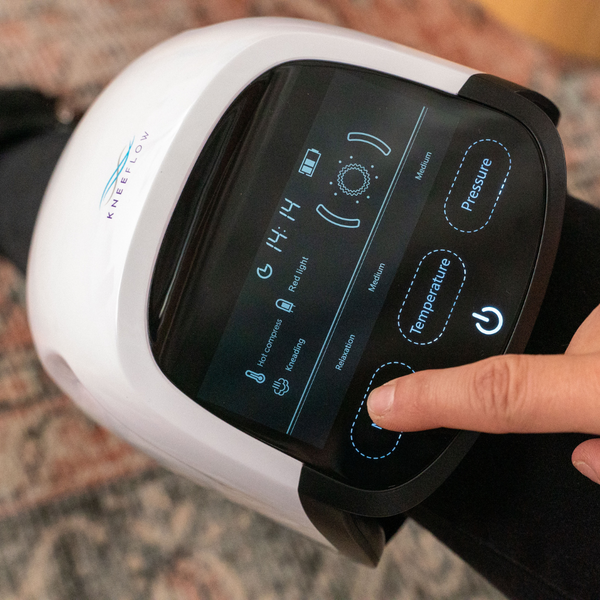
For runners looking for at-home support between training sessions, the Kneeflow heated knee massager reflects how Flow Knee approaches daily knee comfort. The value is not in making dramatic promises. It is in helping the knee feel easier to support after repeated load.
When Knee Pain Should Not Be Ignored
Some running-related knee pain is mild and improves with rest, load management, and better recovery habits. Other symptoms deserve more attention. Pain that worsens, swelling that does not settle, locking, giving way, severe pain, or pain after a clear injury should be taken seriously.
That distinction matters because runners can become very good at adapting around discomfort. The problem is that adapting around pain can change movement patterns and create more stress elsewhere. Waiting too long can turn a manageable issue into something more disruptive.
A careful response protects runners from treating every pain as minor when the knee is clearly asking for more attention. If symptoms feel severe, unstable, or unusually persistent, the safest next step is a proper medical evaluation rather than continued guessing.
When Running Starts Feeling Trustworthy Again
Knee pain while running can feel discouraging because it changes the relationship between effort and confidence. A runner who once focused on pace, distance, or endurance may suddenly focus on whether the next step will hurt. That shift can make training feel smaller before the body is truly limited.
The way forward is usually not built on one perfect fix. It comes from understanding the cause, reducing the stress pattern, improving support around the knee, and letting recovery become part of the training rhythm. That combination helps the runner feel less reactive and more in control.
If knee pain has started affecting your running routine, Flow Knee was built to make daily support feel more practical and repeatable. The Kneeflow heated knee massager can fit into that recovery rhythm by supporting comfort after repeated load and helping knee care feel easier to return to.
FAQ
Why do my knees hurt when I run?
Knee pain while running is often linked to overuse, runner’s knee, training changes, weakness, or irritation around the kneecap.
Is runner’s knee serious?
Runner’s knee is often manageable, but it should not be ignored if pain worsens, swelling appears, or the knee feels unstable.
Should I keep running with knee pain?
Running through knee pain can worsen irritation. A more careful approach usually involves reducing load and understanding the cause.
What helps knee pain after running?
Rest, training adjustments, strengthening, and recovery support can help the knee feel more comfortable after running.
Can heat help knee pain from running?
Heat can help the knee feel less stiff and tense after activity, especially when discomfort is linked to tightness or post-run soreness.