An aching knee doesn't stay in one place. It shows up getting out of bed, on the stairs, standing at the counter a little too long. What causes knee pain isn't always obvious, and it's rarely just "getting older," even though that's the easy answer people reach for. Usually there's something specific behind it. Finding that thing changes what actually helps.
This piece goes through how the knee is put together, the big categories behind what causes knee pain, the signs that mean a doctor should see it today instead of next month, and where heat and compression genuinely belong once you know what you're dealing with.
A lot of people land on the Kneeflow Massager after they've already worked out roughly what's wrong. They just want something practical to add on top of that.
None of this is a diagnosis. It's a way to talk about what's happening, whether that conversation is with a doctor or just with yourself.
A Quick Look at What's Actually Inside the Knee
The knee isn't really a hinge. It just moves like one.
Three bones meet here: the femur, the tibia, and the kneecap. Cartilage covers the bone ends so they slide instead of grinding against each other. Two menisci sit between them and spread the weight out. Four ligaments, ACL, PCL, MCL, LCL, stop the joint from bending sideways or twisting too far. Tendons pull the whole thing into motion, and small fluid sacs called bursae keep tissue from rubbing raw where it moves the most.
None of these parts work in isolation. A tight tendon changes how a ligament gets loaded. A worn meniscus changes how weight sits across the cartilage. Damage one piece and the rest compensates, badly, for a while. What causes knee pain in one person often has nothing to do with what's wrong in someone else, even when both describe it the exact same way.
Common Causes of Knee Pain
Doctors have a long list of specific labels: arthritis, meniscus tear, patellar tendonitis, bursitis. Working out what causes knee pain in a given case usually starts by sorting it into one of three buckets.
Sudden Injuries
You usually remember the moment. A bad step, a twist on the field, a fall down two stairs instead of one. Something gives, and the pain arrives right away instead of building up over weeks.
Ligament tears top this list, ACL, MCL, LCL, PCL, often paired with a torn meniscus since both tend to happen in the same bad movement. Fractures and kneecap dislocations show up here too, usually from a harder hit.
Swelling that comes on fast. Not being able to put weight on it. A knee that feels like it might give way. Trouble bending or straightening it all the way. None of that is a wait-a-month situation, and pushing through it rarely ends well.
Overuse and Strain
Plenty of sore knees don't have a story like that at all. The pain just builds. Long shifts on your feet, training without enough recovery, running on concrete, kneeling on tile for work. Small stresses, repeated enough times.
Tendonitis shows up just under the kneecap more than anywhere else. Bursitis irritates those same fluid sacs mentioned earlier. Pain along the outside of the knee usually points to the IT band, especially in runners who add miles faster than their legs can keep up with.
It gets worse with whatever caused it and eases with rest. Ignore that pattern long enough and it stops being mild. A lot of people push through the early ache for months, then wonder why a simple tendon issue turned into something that needs a real recovery plan.
Arthritis
Morning stiffness. Grinding when you move. Swelling that comes and goes on its own schedule. Pain that eases once you're warmed up, then creeps back after sitting too long. That's arthritis, not an injury.
Osteoarthritis is the common one, cartilage wearing thin until bone sits closer to bone. It shows up more after 40, though a bad injury or years of hard physical work can bring it earlier. Rheumatoid arthritis works differently. It's autoimmune, the immune system going after the joint lining itself, and it usually swells both knees instead of just one.
Stiffness that never fully lets up is what pushes a lot of people toward a knee massager instead of pills all day. It's not about replacing medication. It's about having something to reach for at 6am that doesn't come with a prescription label.
Less Common Causes Worth Knowing
Not everything behind what causes knee pain fits the usual injury or overuse story. Gout hits without warning, usually overnight, sharp pain with real swelling and redness. A joint infection is rarer still and more serious: intense pain, warmth, and fever, all together.
Sometimes the knee isn't actually the problem. Pain traveling down from the hip or lower back can feel like it's coming from the joint when it isn't, which throws off plenty of people trying to guess what causes knee pain without an exam. Carrying extra weight just adds load to whatever else is already going on, step after step.
Fever plus a red, hot knee isn't a wait-and-see situation. That combination means infection, and it needs a doctor now.
When Knee Pain Is a Medical Emergency
Some things can't wait for a regular appointment, no matter what causes knee pain behind them. Not being able to bear weight at all. A knee that looks visibly wrong. A loud pop followed by swelling that shows up in minutes, not hours.
A hot, swollen, red knee with fever needs that same urgency. So does a bad fall, a car accident, or a hard hit during sports, even if you can still limp around on it. Whatever causes knee pain in that moment, walking on it isn't proof things are fine.
This isn't the moment for heat and compression. Get it looked at first. Working out what causes knee pain can wait until the emergency part is handled.
How Doctors Diagnose Knee Pain
Pain that won't calm down after a few days deserves an actual exam, not more guessing. Doctors usually start with questions: how it started, how it's changed. Then they check movement, stability, where it hurts to the touch.
Imaging comes next if the exam points that way. X-rays show bone alignment and arthritis-related changes. MRIs catch the soft tissue detail an X-ray misses, ligaments, meniscus, cartilage. Blood work enters the picture if infection or an inflammatory type of arthritis seems possible.
It can feel like overkill for a sore knee. Skip it, though, and you're treating a guess instead of the actual cause behind what causes knee pain. A lot of people wait months on a guess before finally getting the exam that would have told them in twenty minutes.
How Knee Pain Is Treated
Treatment depends on the cause. Once you know what causes knee pain in your case, most people end up combining a few approaches rather than picking just one.
Home Care in the First Few Days
Back off from whatever's aggravating it, once you have a rough sense of what causes knee pain in your case. Ice for something fresh, heat for stiffness that's been sitting around a while. A compression sleeve. Keeping the leg elevated when you can. Over-the-counter pain relievers help some people, though checking with a doctor or pharmacist first is worth doing, especially if something else is already in the medicine cabinet.
Physical Therapy and Targeted Exercise
Once the sharp edge wears off, a physical therapist can do more than home care ever will. Building strength around the knee. Fixing movement patterns. Loosening whatever's pulling on the joint. Pain that shows up with the exact same movement every time usually means a mechanics problem, and that's a physical therapy fix, not a rest fix.
Skipping this step is probably the single biggest reason people cycle through the same flare-up every few months without ever actually getting better.
Injections and Surgery for More Serious Cases
Steroid injections. Gel injections for certain arthritis cases. Arthroscopic surgery for specific tears. A full knee replacement when the joint is too far gone. Most people work through the conservative stuff first once they understand what causes knee pain in their case, and plenty never need to go further than that.
Where a Knee Massager Like Kneeflow Fits In
Once you actually know what causes knee pain in your case, and once anything serious is ruled out, heat and gentle compression can help with the day-to-day part of it.
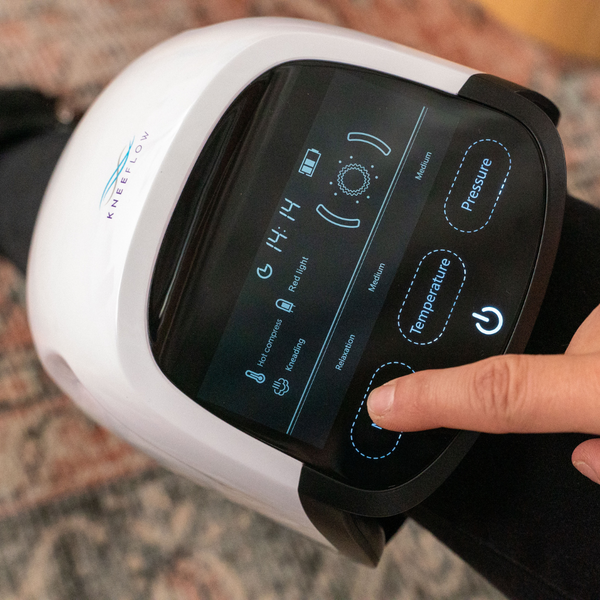
The Kneeflow Massager runs adjustable heat, somewhere between 45 and 55 degrees Celsius depending on the mode, alongside gentle air compression and 19 infrared lights built into a cordless wrap weighing under two pounds. These numbers come straight from the product page rather than our own testing, so double-checking them there before buying is worth doing.
It won't repair cartilage. It won't rebuild a ligament or undo arthritis, whatever a preset mode happens to be named. What it's actually good for is comfort, circulation, and loosening tight muscles around a joint that's already dealing with something bigger. People managing arthritis, old sports injuries, or plain overuse tend to get the most out of it.
Anyone thinking about using it during surgical recovery should run it by their surgeon first. Timing matters more here than people expect, and skipping that check is the kind of shortcut that backfires.
Getting the Most Out of a Heat and Compression Routine
Start short. Even if a session is built for fifteen minutes, five or ten tells you plenty about how a knee reacts. This matters more once you already know what causes knee pain in your specific case, since the wrong intensity on the right device still feels bad.
Match the setting to the moment. Gentle warmth to get moving in the morning. A bit more after activity, when muscles need to settle. Longer and steadier for the kind of stiffness that just sits there, arthritis, an old injury, whatever's been dragging on.
Maxing out the heat or pressure right away isn't a shortcut. The lowest setting that still feels genuinely good usually beats one that feels like too much to sit through.
Consistency beats intensity here. Once or twice a day, most days, does more than one long session a week ever will, and pairing it with a bit of stretching afterward works better than either alone. None of this replaces figuring out what causes knee pain in the first place. It just makes the day-to-day part more livable once you have.
The Bottom Line
What causes knee pain almost always lands in one of a few buckets. A sudden injury. Overuse that built up slowly. Arthritis. Or something rarer worth ruling out early.
New and severe? Get it looked at. Ongoing and wearing you down? Don't just live with it. Tied to arthritis or an old injury? Build a routine around movement, some strength work, and the right comfort tools.
If you've got a sense of what's behind your knee pain and you're wondering whether heat and compression fit in, feel free to reach out to our team with questions, or take a look at the Kneeflow Massager to see if it matches what you're dealing with.
FAQ
Can a Knee Massager Really Help With Arthritis Pain?
For a lot of people, yes, though it helps to be precise about what that means. Arthritis itself doesn't go away. Heat combined with gentle compression can ease stiffness, support circulation, and relax the muscles around the joint, and that often adds up to less rigid mornings and steadier comfort during the day. Devices that combine heat, massage, and light in one session tend to do more than any single feature alone, and using one consistently matters more than any single powerful session.
Can a Knee Massager Replace Physical Therapy or Medical Treatment?
No. A device like this is a support tool, not a full solution. An actual diagnosis, targeted strengthening work, and guidance on movement still need to come from a doctor or physical therapist. What it can do is make exercises more comfortable to get through by easing stiffness beforehand, and help a knee settle down after a demanding day. It works best as one part of a plan, not the whole plan.
How Often Can I Use a Knee Massager?
Most people use one once or twice a day without any issue, often a short session in the morning and another in the evening after activity. Anyone managing a specific medical condition, vascular disease, a recent infection, recent surgery, should check with a doctor about timing and frequency before building it into a daily habit, since those situations sometimes call for a different approach.
Is a Knee Massager Only Useful for Arthritis, or Can Athletes Use One Too?
Athletes make up a big share of the people who get real use out of this kind of device. Post-training recovery. Easing soreness after running or heavy leg work. Warming up circulation before activity. Managing an old injury that flares when training volume climbs. The same mechanism that helps arthritis-related stiffness works for exercise soreness too, though neither use replaces rest, recovery, or a doctor's opinion when something feels seriously off.
What Are the Most Common Causes of Knee Pain?
The most common causes fall into three broad groups: sudden injuries like ligament tears or a torn meniscus, gradual overuse conditions like tendonitis or bursitis, and arthritis, particularly osteoarthritis. Less common causes, gout, joint infection, referred pain from the hip or back, make up a smaller share but still matter, especially when symptoms don't fit the usual pattern. Figuring out which category fits is the clearest first step toward knowing what actually helps.
When Should I See a Doctor for Knee Pain?
See a doctor if pain follows a fall or twisting injury, if there's real swelling, instability, locking, or an inability to bear weight, or if fever comes along with it. Pain that doesn't improve after a few days of reasonable home care, or that keeps getting worse instead of better, also calls for an evaluation rather than more waiting. Morning stiffness or grinding building up over weeks is worth mentioning at a routine visit too, even without these more urgent signs.
Can Knee Pain From Arthritis Be Cured?
No, arthritis doesn't have a cure. Both osteoarthritis and rheumatoid arthritis have real treatment options that meaningfully manage symptoms, though. Treatment usually combines activity changes, strengthening exercise, weight management where it applies, and medical care, sometimes injections or surgery for more advanced cases. Heat and gentle compression support day-to-day symptoms well, but they run alongside a treatment plan rather than replacing one.
Does Body Weight Affect Knee Pain?
Yes. Extra body weight increases the load the knee absorbs with every step, and that can worsen pain from arthritis, overuse, and general wear over time. Even modest weight loss meaningfully reduces joint stress, since the knee handles several times body weight in force during things like walking and climbing stairs. Weight isn't the only factor behind anyone's knee pain, but it's a real piece of the picture worth raising with a doctor.