Using a knee massager after knee replacement can sound helpful when recovery starts to feel repetitive. The knee may be stiff, heavy, swollen, sensitive, or slow to move. Simple things like bending the leg, walking across the room, sleeping comfortably, or keeping up with therapy exercises may feel more demanding than expected.
That does not mean the knee is failing. Knee replacement recovery is a staged process, and the body needs time to heal from surgery, rebuild strength, restore range of motion, and adjust to a new joint surface. Physical therapy, surgeon guidance, medication instructions, wound care, swelling control, and gradual movement are still the foundation.
At Flow Knee, we approach post-surgery comfort carefully. A knee massager can support warmth, relaxation, and a calmer routine when a healthcare professional says it is safe. It should not be used over a healing incision, unusual swelling, heat, redness, infection concerns, numbness, blood clot concerns, or pain that feels sharp, severe, or worsening.
Why Recovery After Knee Replacement Feels So Demanding
Knee replacement recovery asks the body to heal and relearn movement at the same time. The joint has been surgically changed, soft tissues have been affected, and the surrounding muscles often feel weak or guarded. Even when surgery goes well, the early recovery period can come with swelling, stiffness, bruising, fatigue, and limited mobility.
This can be discouraging because progress is not always smooth. One day the knee may bend more easily, and the next day it may feel tighter after therapy, walking, or normal daily use. That rhythm can make people look for tools that help the knee feel calmer between appointments and exercises.
A knee massager after knee replacement belongs in that conversation only as supportive comfort. It cannot replace therapy, rebuild muscle strength, protect the implant, or speed healing on its own. Its role, when cleared by a clinician, is to help the surrounding area feel less tense and easier to relax during recovery.
When a Knee Massager After Knee Replacement May Make Sense
A knee massager after knee replacement may make sense later in recovery when the incision is healed, swelling is stable, and the surgeon or physical therapist has said gentle comfort support is appropriate. Timing matters. What feels soothing months after surgery may be unsafe too soon after surgery.
Some people may use gentle warmth or soft massage around the knee when stiffness becomes the main complaint. Others may find that a calm comfort session helps them relax after a day of prescribed movement, walking, or therapy. The session should never feel painful, intense, or like it is forcing the knee to bend.
The safest mindset is to treat the device as an accessory to recovery, not the recovery plan itself. If physical therapy is the main road, a comfort tool is only a side support. It may make the routine feel easier to return to, but it should always stay within the limits given by the care team.
What a Knee Massager Cannot Do After Surgery
A knee massager after knee replacement cannot correct surgical complications, replace physical therapy, or diagnose the cause of pain. It also cannot reduce every kind of swelling safely. Post-surgical swelling can have different meanings, and some changes need medical review rather than more home treatment.
It is especially important not to use a massager directly over a new incision, open skin, scabbing, drainage, redness, warmth, or infection concern. The knee may already be sensitive, and pressure over healing tissue can irritate the area. Heat may also be inappropriate when the knee is actively swollen, hot, or inflamed.
A massager should never be used to push through warning signs. If the knee is getting more painful, more swollen, hotter, redder, unstable, numb, or difficult to bear weight on, the right next step is medical guidance. Comfort should never cover up a symptom that needs attention.
Knee Replacement Stiffness Relief Starts With the Right Plan
Knee replacement stiffness relief usually starts with the exercises and movement plan given by the surgeon or physical therapist. Range of motion work is important because the knee needs to bend and straighten well enough for daily life. Walking, gentle strengthening, and gradual activity can all be part of the plan, depending on the recovery stage.
Stiffness can feel frustrating because it often returns after sitting, sleeping, or being still for a while. The knee may feel resistant at first, then loosen slightly with gentle movement. That pattern is common, but it should still be discussed with a clinician if stiffness is severe, worsening, or blocking progress.
A knee massager after knee replacement may support stiffness comfort once it is safe to use. Warmth and soft massage may help the area feel less guarded, especially when the goal is relaxation rather than deep pressure. The key is to keep the session gentle and to avoid using comfort tools instead of prescribed movement.
How Heat, Massage, and Compression Should Be Treated Carefully
Heat, massage, and compression can sound harmless, but after knee replacement they need more caution. Heat may feel helpful for muscle tension and chronic stiffness, but it is not always right for a knee that is swollen, hot, red, or recently operated on. Cold therapy is often used for swelling, especially in earlier recovery, but even ice should be used safely and not placed directly on the skin.
Massage also depends on location and timing. Gentle massage around the thigh or surrounding muscles may be different from direct pressure over the surgical site. Scar tissue work, if recommended, should be guided by a professional. The back of the knee, incision area, and any tender or swollen region should be treated carefully.
Compression or airbag massage should also stay mild. Too much pressure can feel uncomfortable or inappropriate after surgery. If a device has settings, the lowest comfortable option is usually the best starting point once the care team has cleared use.
Knee Surgery Rehabilitation Still Depends on Movement
Knee surgery rehabilitation is built around movement that is safe, progressive, and specific. The goal is not only to feel better in the moment. The goal is to restore function so the person can walk, climb stairs, sit, stand, sleep, and return to daily routines with more confidence.
A device cannot replace the work of rebuilding strength. Quadriceps control, hip stability, balance, walking mechanics, and range of motion all matter after knee replacement. Those areas need repetition, guidance, and patience. A massager may help the knee feel more comfortable between those efforts, but it does not create the same gains as therapy.
This distinction protects the user from expecting too much from a comfort tool. The best recovery plans are usually layered. Medical follow-up handles safety. Physical therapy handles function. Home habits support consistency. Comfort tools may help the routine feel less discouraging when used correctly.
Questions to Ask Before Using a Knee Massager After Surgery
Before using a knee massager after knee replacement, it is worth asking the surgeon or physical therapist a few direct questions. Is the incision fully healed? Is swelling at a safe stage? Is heat allowed? Is compression or massage appropriate? Are there areas of the knee to avoid?
These questions matter because each recovery is different. A person with slow wound healing, blood clot risk, diabetes, nerve changes, infection concern, or unusual swelling may need different instructions from someone healing normally. Even two people who had the same surgery can have different safe timelines.
It also helps to ask how long a session should last and what symptoms mean you should stop. A safe session should feel comfortable, not intense. Pain, skin irritation, increased swelling, warmth, numbness, or unusual discomfort should be treated as reasons to pause and ask for guidance.
Where Kneeflow May Fit in a Recovery Routine
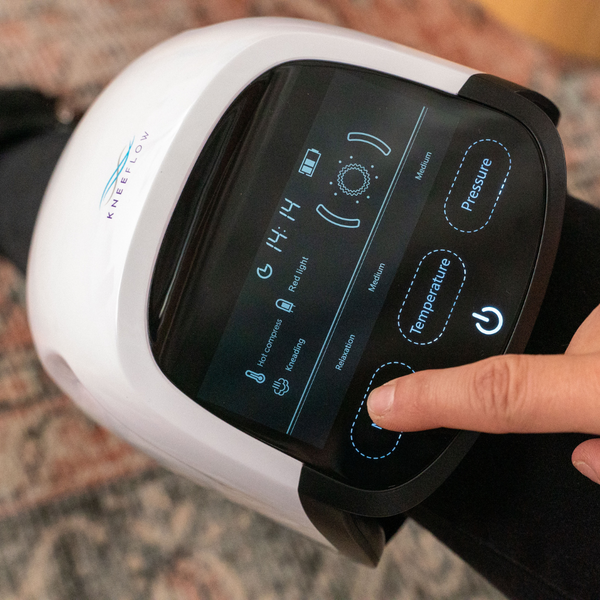
A knee massager after knee replacement may be most useful when the knee has already been medically cleared for gentle comfort support. The Kneeflow cordless knee massager with heat combines controlled warmth, red light support, and soft airbag massage in a wraparound design made for knee comfort. That kind of simplicity can matter when recovery already involves appointments, exercises, and careful daily pacing.
For someone later in recovery, Kneeflow may support a calmer routine after approved activity or during quiet rest. The goal is not to treat the surgery itself. The goal is to help the knee area feel more relaxed when the care team agrees that warmth and gentle massage are appropriate.
Flow Knee products should be viewed as comfort support, not post-surgical treatment. If there is any uncertainty about timing, swelling, incision healing, or pressure around the knee, the safest choice is to ask a healthcare professional before use.
When to Avoid a Knee Massager After Knee Replacement
A knee massager after knee replacement should be avoided if the incision is open, healing poorly, draining, scabbed, or irritated. It should also be avoided over areas that are red, hot, unusually swollen, infected-looking, numb, bruised in a concerning way, or painful to touch.
It is also important to avoid massage or heat if symptoms suggest a complication. Calf swelling, shortness of breath, chest pain, sudden severe pain, fever, chills, increased redness, wound drainage, or rapidly worsening swelling should be treated as medical concerns. A comfort device should never delay care in those situations.
People with circulation problems, reduced sensation, implanted devices, diabetes-related nerve changes, or a history of blood clots should be especially cautious. These conditions can change how safe heat, vibration, compression, or massage may be. Professional clearance matters more than product convenience.
A More Realistic Way to Support Post-Surgery Comfort
Using a knee massager after knee replacement can be helpful when expectations are realistic. Recovery is not about finding one device that does everything. It is about building a routine that supports healing, movement, rest, and confidence without ignoring medical guidance.
A safe comfort routine may include prescribed exercises, walking as directed, swelling management, rest, hydration, medication instructions, and follow-up appointments. If a knee massager is added, it should fit inside that structure. It should not compete with it.
At Flow Knee, we believe post-surgery support should feel careful, steady, and easy to understand. Kneeflow may help create a gentler recovery moment when the knee has been cleared for warmth and soft airbag massage. If you are unsure whether it belongs in your post-replacement routine, contact Flow Knee and ask how to approach comfort support more safely.
FAQ
Can I use a knee massager after knee replacement?
You may be able to use a knee massager after knee replacement, but only when your surgeon or physical therapist says it is safe. Timing matters because the incision, swelling, skin sensitivity, and blood clot risk can all affect whether massage, heat, or compression is appropriate. A massager should not be used over a fresh incision or unusual swelling.
How long after knee replacement can I use a knee massager?
There is no single timeline that fits every patient. Some people may be cleared for gentle comfort support later in recovery, while others may need to wait longer because of swelling, wound healing, nerve sensitivity, or medical risk factors. The safest answer should come from your care team because they know your surgery, healing progress, and restrictions.
Can a knee massager help with knee replacement stiffness relief?
A knee massager may support comfort when stiffness is mild and your clinician has cleared use. Warmth and soft massage may help the area feel more relaxed, but they do not replace range of motion exercises or physical therapy. If stiffness is severe, worsening, or limiting progress, it should be discussed with your surgeon or physical therapist.
Should I use heat after knee replacement surgery?
Heat may feel helpful for some muscle tension later in recovery, but it is not always appropriate after surgery. If the knee is swollen, hot, red, recently injured, or still in an early healing stage, heat may not be the right choice. Always ask your healthcare provider when heat is safe for your specific recovery.
Can massage reduce swelling after knee replacement?
Some forms of gentle, professionally guided massage may be used in certain recovery settings, but swelling after knee replacement should not be treated casually. Swelling can be part of normal healing, but it can also signal irritation or complications. Do not use strong massage, heat, or compression over swelling unless your clinician has approved it.
Is a knee massager after surgery a replacement for physical therapy?
No, a knee massager after surgery is not a replacement for physical therapy. Physical therapy helps restore strength, range of motion, walking ability, balance, and function. A massager may support comfort around the knee when safe, but it does not provide the same rehabilitation benefits as prescribed exercises and professional guidance.
Can I use a knee massager over my scar after knee replacement?
You should not use a knee massager directly over a healing incision, open skin, scabs, drainage, redness, or tenderness. Scar massage, when appropriate, should be guided by your healthcare provider or physical therapist. The surgical area needs careful handling because pressure too early can irritate healing tissue.
What settings should I use on a knee massager after knee replacement?
If your clinician clears you to use a knee massager, start with the gentlest setting. The session should feel comfortable and soothing, not intense or painful. Stop if you notice increased swelling, redness, heat, numbness, skin irritation, or unusual discomfort. More pressure does not mean better recovery.
When should I call a doctor during knee replacement recovery?
Call a doctor if you have fever, chills, worsening pain, increasing redness, wound drainage, sudden swelling, calf pain, shortness of breath, chest pain, numbness, or trouble bearing weight. These symptoms should not be managed with a massager or home comfort device because they may need urgent medical attention.