Swimming for knee pain relief has a solid track record, and the water itself deserves most of the credit. Buoyancy strips away a huge chunk of body weight from the joint, letting a stiff or achy knee move through territory that would feel completely out of reach on dry land. That single fact explains why pools show up so often in physical therapy clinics, and why so many people circle back to swimming once nearly everything else has fallen flat.
Here's what this guide covers: why water behaves the way it does around a sore joint, what the research actually shows, which strokes and pool exercises pay off, which ones deserve a second look, and how a pool habit slots into a broader knee care routine without becoming the entire plan.
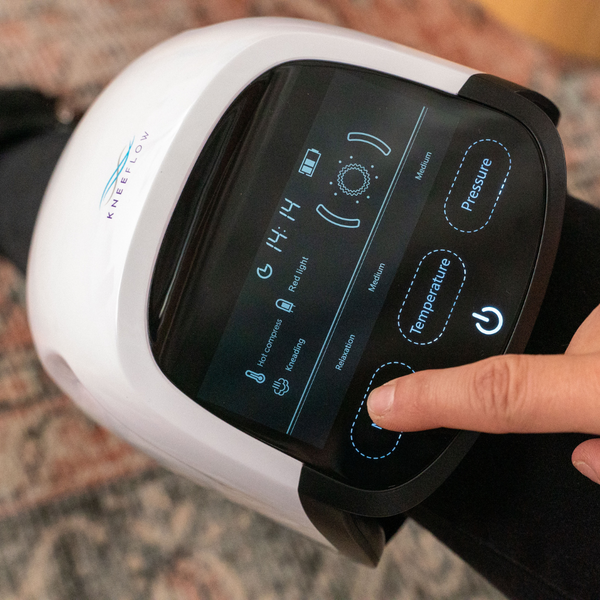
A fair number of people asking us about the Kneeflow Massager also swim on a regular basis, usually curious whether a pool session belongs before heat and compression or after it.
This isn't a training plan for a triathlon. Think of it instead as a way to use water sensibly, for a knee looking for movement without the toll that walking, running, or standing usually takes on it.
What the Research Says About Swimming for Knee Pain Relief
A 2022 systematic review and meta-analysis pooling 22 trials and nearly 1,400 people with knee osteoarthritis found that aquatic exercise led to measurable gains in pain, stiffness, and physical function compared with no exercise, and the pain benefit held up for at least three months afterward.
That same body of research places aquatic exercise roughly on par with land-based exercise across most outcomes, rather than clearly outperforming it. The Arthritis Foundation points out that water workouts cut joint strain while still delivering the cardiovascular and strength payoff regular exercise is known for, part of why aquatic programs have been a go-to recommendation for arthritis for decades.
Study quality across this research varies quite a bit, and several trials are small. Even so, the pattern holds up consistently enough that swimming for knee pain relief earns its place among the better-supported movement options for people managing knee osteoarthritis specifically, rather than functioning as just a softer fallback people settle for.
Getting Started Safely in the Pool
Water temperature shapes the experience more than most people expect. A pool cool enough for lap swimmers can feel downright uncomfortable on a stiff joint, while a warm therapy pool, typically in the low 90s Fahrenheit, tends to loosen muscles and joints before any actual movement starts. Anyone new to swimming for knee pain relief usually notices this within the first couple of sessions, sometimes more than any other single factor.
Easing in beats diving straight into laps. A few minutes walking through waist-deep water, or gentle leg swings holding the pool wall, gets circulation moving and gives you a read on how the knee is feeling that day before committing to anything longer.
Footwear built for water, or simply going barefoot on a textured pool floor, cuts down on slipping while getting in and out, which matters more for anyone whose knee already feels a little unsteady. Taking the entry and exit slowly, rather than rushing down pool steps, sidesteps exactly the kind of sudden twist that aggravates a sensitive knee, and it's an easy detail to overlook when squeezing a swim into a packed schedule.
Strokes and Pool Exercises for Knee Pain
These options make up a smart starting lineup for anyone shaping a water-based habit around a sore knee, spanning full strokes and simple standing exercises alike. Combining a few of these into one session gives a well-rounded shape to swimming for knee pain relief without overloading any single movement pattern.
1. Freestyle With a Relaxed Kick
Freestyle, swum with a light flutter kick rather than a powerful one, moves the knee through a comfortable range without demanding much from it directly. Most of the propulsion comes from the arms and core, leaving the legs to trail along instead of driving the stroke.

2. Backstroke
Backstroke places similar demands on the knee as freestyle, with the bonus of keeping your face out of the water, something plenty of people find easier to relax into. A gentle kick does the job here too, without straining the joint.

3. Water Walking
Walking forward, backward, and sideways through waist- or chest-deep water builds strength and balance with almost none of the impact walking on land carries. It's often the first exercise handed to people starting aquatic physical therapy for exactly this reason.

4. Aqua Jogging
Strapping on a flotation belt to jog in deep water, feet never brushing the pool floor, delivers a cardio workout with zero impact through the knee. It takes some getting used to, but it's about as close to running as most sore knees can tolerate.

5. Standing Leg Lifts at the Wall
Holding the pool wall or edge for balance, lifting one leg forward, sideways, and behind you in slow, controlled movements builds hip and thigh strength that backs up the knee, with water resistance doing the work instead of gravity.

6. Seated Leg Extensions
Sitting on a pool step or floating with support, straightening and bending the knee slowly against water resistance strengthens the quadriceps directly, using water itself as gentle, adjustable resistance instead of a fixed weight.

7. Standing Water Squats
Standing in chest-deep water with feet hip-width apart, bending the knees into a shallow, comfortable squat and pressing back up works the same muscles as a land-based squat, at a fraction of the joint load, since buoyancy is carrying most of your body weight the entire time. This last move rounds out a well-balanced approach to swimming for knee pain relief without asking too much of any single joint in one session.

Strokes and Movements to Approach With Caution
The breaststroke kick, sometimes called the whip kick, twists through the knee in a way that puts real torque on the joint and drives what's known as breaststroker's knee, even in swimmers with no prior knee issues. Anyone folding swimming for knee pain relief into their routine is usually better off skipping this stroke or trading it for a straight flutter kick.
Pushing off hard from the pool wall, or thrashing through an aggressive eggbeater kick while treading water, both load the knee more than most other pool movements and deserve easing into gradually rather than diving straight into at full intensity.
None of this brands these movements unsafe across the board. It flags them as a rougher starting point for a knee that's already unhappy, and swapping them out counts as a completely reasonable call rather than something to grit your teeth through for the sake of a stroke count.
How Often to Swim for Real Benefit
Most of the research behind swimming for knee pain relief involved sessions two to three times a week for around eight weeks before any real shift appeared, a fair timeline to set expectations around rather than a quick fix.
Sessions in the twenty to thirty minute range, kept consistent, beat occasional long swims more often than not for anyone serious about swimming for knee pain relief. Building the habit outweighs pushing distance or speed, especially in the first several weeks, and a shorter session done reliably outperforms an ambitious one attended once every couple of weeks.
Improvement tends to build slowly, mirroring most joint-friendly exercise approaches, so judging your progress after a visit or two doesn't give the effort a fair shot at proving itself. Tracking how the knee feels across several weeks, instead of after a single swim, offers a far clearer picture of whether the habit is actually paying off.
Common Mistakes That Undermine a Pool Routine
Pushing through sharp pain instead of adjusting stroke or intensity ranks as the most common misstep, since sharp pain in water signals the same thing it would anywhere else: back off.
Skipping the warm-up because you're already surrounded by water comes in a close second. Water doesn't replace the value of easing into movement, and diving straight into hard laps on a stiff knee usually feels worse than spending five minutes walking through the shallow end first. This one habit shift moves the needle on swimming for knee pain relief more than almost anything else on this list.
Leaning only on strokes that stress the knee, breaststroke chief among them, without trying gentler alternatives, closes out the list. Plenty of people write off swimming as ineffective for their knee when really it's one specific stroke causing the trouble, not the activity itself.
When Swimming Isn't Enough on Its Own
Swimming backs up a broader knee care plan, but it doesn't substitute for a diagnosis or medical treatment. Building your swimming for knee pain relief habit is meant to run alongside professional guidance, not in place of it. Knee pain following a fall, a twisting injury, or a direct impact calls for an evaluation before any new exercise routine, pool-based or otherwise.
Significant swelling, a knee that locks or feels unstable, visible deformity, an inability to bear weight, or pain that arrives suddenly and severely all point toward a doctor's exam rather than a swim session. The same goes for pain that keeps climbing instead of easing over a couple of weeks of gentle pool work.
Anyone recovering from knee surgery, sitting with an unclear diagnosis, or dealing with an open wound or skin infection should check with a doctor before getting into a pool at all, no matter how gentle the planned routine sounds. Chlorine and standing water can complicate healing in ways that have nothing to do with the knee itself, something worth ruling out before adding swimming for knee pain relief to a recovery plan.
Building Swimming Into a Broader Knee Care Routine
Swimming for knee pain relief pulls its weight best alongside strength work outside the pool, steady activity on land, and comfort tools like heat or gentle compression, rather than carrying an entire routine solo.
A short session with something like the Kneeflow Massager before heading to the pool can loosen stiffness enough to make getting into the water more comfortable, while a session afterward eases whatever tension built up during a longer swim.
Swimming won't fix every knee, and it was never designed to. For the everyday stiffness and mild discomfort a lot of people carry around day after day, it stands as a well-supported, low-impact addition worth folding into a routine consistently, rather than trying once and calling it quits.
If you're curious how swimming for knee pain relief might pair with heat and gentle compression around your pool schedule, connect with our team with questions about timing sessions, or which settings suit before and after a swim.
FAQ
Is Swimming Good for Knee Pain?
For a lot of people, yes, particularly for pain tied to knee osteoarthritis. A 2022 systematic review and meta-analysis of 22 trials found measurable improvements in pain, stiffness, and physical function from aquatic exercise compared with no exercise, with the pain benefit lasting at least three months. Buoyancy strips away much of the load a knee normally carries, letting movement happen with less discomfort. Results build with steady practice over several weeks rather than a single swim, and the payoff grows when paired with other habits like sensible activity and strength work instead of standing alone.
What Strokes Are Best for Swimming With Knee Pain?
Freestyle and backstroke, swum with a light, relaxed kick, rank among the friendliest strokes for a sore knee, since most of the propulsion comes from the arms and core rather than a demanding kick. Water walking and aqua jogging with a flotation belt sit even gentler on the scale, delivering cardio benefit with essentially no impact through the joint. Breaststroke, the whip kick in particular, is the stroke most tied to knee irritation, so minimizing it or swapping in a straight flutter kick makes sense once a knee is already sensitive.
How Often Should I Swim for Knee Pain Relief?
Two to three sessions a week for around eight weeks matches what most of the supporting research actually tested, a reasonable timeline to expect before judging whether it's helping. Sessions of twenty to thirty minutes done consistently outperform occasional longer swims, and building a steady habit matters more than distance or speed early on. Results generally build gradually, so giving a routine several weeks before deciding whether it's making a real difference makes sense.
Can Swimming Help With Knee Osteoarthritis Specifically?
Yes, knee osteoarthritis is the condition studied most directly in aquatic exercise research, and multiple reviews show real improvement in pain, stiffness, and function for this group. Swimming doesn't reverse joint damage or rebuild cartilage, and it isn't a substitute for medical care, but it stands as a well-supported addition to a broader plan that might include strength training, weight management, and a doctor's input. How much benefit shows up depends on how advanced the joint changes are and how consistently someone actually swims.
Is Swimming Safe After a Knee Injury or Surgery?
Not without a doctor's clearance first. Water exercise often plays a role in rehabilitation after knee surgery, but the right timing, intensity, and specific movements hinge entirely on the procedure and how healing is progressing. Getting into a pool too early, or picking the wrong stroke, can interfere with recovery even though water itself sits gentle on joints in general. Once cleared, many of the pool exercises covered in general guidance around swimming for knee pain relief can become a sensible part of a supervised recovery plan.
Should I Swim Before or After Other Exercise?
Either can work, depending on what you're after. Swimming before other activity can loosen a stiff knee and ease you into movement, while swimming afterward helps release tension built up during a workout or a long day on your feet. Some people like pairing a short pool session with heat beforehand, then land-based strength work later in the week, covering different angles of a routine. There's no single correct order, and swimming consistently matters more than exactly when the session happens.
Do I Need Special Equipment to Swim With Knee Pain?
Not much beyond what most pools already have on hand. A flotation belt makes aqua jogging accessible without any running motion touching the pool floor, and water shoes help with grip on wet surfaces getting in and out. Some people use a pool noodle or kickboard for support during standing leg exercises, though none of this gear is required to get started, and a basic routine built around water walking and gentle strokes works fine without any equipment at all.
When Should I Stop and See a Doctor Instead of Swimming Through It?
Stop and get evaluated if knee pain follows a fall or twisting injury, if there's significant swelling, warmth, or redness, if the knee locks or feels unstable, or if pain arrives suddenly and severely rather than building gradually. Pain that keeps climbing instead of easing after a couple of weeks of gentle pool exercise deserves a look too. Ordinary stiffness that responds to rest and gentle movement is generally fine to keep managing at home, but anything outside that pattern calls for a professional's evaluation rather than continued pool sessions.