Knee pain when bending can make ordinary movement feel less simple. Sitting down, getting up from a chair, climbing stairs, kneeling, squatting, exercising, or stepping into a car may suddenly bring discomfort that was not as noticeable at rest. Sometimes it feels dull and stiff. Other times it feels sharp, tight, or protective, as if the knee does not want to move any farther.
That does not always mean something serious is happening. The knee is a busy joint, and bending asks many parts to work together: cartilage, tendons, ligaments, muscles, kneecap tracking, fluid-filled bursae, and the joint surfaces themselves. When one area is irritated, bending can make the problem easier to feel.
At Flow Knee, we approach knee comfort carefully. A knee massager can support warmth, relaxation, and daily comfort, but it should not replace a diagnosis, physical therapy, medical care, or urgent evaluation when symptoms are intense, sudden, swollen, unstable, or getting worse.
1. Overuse Can Make Bending Feel Irritated
Overuse is one of the most common reasons knee pain when bending starts to show up. The knee may not hurt during the activity itself. It may begin later, after stairs, long walks, gym sessions, running, cleaning, yard work, or a day spent standing on hard floors.
This kind of discomfort often feels like the knee has been asked to do more than it was ready for. The pain may sit around the front of the knee, along the sides, or feel more general around the joint. Bending can make it more noticeable because the irritated tissues are being loaded again.
Rest, pacing, and gentler movement may help when the issue is mild. The goal is not to stop moving completely unless a clinician advises it. The goal is to avoid pushing through pain while the knee is clearly asking for a calmer routine.
A comfort device may fit here if the knee feels tired, stiff, or tense after ordinary use. Warmth and gentle massage can support relaxation around the area without pretending to fix the underlying cause.
2. Knee Arthritis Can Affect Bending and Straightening
Arthritis can make the knee feel stiff, swollen, achy, or harder to bend fully. Some people notice discomfort after sitting for a long time. Others feel it in the morning, after rest, or after a day with more walking than usual.
Knee pain when bending related to arthritis may feel deep inside the joint. It may also come with creaking, grinding, swelling, or a sense that the knee does not move as smoothly as it used to. The discomfort can change from day to day.
A careful routine matters here. Gentle movement, safe strength work, pacing, and medical guidance may all play a role, depending on the person. Home comfort support can help the knee feel cared for, but arthritis symptoms should be discussed with a healthcare professional if they are limiting daily life.
Flow Knee products are best viewed as supportive comfort. They may help with warmth and relaxation, but they are not a replacement for arthritis care or a treatment plan.
3. Patellar Tendon Irritation Can Create Front Knee Pain
The patellar tendon sits below the kneecap and helps connect the kneecap to the shinbone. When this area becomes irritated, knee pain bending may feel more focused at the front of the knee, especially during stairs, squats, jumping, running, or rising from a seated position.
This type of discomfort can feel tender, sharp, or tight under the kneecap. Some people describe it as a pulling sensation. Others notice that the knee feels fine at rest but complains when loaded in a bent position.
Front knee pain can have several causes, so it is important not to self-diagnose too quickly. If pain is persistent, worsening, or connected to sports activity, a clinician or physical therapist can help identify what is actually happening.
For mild tension around the knee, gentle warmth and soft massage may help the area feel less guarded. Strong pressure, aggressive stretching, or pushing through sharp pain is not a good comfort strategy.
4. Meniscus Irritation or Injury Can Make Bending Feel Sharp
The meniscus is cartilage that helps cushion and stabilize the knee. When it becomes irritated or injured, bending can feel uncomfortable, especially if the movement includes twisting, squatting, or deep knee flexion.
Sharp knee pain when bending knee movements may sometimes be connected to meniscus issues, especially if there was a twist, sudden turn, awkward step, or sports-related motion. Some people also notice catching, locking, swelling, or a feeling that the knee does not move normally.
This is one area where caution matters. A knee that locks, gives way, swells significantly, or hurts sharply after an injury should be checked. Home comfort steps should not be used to push through a possible structural problem.
If a clinician has ruled out urgent concerns, comfort routines may help the surrounding muscles feel more relaxed. The priority should always be safe movement and proper evaluation when symptoms suggest more than everyday stiffness.
5. Bursitis Can Make Kneeling and Bending Uncomfortable
Bursae are small fluid-filled sacs that help reduce friction around joints. When a bursa near the knee becomes irritated, the area may feel swollen, tender, warm, or sensitive to pressure.
Bursitis can make bending uncomfortable because the irritated area is being compressed or stretched. It may be more noticeable after kneeling, repeated pressure, long activity, or certain work tasks. Some people feel discomfort at the front of the knee, while others may feel tenderness in another area depending on which bursa is involved.
If swelling, warmth, redness, fever, or strong tenderness appears, it is important to seek medical guidance. Infection and inflammatory issues need more caution than a simple at-home comfort plan.
For mild, familiar knee discomfort, rest from pressure, gentle positioning, and avoiding kneeling may help. A knee massager should not be used directly over unusual swelling, heat, or skin irritation unless a clinician says it is safe.
6. Knee Stiffness When Bending May Come From Rest or Tight Muscles
Knee stiffness when bending can happen after long sitting, travel, desk work, inactivity, or a sudden return to movement. The knee may not feel severely painful, but it may feel resistant, tight, or slow to move.
Sometimes the stiffness is not only inside the knee. Tightness in the quadriceps, hamstrings, calves, or hips can affect how the knee feels during bending. The joint may be taking the complaint from surrounding muscles that are not moving well.
A gentle warm-up can help some people. Light walking, easy range-of-motion movement, and careful stretching may make bending feel smoother. The movement should feel controlled, not forced.
This is where a comfort routine can be useful. Warmth, soft massage, and a few minutes of quiet support may help the knee area feel more relaxed before or after daily activity. The key is staying gentle.
7. Recent Injury or Swelling Should Be Treated More Carefully
Not all knee pain when bending belongs in a simple comfort routine. If pain started after a fall, twist, impact, sports injury, or sudden movement, it deserves more caution. The same is true if the knee is swollen, red, hot, unstable, locked, or difficult to straighten.
Bending pain after an injury may involve ligaments, cartilage, tendons, bone, or joint swelling. Trying to stretch, massage, or “work through it” can make the situation worse if the knee needs medical evaluation.
A good rule is to look at the whole picture. Can you put weight on the knee? Is the pain severe? Is swelling increasing? Does the knee give way? Did you hear or feel a pop? Is movement blocked? If any of these are present, professional care is the safer next step.
Flow Knee should not be used as a way to ignore symptoms that feel unusual or urgent. Comfort support works best when the knee has been reasonably assessed and the symptoms are mild enough for home care.
How to Find Gentle Relief When Bending Hurts
Relief starts with understanding the pattern. When does the pain happen? Is it during stairs, squats, sitting, kneeling, exercise, or standing up? Does it feel sharp or achy? Does it improve after gentle movement, or does it worsen the more you use the knee?
If symptoms are mild and familiar, simple changes may help. Reduce activities that clearly irritate the knee for a short period. Avoid deep bending if it triggers pain. Use supportive footwear. Try gentle movement instead of sudden loading. Give the knee a calmer transition before exercise or after long sitting.
Warmth can be helpful when the knee feels stiff or guarded. Cold may feel better when the knee feels irritated after activity. Pillow support, rest, and gradual movement can also make daily bending feel less stressful.
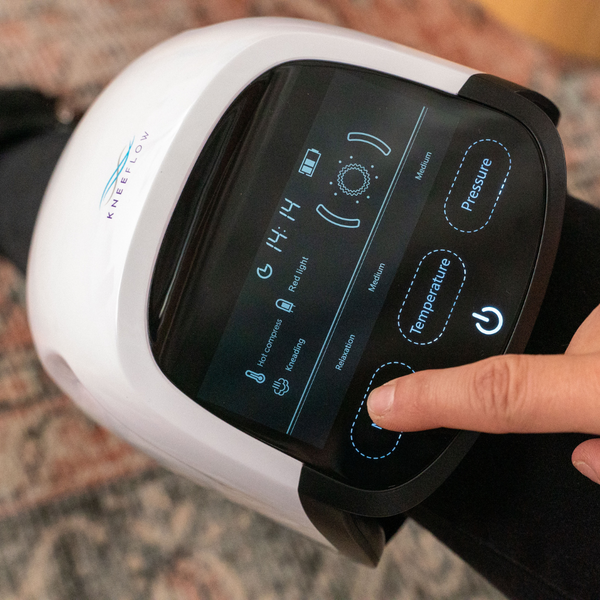
A knee-specific massager may fit into this routine when the goal is comfort, not treatment. Kneeflow combines heat, red light support, and soft airbag massage in a wraparound design made for knee comfort. For people who want repeatable support after activity or during quiet evening care, that simplicity can matter.
When to Get Medical Help for Knee Pain When Bending
Some symptoms should be checked instead of managed at home. Seek medical guidance if knee pain when bending is severe, sudden, injury-related, or paired with swelling, warmth, redness, instability, locking, numbness, fever, or inability to bear weight normally.
You should also consider getting evaluated if the pain keeps returning, limits daily activity, interrupts sleep, or does not improve with reasonable rest and gentle care. A healthcare professional can help determine whether the cause is arthritis, tendon irritation, bursitis, meniscus injury, ligament strain, or another issue.
This matters because the right relief depends on the cause. A stiff knee after long sitting needs a different plan than a swollen knee after a twist. A tender tendon needs different care than a joint that locks.
Home support is most useful when it sits inside a sensible plan. Listen to the knee, avoid pushing through warning signs, and use comfort tools in a way that feels safe and controlled.
A Better Way to Support Bending Comfort
Knee pain when bending can make the day feel smaller. Stairs become slower. Sitting becomes more careful. Exercise feels uncertain. Even simple movements can make you think twice.
The first step is not to assume the worst. The first step is to notice the pattern and respond with care. Mild stiffness, overuse, and everyday tension may benefit from pacing, gentle movement, warmth, rest, and a more consistent comfort routine. Sharp, swollen, unstable, or worsening symptoms deserve medical attention.
At Flow Knee, we believe knee support should feel simple, safe, and easy to return to. Kneeflow can be a practical option for people who want controlled warmth, soft airbag massage, and knee-specific comfort as part of a daily routine. It is not a diagnosis or a cure, but it can help make bending feel less frustrating when the knee needs gentler care. If you are unsure whether Kneeflow fits your comfort routine, contact us and our team can help you take the next step with more clarity.
FAQ
Why do I have knee pain when bending?
It may come from overuse, arthritis, tendon irritation, bursitis, meniscus issues, stiffness, past injury, or swelling around the joint.
What causes sharp knee pain when bending knee movements?
Sharp pain may be linked to injury, tendon irritation, meniscus problems, swelling, or joint stress. Persistent sharp pain should be checked.
Can knee stiffness when bending improve with home care?
Mild stiffness may improve with gentle movement, warmth, rest, and pacing. Worsening or swollen knees need medical guidance.
Should I exercise with knee pain bending discomfort?
Avoid movements that increase pain. Gentle activity may help some people, but injury-related or sharp pain should be evaluated first.
Can a knee massager help knee pain when bending?
A knee massager may support comfort, warmth, and relaxation, but it should not replace medical care or physical therapy.