By 3pm your knees are done. Retail floors, nurses' stations, kitchen lines, hair salons, anywhere that keeps a person upright for eight or ten hours straight. Knee pain from standing all day gets treated like it's just part of the job, something to grit through. Mostly it isn't damaged. It's fatigue. And fatigue actually responds to changes you can make.
Here's where this goes: why standing wears differently on a knee than walking does, what the research actually found, telling normal end-of-shift ache apart from something that needs a doctor, and the specific things that help, shoes, breaks, a decent recovery routine once the shift's over.
A lot of the people who write in about the Kneeflow Massager work jobs that keep them on their feet all day. Retail floors. Hospital units. Kitchen lines. That kind of wear looks different from a runner's knee, so it needs a different answer.
This isn't about writing off your knee pain as nothing. It's about telling apart the kind that eases up with a smarter routine from the kind that needs an actual exam.
Why Standing All Day Wears on the Knees
Walking has a beat to it. Contract, release, shift the load, repeat, step after step. Standing kills that rhythm almost entirely. The same muscles hold one position for hours straight. Blood sinks lower in the legs instead of circulating. The knee just sits there absorbing the same unchanging weight instead of passing it around.
Researchers looking at cartilage during prolonged standing found the tissue compresses more the longer someone stays upright, and that compression shows up within a single shift, measurably. Not a tear. Not a break. More like a sponge that's been sat on for hours. Still fine. Just squeezed flatter than it wants to be.
Weight plays into it too. Standing the same eight hours hits someone carrying extra weight harder, since gravity doesn't care whether the load moves, only how much of it there is. Two people doing the identical job, side by side, and the shift can feel completely different by the end of it.
Age and prior injury history shift things as well. A knee that's had a rough ligament sprain years back, or one that's already showing early arthritis, tends to complain louder under the same standing load than one with a clean history. That's part of why two coworkers can describe wildly different levels of knee pain from standing all day despite working the exact same shift.
Hours of steady, unrelenting load with nowhere to redistribute it. That's mostly what knee pain from standing all day comes down to, not one bad moment but thousands of small unbroken ones stacked on top of each other.
What the Research Actually Shows
A systematic review and meta-analysis in the British Journal of Sports Medicine looked at occupational standing directly and found a real link to musculoskeletal symptoms, lower limbs included, across a stack of studies on standing workers. That link held up well enough that researchers now count prolonged standing as an actual occupational risk factor. Not just something people complain about at the end of a shift.
Break frequency kept showing up as one of the clearer pieces of this. Workers taking fewer breaks reported more discomfort. Separate flooring studies found anti-fatigue mats produced better physiological outcomes during simulated standing work than plain hard flooring. Nurses turn up in this research constantly, probably because the job stacks long standing hours on top of fast, awkward movements.
None of it proves one single fix solves everything. What it does show is that knee pain from standing all day is documented, studied, and it responds to specific changes rather than something you just push through. That matters if you've ever been told, straight out or between the lines, that this kind of ache just comes with the territory and there's nothing to be done. It isn't a fair thing to hear, and the research doesn't back it up either.
Ordinary Fatigue vs. Something That Needs a Doctor
Most end-of-shift ache is exactly what it looks like. Dull. Achy. Worse by closing time, better after a full night's sleep, back again next shift. That pattern points to fatigue and mild inflammation, not a structural problem, and it responds well to better shoes and actual breaks.
A few signs point somewhere else entirely. Swelling that won't go down overnight. Pain that's sharp instead of achy, or worse on one specific movement rather than generally tired. Locking. Catching. A sense the knee might give out. Pain showing up even on days off, when standing isn't even the trigger anymore.
Any of that deserves a real look, not another pair of insoles. Standing-related discomfort usually shifts within a couple weeks of routine changes. If it's not budging at all, something else is probably in play, and pretending every version of knee pain from standing all day is automatically harmless is the wrong call. A quick doctor's visit costs far less time than months spent guessing.
Footwear, Insoles, and Flooring That Actually Help
Shoes matter more here than almost anywhere else in knee care. They're the one buffer between a hard floor and hours standing on it. Anyone serious about easing knee pain from standing all day should start here before anything else on this list. Cushioned, supportive shoes with a stable heel counter cut down how much impact travels up the leg, and swapping them out before the cushioning is visibly gone matters more than people think. A worn-out shoe does basically nothing even if it still looks fine sitting in the box.
Insoles help people whose shoes already fit but still leave them sore by the end of a shift. Firmer support usually beats soft, plush padding here, since stability under sustained weight matters more than a soft feeling for the first ten minutes. Custom orthotics make sense for anyone whose knee pain from standing all day traces back to how their foot sits, though a decent over-the-counter insole handles it for most people without that extra step.
Anti-fatigue mats deserve genuine credit. Research on standing workstations found flooring made a measurable physiological difference across a full shift, not just a subjective comfort bump. Checkout counter, nurses' station, kitchen line, wherever the post stays fixed, a mat underfoot is one of the more evidence-backed changes on this whole list.
Micro-Breaks and Movement During a Shift
Even brief movement resets what standing still can't. Shift your weight. Walk a short loop. A few calf raises behind the register. Small stuff like that briefly kicks the muscle pump back on that static standing shuts off. It adds up more than people expect while dealing with knee pain from standing all day.
Sitting two or three minutes, when a break allows it, does more for circulation than just standing somewhere different. If a stool's an option for brief moments, using it isn't slacking off. It's exactly the kind of recovery the research keeps pointing at, and plenty of workplaces are more open to a sit-stool than people assume until they actually ask for one.
Frequency wins over duration. Shifting position for thirty seconds every twenty minutes tends to beat one long break stuck in the middle of an eight-hour shift, since the knee never gets a chance to fully settle into that unchanging load in the first place. Setting a phone reminder for the first couple of weeks helps the habit stick until it's automatic, which matters more than most people expect for anyone serious about easing knee pain from standing all day.
Compression, Heat, and Recovering After a Shift
Compression socks or sleeves worn during a shift support venous return, blood flowing back up the leg, which standing all day works against by design. Plenty of people managing knee pain from standing all day notice less swelling and less heaviness by evening once compression enters the picture.
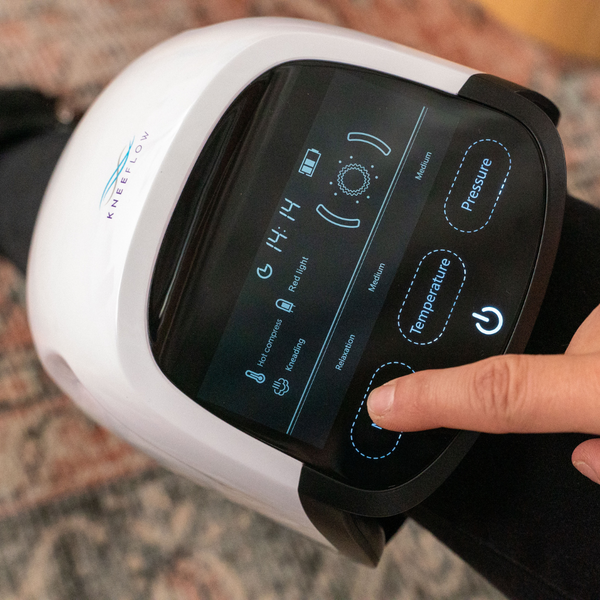
Heat after work eases the muscle tightness that builds up from hours of static load. We built the Kneeflow Massager around exactly this kind of end-of-shift routine, adjustable heat paired with gentle air compression, so a short session undoes a piece of what an eight-hour shift does to a tired joint.
Legs up for even fifteen minutes after work, feet above heart level if you can manage it, finally works with gravity instead of against it. Pair that with a bit of heat or gentle movement and it covers more ground than any single step alone. Consistency across a full week matters more than one perfect evening of recovery, and that's the piece people managing knee pain from standing all day tend to skip once the initial motivation fades.
Common Mistakes People Make
Ignoring early discomfort until it turns into a real problem. That's the big one. A mild ache after a long shift is normal for most people dealing with knee pain from standing all day. The same ache three shifts running, getting worse each time, is a signal to act on rather than push through.
Wrong shoes for the job comes in close behind. Fashion-forward flats, sneakers with the cushioning gone, anything without real support turns an eight-hour shift into a much longer recovery than it needs to be. What's on your feet matters as much as anything you do afterward, and it's usually the cheapest fix on this entire list for anyone battling knee pain from standing all day.
Skipping recovery entirely rounds it out. Coming home, sitting with bad knee posture, legs down, no elevation, no heat, no movement. Whatever built up all day just sits there overnight instead of settling. A day off doesn't reset knee pain from standing all day if the evenings look identical to the shifts.
Who Deals With This Most
Retail and grocery workers spend whole shifts on concrete or tile with barely any give, often with no option to sit even briefly. Nurses and healthcare workers stack quick, awkward movements, lifting, turning, reaching, on top of hours already spent upright. Teachers, hairdressers, and food service workers round out the group most likely to end up searching knee pain from standing all day, usually after realizing it isn't fading on its own.
Factory and assembly-line work adds its own layer, standing paired with repetitive motion in a fixed spot for shift after shift. Warehouse staff and security workers hold posts for entire shifts with barely any change in position, their own particular flavor of the same problem. Hospitality and event staff, bartenders, hosts, ushers, deal with long stretches on hard flooring too, often on top of late hours that leave less time for real recovery. What links all these jobs isn't the industry. It's simply not having a choice in the matter, which is exactly why workplace-level fixes, mats, footwear policy, break structure, carry more weight here than in almost any other category of knee pain.
Building a Routine That Actually Holds Up
Layer a few small things instead of betting everything on one. Better shoes. A mat if the job allows it. Movement worked into the shift. An actual recovery routine once the day ends. That combination covers most of what the research actually supports. None of it looks dramatic by itself. Stacked together over a few weeks, it usually adds up to a genuinely different feeling by the end of a shift.
If you're dealing with knee pain from standing all day and wondering whether heat and compression belong in that routine, feel free to call us about timing a session around your shift, or check out the Kneeflow Massager to see if it fits your situation.
FAQ
Why Do My Knees Hurt So Much From Standing All Day?
Standing keeps the knee under one steady, unchanging load instead of the varied load walking creates, and research on prolonged standing shows cartilage actually compresses measurably over a shift. Blood also pools lower in the legs without the muscle-pump effect walking provides, adding to the heaviness a lot of people feel by day's end. This is a documented occupational pattern, not just a personal complaint, and it responds well to footwear changes, movement breaks, and end-of-shift recovery for most people.
What Are the Best Shoes for Knee Pain From Standing All Day?
Supportive shoes with real cushioning and a stable heel counter make the biggest difference, cutting down how much impact travels up the leg every hour you're standing. Replacing shoes once the cushioning visibly flattens matters more than most people realize, since worn-out support does almost nothing even if the shoe still looks fine. Firm insoles tend to beat soft, plush ones for people needing extra support on top of an already decent shoe, and anti-fatigue mats add a further, well-documented layer of relief for anyone working a stationary post.
Can Standing All Day Cause Permanent Knee Damage?
For most people, no. Ordinary standing-related discomfort reflects fatigue and temporary tissue compression, not lasting structural damage. Research does show cartilage compresses measurably during a shift, but that's a normal, reversible response rather than an injury. That said, some studies connect standing occupations with a higher long-term risk of knee osteoarthritis, which is part of why taking the discomfort seriously now, better footwear, breaks, recovery, matters even before anything feels seriously wrong.
Do Compression Socks Help With Knee Pain From Standing?
Yes, for a lot of people. Compression socks or sleeves support venous return, helping blood move back up the leg instead of pooling, exactly what standing all day works against. Less pooling generally means less swelling and heaviness around the knee and lower leg by evening. They work best as part of a broader routine, paired with supportive footwear and movement breaks, rather than as a standalone fix for standing-related discomfort.
How Often Should I Take Breaks During a Standing Shift?
Frequent, brief breaks tend to beat one longer break. Shifting position every fifteen to twenty minutes, even briefly, keeps the knee from settling into hours of unchanging load in the first place. A thirty-second weight shift, a short walk, a few ankle circles, all of it counts. If sitting briefly is on the table during any pause, even a couple of minutes off your feet does more for circulation than just standing somewhere else.
Is Knee Pain From Standing a Sign of Arthritis?
Not necessarily, though the two can connect. Ordinary fatigue-related discomfort from standing doesn't mean arthritis is present, and most people in standing jobs are dealing with muscular and circulatory fatigue rather than joint disease. That said, some research links long-term standing occupations with a higher risk of developing knee osteoarthritis over years, which makes early attention to footwear, breaks, and recovery a reasonable precaution rather than something to brush off just because nothing feels seriously wrong right now.
When Should I See a Doctor About Knee Pain From Standing?
See a doctor if swelling doesn't go down overnight, if pain feels sharp rather than a dull ache, if the knee locks, catches, or feels unstable, or if pain shows up even on days you're not working. Standing-related discomfort that doesn't meaningfully improve within a couple weeks of better footwear, breaks, and recovery is also worth an evaluation instead of continuing to push through it. Ordinary end-of-shift fatigue that resolves overnight is generally fine to manage with the strategies covered here.
Are Anti-Fatigue Mats Actually Worth It?
Research on standing workstations found flooring made a measurable physiological difference over a full shift, not just a subjective comfort difference, which puts anti-fatigue mats ahead of most other single changes someone can make at a stationary post. They work by cutting the constant, unchanging pressure hard flooring like concrete or tile puts on the legs and feet. For anyone standing at a fixed spot most of a shift, checkout counter, nurses' station, a mat is one of the more evidence-backed investments out there.