Knee pain at night can feel more frustrating than discomfort during the day because there is less to distract you from it. You finally sit down, stretch out, or try to sleep, and the knee starts aching, pulsing, tightening, or feeling harder to settle. The pain may not be new, but at night it can feel louder.
That does not always mean something serious is happening. A knee can feel worse after a long day of walking, standing, sitting, exercising, climbing stairs, or carrying extra tension around the joint. It can also be connected to arthritis, overuse, inflammation, past injury, bursitis, tendon irritation, or stiffness that becomes more noticeable when the body slows down.
At Flow Knee, we look at knee comfort with realistic expectations. A knee massager can support warmth, relaxation, and a gentler comfort routine, but it should not replace medical care when symptoms are sudden, severe, swollen, hot, unstable, or worsening.
Why Knee Pain at Night Can Feel Stronger
Knee pain at night often feels worse because the body finally stops moving. During the day, you may walk, shift positions, work, drive, exercise, or stay busy enough that discomfort becomes background noise. At night, the room is quiet, movement slows, and the knee gets more attention.
Rest can also make stiffness feel more obvious. If the joint or surrounding muscles have been irritated during the day, stillness may make the area feel tighter. Some people feel this after long sitting. Others notice it after too much activity, especially if the knee was already sensitive.
Sleep position can matter too. Side sleepers may place pressure through the knees. Back sleepers may feel pulling if the legs stay fully straight. A knee that felt manageable in the afternoon may become harder to ignore once the body is trying to rest.
The goal is not to panic at every nighttime ache. The goal is to understand the pattern. When does it happen? What did the day involve? Does it improve with gentle movement, warmth, rest, or position changes?
Common Causes of Knee Pain at Night
Knee pain at night can come from several sources, and they do not all feel the same. Arthritis-related stiffness may feel deep, achy, or worse after long periods of rest. Overuse may create soreness around the joint after walking, exercise, or standing. Tendon irritation may feel more focused around the front or sides of the knee.
Bursitis can cause tenderness and swelling near the knee, especially after kneeling, pressure, or repeated motion. A past injury may also become more noticeable at night if the joint is still irritated. Some people feel nighttime discomfort after a long day on hard floors or after returning to activity too quickly.
The phrase “why does my knee hurt at night” usually comes from someone trying to connect the pain to a simple cause. Sometimes there is one clear reason. Other times, the answer is a mix of joint sensitivity, daily load, muscle tension, sleep position, and inflammation.
If pain is new, intense, linked to an injury, or paired with swelling, redness, warmth, locking, or instability, it is better to speak with a healthcare professional before relying on home comfort steps.
Why Knee Pain Worse at Night May Be Linked to Daily Load
Knee pain worse at night often starts earlier in the day. The knee absorbs stress from stairs, walking, standing, exercise, lifting, bending, and sitting in one position too long. The discomfort may not peak while you are active. It may show up once the joint stops working and the body tries to settle.
This is common with knees that already feel stiff or sensitive. A person may feel fine during errands, then notice aching later in bed. Another person may sit through a long workday and feel tightness when trying to rest. The timing can make the pain feel mysterious, but the source may be the total load from the day.
Tracking the pattern can help. If knee pain at night follows long walks, intense workouts, heavy chores, or long sitting, the routine may need adjustment. More supportive footwear, gentler movement, pacing, stretching, light daytime knee support, or a rest day may help reduce the pressure.
The main idea is simple. Nighttime pain may be the bill the knee sends after the day is over.
Sleep Position Can Change How the Knee Feels
The way you sleep can affect knee comfort. Side sleeping may place one knee directly on the other, which can feel uncomfortable if the joint is already tender. Back sleeping with the legs fully straight may create pulling or stiffness for some people. Curling the knees too tightly may also bother certain joints.
Small changes can help the knee feel less exposed to pressure. A pillow between the knees may support side sleepers. A pillow under the knees may help some back sleepers feel more relaxed. The right position is the one that reduces pressure without forcing the knee into an awkward angle.
This is especially relevant when knee pain at night does not feel sharp but keeps interrupting sleep. Sometimes the issue is not only the knee itself. It is the repeated pressure placed on the joint for hours.
If changing sleep position helps, that is useful information. It may not solve the underlying cause, but it can make the night feel more manageable.
Gentle Nighttime Knee Pain Relief Steps
Nighttime knee pain relief should feel calm and safe. The first step is usually to reduce pressure. Try adjusting your sleep position, adding pillow support, or giving the knee a few minutes of gentle movement before bed.
Warmth may help when the knee feels stiff, tight, or achy. A controlled heat routine can make the area feel more relaxed before rest. Cold may be more helpful when the knee feels irritated after activity or mildly swollen. The right option depends on how the knee feels, and neither should be used in a way that causes skin irritation or discomfort.
Gentle stretching can help some people, especially when tight muscles around the thigh or calf make the knee feel guarded. The movement should be easy, not forced. Pain is not a sign that a stretch is working.
A comfort routine can also include slowing down before bed. The knee may respond better when the evening includes rest, light movement, warmth, and a position that does not place direct pressure on the joint.
Where a Knee Massager Can Fit Into an Evening Routine
A knee massager can be useful when knee pain at night feels connected to stiffness, everyday tension, or the need for a calmer pre-sleep routine. The value is not in making dramatic medical claims. The value is in helping the knee feel cared for in a repeatable way.
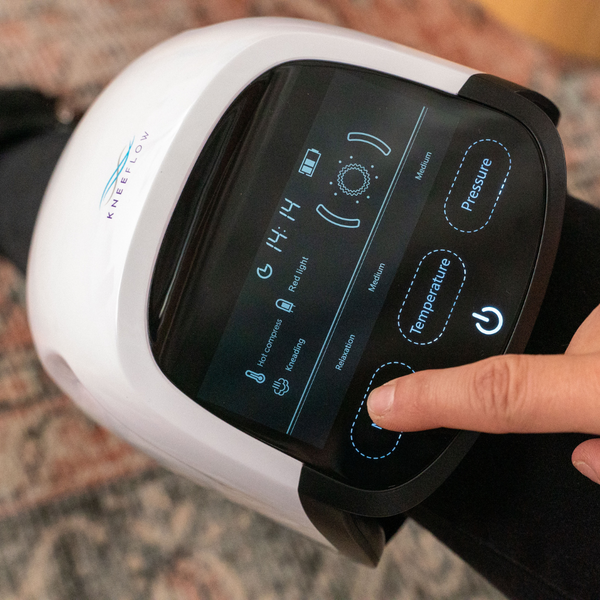
Heat can support a warmer, more relaxed feeling around the joint. Gentle massage can help the area feel less tense. A wraparound design may feel more practical than trying to balance a general heating pad or handheld device around the knee.
Kneeflow is designed for knee-specific comfort with heat, red light support, and soft airbag massage. For someone who wants an easy evening routine, that kind of design can make support feel more natural to repeat.
A knee massager should be used thoughtfully. It is not meant for sudden injury, severe swelling, unexplained warmth, redness, locking, or intense pain. Those symptoms deserve medical guidance before home support becomes the plan.
When Knee Pain at Night Should Be Checked
Some nighttime knee discomfort can be managed with self-care, but certain symptoms should not be ignored. If knee pain at night appears after a fall, twist, sports injury, or sudden impact, it is safer to get checked. The same is true if the knee looks swollen, red, hot, unstable, or difficult to move.
Pain that keeps getting worse, wakes you repeatedly, or does not improve with reasonable rest should also be taken seriously. If walking becomes difficult, the knee locks, or you cannot put weight on it normally, home comfort routines are not enough.
This does not mean every ache is dangerous. It means your knee is giving you information. A healthcare professional can help identify whether the cause is arthritis, injury, inflammation, bursitis, tendon irritation, or something else.
Flow Knee products are designed for comfort support. They are not designed to diagnose pain or replace care when symptoms need medical attention.
Building a Better Night Routine for Knee Comfort
A better night routine does not need to be complicated. Start by noticing what tends to make knee pain at night worse. Was the day more active than usual? Did you sit longer than normal? Did you climb more stairs? Did you skip movement? Did the knee feel stiff before bed?
From there, build a routine that feels easy to repeat. Give the knee time to settle before sleep. Use gentle movement if it helps. Support the joint with pillows. Avoid positions that create pressure. Use warmth when the knee feels stiff and achy, or cold when the joint feels irritated after activity.
A knee comfort routine works best when it feels realistic. If it is too complicated, it will probably be skipped. A few simple habits done consistently may be more useful than an intense routine that only happens once.
For some people, a knee-specific massager can become part of that routine because it brings heat and gentle massage into one easy step.
A Calmer Way to Approach Knee Pain at Night
Knee pain at night can make rest feel harder, especially when the discomfort keeps returning. The best first step is to pay attention without assuming the worst. Look at the pattern, the day’s activity, sleep position, stiffness, swelling, and how the knee responds to gentle comfort steps.
If symptoms are mild and familiar, simple support may help: better positioning, controlled heat, light movement, rest, and a more consistent evening routine. If symptoms are severe, sudden, swollen, hot, unstable, or worsening, it is time to get professional guidance.
At Flow Knee, we believe knee support should feel safe, clear, and easy to return to. Kneeflow can be a practical option for people who want warmth, soft airbag massage, and knee-specific comfort as part of a nighttime routine. The goal is not to promise a cure. The goal is to help your knee feel more cared for when rest matters most. If you are unsure whether Kneeflow fits your comfort routine, contact us and our team can help you review the next step.
FAQ
Why does my knee hurt at night?
It may be linked to arthritis, overuse, stiffness, bursitis, past injury, inflammation, sleep position, or daily activity load.
Why is my knee pain worse at night?
Pain can feel stronger when movement slows, distractions fade, stiffness builds, or the knee responds to stress from the day.
What helps nighttime knee pain relief?
Gentle movement, pillow support, controlled heat, rest, careful sleep positioning, and medical guidance when symptoms are unusual may help.
Can a knee massager help knee pain at night?
A knee massager may support comfort, warmth, and relaxation, but it should not replace diagnosis or medical treatment.
When should I see a doctor for knee pain at night?
Seek care for severe pain, swelling, redness, warmth, instability, locking, injury-related pain, or symptoms that keep worsening.