Knee pain after sitting too long can feel confusing because nothing dramatic seems to happen first. You sit through a workday, a long drive, a movie, a flight, or a quiet evening at home, and then the knee feels stiff, achy, tight, or slow to straighten when you finally stand up. The discomfort may fade after a few steps, or it may stay with you long enough to make the next movement feel more cautious.
That pattern is different from pain that starts during exercise or wakes you at night. It is tied to stillness, bent-knee positioning, pressure, and the way the joint responds after being held in one place. For office workers, remote workers, drivers, students, and sedentary adults, that can make the knee feel older or more fragile than it actually is.
At Flow Knee, we think knee comfort should start with understanding the pattern, not guessing at the worst possible cause. A knee massager may support warmth, relaxation, and daily comfort, but it should not replace medical care, physical therapy, or evaluation when pain is severe, swollen, sudden, unstable, or getting worse.
Why Knee Pain After Sitting Too Long Can Happen
Knee pain after sitting too long often begins with a simple problem: the knee has been bent and quiet for longer than it likes. When the joint stays in one position, surrounding muscles can tighten, circulation can feel less active, and irritated tissues may become more noticeable when movement returns. The first few steps after sitting can feel like the knee needs time to remember how to move smoothly again.
This does not automatically mean the joint is damaged. The knee is designed for movement, but modern routines often ask it to stay folded under a desk, tucked under a chair, crossed on a couch, or pressed into one position during travel. That mismatch can make mild irritation feel bigger than it is, especially when the same sitting pattern repeats every day.
For some people, the discomfort eases quickly after walking around. For others, knee pain after sitting becomes a recurring signal that the knee needs better transitions throughout the day. The goal is not to panic. The goal is to notice whether the pain is mild and temporary, persistent and limiting, or paired with warning signs that deserve professional attention.
Knee Pain After Sitting and the “Movie Theater” Feeling
Knee pain after sitting too long is sometimes described as a “movie theater” feeling because it becomes noticeable after the knee has stayed bent for a while. You may feel fine while sitting, then notice aching around the front of the knee when standing, climbing stairs, or straightening the leg. The discomfort may feel dull, heavy, or slightly sharp around the kneecap.
One possible reason is irritation around the kneecap area. When the knee remains bent, the kneecap and surrounding tissues may stay under pressure. If those tissues are already sensitive, standing up can make the discomfort easier to feel. This can happen in people who are active, inactive, or somewhere in between.
The important detail is the pattern. Pain tied to sitting, stairs, squats, or rising from a chair may point toward front-knee irritation, but it is not something to self-diagnose too quickly. If knee pain after sitting keeps returning, worsens, or starts limiting normal movement, a healthcare professional or physical therapist can help identify what is actually happening.
Knee Stiffness After Sitting Is Not Always the Same as Pain
Knee stiffness after sitting can feel more like resistance than pain. The knee may not throb or ache, but it may feel locked into a slower rhythm for the first few steps. Some people describe it as tightness behind the knee, pressure around the front, or a sense that the joint needs a warm-up before it trusts movement again.
Stiffness can come from the joint itself, but it can also come from the muscles around it. Tight quadriceps, hamstrings, calves, and hips can all change how the knee feels when standing from a chair. If the body has been still for hours, the knee may simply be the place where that stillness becomes most noticeable.
This kind of knee stiffness after sitting may improve with gentle movement, better pacing, and a calmer transition from sitting to standing. The first movement does not need to be dramatic. A few slow bends, a short walk, or a change in leg position during the day may help the knee feel less surprised when it is time to move.
Stiff Knees After Sitting Can Reflect Your Daily Setup
Stiff knees after sitting are not only about the knee. They can also reflect the way your day is arranged. A chair that keeps your knees deeply bent, a desk setup that discourages movement, or a habit of sitting for long blocks without standing can all make the joint feel compressed and underused by the end of the day.
This matters because many people treat the symptom as if it came from nowhere. In reality, the knee may be responding to hours of small pressures. The feet may be tucked back. The hips may be tight. The chair height may be too low. The legs may stay crossed. None of these details feels dramatic in the moment, but together they can make the knee feel stiff when movement finally returns.
For desk workers and sedentary adults, easing stiff knees after sitting often starts with making the day less static. The knee usually prefers regular, gentle movement over long periods of stillness followed by sudden demand. Standing up more often, changing leg positions, and avoiding long stretches of deep knee bend can make daily comfort feel more manageable.
When Knee Pain After Sitting Too Long May Be Linked to Arthritis
Knee pain after sitting too long may also appear in people with arthritis or joint wear. Arthritis-related discomfort can feel achy, deep, stiff, or swollen. Some people notice it most after rest, while others feel it more after a day that includes stairs, walking, or standing on hard surfaces.
The difference is that arthritis-related stiffness may not disappear completely after a few steps. The knee may feel less smooth, less flexible, or more sensitive from day to day. There may also be swelling, creaking, grinding, or a feeling that the joint does not move as freely as it used to. These signs do not confirm arthritis by themselves, but they are worth paying attention to.
If knee pain after sitting begins to affect daily life, a medical evaluation can help clarify whether arthritis, inflammation, past injury, or another condition is involved. Comfort routines may still have a place, but they work best when they sit inside a realistic plan. Warmth and gentle support can feel helpful, but they should not be used to ignore symptoms that need proper care.
Small Sitting Habits That May Ease Knee Pain After Sitting
Knee pain after sitting too long often responds best to small changes that are easy to repeat. The goal is not to turn every workday into a therapy session. The goal is to keep the knee from spending hours in one fixed position, then being asked to move suddenly without warning.
A simple approach is to change position before the knee starts complaining. Stand for a minute, straighten the legs, walk to another room, or shift the feet so the knees are not held in a deep bend for too long. These small breaks may feel too simple to matter, but they can reduce the long stretch of stillness that often makes the first step uncomfortable.
It may also help to look at how you stand up. Rising quickly after hours of sitting can make the knee feel caught off guard. A slower transition, light movement before standing, and a few gentle steps can make the change feel less abrupt. If pain is sharp, swollen, or unstable, the safer choice is to stop and seek guidance instead of forcing movement.
Gentle Comfort Support for Knee Pain After Sitting Too Long
Knee pain after sitting too long can make people search for something more repeatable than random stretching or waiting for the discomfort to pass. A comfort routine can help create that sense of care, especially when the knee feels tense, stiff, or tired after long periods of stillness. Warmth, rest, and gentle relaxation may support a calmer transition back into movement.
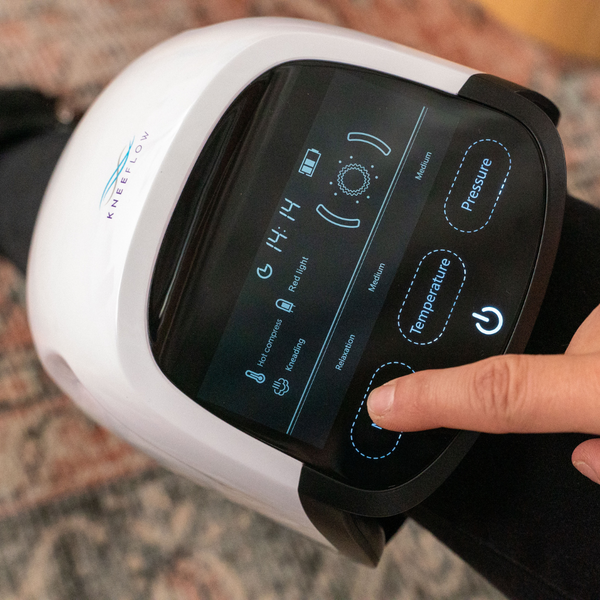
This is where a knee-specific device may fit for some people. The Kneeflow knee massager is designed around controlled warmth, red light support, and soft airbag massage in a wraparound format. For someone who spends long hours at a desk or notices knee stiffness after sitting, that kind of routine may feel easier to return to than a complicated plan.
The role of a device should stay clear. It is not a diagnosis, cure, or replacement for medical treatment. It is supportive comfort. If the knee feels mildly stiff after sitting, a gentle routine may help the area feel more relaxed. If the knee is swollen, hot, unstable, recently injured, or worsening, home comfort should not take the place of professional care.
When to Get Medical Help for Knee Pain After Sitting
Knee pain after sitting too long can often be mild, but some symptoms deserve more caution. Seek medical guidance if the pain is severe, sudden, related to a fall or twist, or paired with swelling, redness, warmth, locking, instability, numbness, fever, or trouble bearing weight. Those signs suggest the knee needs more than a simple comfort routine.
You should also consider getting evaluated if the pain keeps coming back, limits work, makes stairs difficult, interrupts sleep, or does not improve with reasonable changes. A healthcare professional can help determine whether the issue is related to kneecap irritation, arthritis, tendon problems, bursitis, meniscus concerns, or another cause.
This matters because different causes need different approaches. A stiff knee after long sitting is not the same as a swollen knee after injury. A sore front knee from bent positioning is not the same as a joint that locks or gives way. Listening carefully to the pattern can help you choose comfort wisely and avoid pushing through signs that should be checked.
A Calmer Way to Support Sitting-Related Knee Discomfort
Knee pain after sitting too long can make ordinary moments feel more complicated than they should. Standing from a desk, getting out of a car, walking after a meeting, or climbing stairs after a long day may become movements you start to anticipate. That anticipation can be frustrating because the pain is not always constant, but it still changes how you move.
The first step is to understand the rhythm. Does the discomfort ease after a few steps? Does it feel stiff rather than sharp? Does it happen after long sitting but not during exercise? Does it come with swelling, instability, or worsening pain? These details help separate everyday stiffness from symptoms that need medical attention.
At Flow Knee, we believe knee support should feel simple, thoughtful, and realistic. Kneeflow can be a practical option for people who want controlled warmth, soft airbag massage, and knee-focused comfort as part of a daily routine. If you are unsure whether it belongs in your sitting-related comfort plan, contact Flow Knee and ask for guidance before taking the next step.
FAQ
Why do I get knee pain after sitting too long?
It may come from stiffness, bent-knee pressure, kneecap irritation, arthritis, tight muscles, or another knee condition.
Is knee pain after sitting serious?
Not always. Mild stiffness may improve with movement, but swelling, instability, sharp pain, or worsening symptoms should be evaluated.
How can I ease knee stiffness after sitting?
Gentle walking, position changes, warmth, and shorter sitting blocks may help. Avoid forcing movement if pain feels sharp or unusual.
Why do my knees feel stiff after sitting at work?
Long desk hours can keep the knees bent and still. That can make the joint and surrounding muscles feel tight when standing.
Can a knee massager help knee pain after sitting?
A knee massager may support warmth and relaxation for mild discomfort, but it should not replace medical care or physical therapy.
When should I see a doctor for knee pain after sitting?
See a clinician if pain is severe, swollen, injury-related, unstable, locking, worsening, or limiting normal daily movement.