Knee bursitis treatment often starts with one uncomfortable question: is this just a sore knee, or is something around the joint actually inflamed? Bursitis can feel different from ordinary stiffness because the discomfort may sit in one tender, swollen, pressure-sensitive area. Kneeling, bending, stairs, or even touching the area can make the knee feel more reactive than usual.
A bursa is a small fluid-filled sac that helps reduce friction near a joint. When one becomes irritated, the area may swell, ache, feel warm, or become sensitive to pressure. Around the knee, bursitis can show up in different places, including the front of the kneecap or the inner side of the knee below the joint.
At Flow Knee, we approach this topic carefully because bursitis is not just general knee tension. A knee massager may support comfort in some mild, non-urgent situations, but it should not be used directly over unusual swelling, heat, redness, skin irritation, infection concerns, or pain that has not been properly assessed.
What Knee Bursitis Treatment Is Really Trying to Calm
Knee bursitis treatment is not only about reducing pain. It is about calming irritation in a specific soft-tissue area so the knee is no longer being aggravated by pressure, repeated movement, or an inflamed bursa. That is why bursitis care often starts with protecting the area from whatever keeps provoking it.
This matters because people often try to stretch, rub, or push through bursitis as if it were ordinary tightness. That can be the wrong approach. A swollen bursa may need less compression, less direct pressure, and fewer irritating positions before it can settle down.
The goal is to give the knee a quieter environment. That may mean avoiding kneeling, changing work tasks, reducing stair-heavy activity for a short period, using cold when swelling is present, and watching for symptoms that do not behave like simple irritation.
How Knee Bursitis Usually Feels
Knee bursitis treatment depends partly on where the discomfort sits. Some people feel a tender swelling over the kneecap. Others feel soreness along the inner side of the knee, slightly below the joint line. The pain may feel dull at rest, sharper with pressure, or more noticeable when the knee bends.
Bursitis can also make ordinary tasks feel oddly specific. Kneeling may be uncomfortable because the irritated bursa is being compressed. Stairs may bother the knee because surrounding tendons and tissues move over a sensitive area. Sitting with the knee bent may feel fine for a while, then stiff or sore when standing.
The pattern matters. If the knee is swollen, warm, red, very tender, feverish, or painful even without movement, it should be checked. Bursitis can sometimes involve infection or inflammatory conditions, and those situations need medical care rather than a home comfort plan.
Prepatellar Bursitis Treatment for Front-Knee Swelling
Prepatellar bursitis treatment focuses on the bursa in front of the kneecap. This type is often associated with repeated kneeling, direct pressure, a fall onto the knee, certain work tasks, or activities that place the front of the knee against a hard surface. It may create visible swelling that makes the kneecap area look puffy or feel tender.
The first step is usually to stop irritating the front of the knee. That may sound simple, but it can require real adjustments if someone works on floors, gardens, cleans, installs materials, plays certain sports, or kneels often during daily tasks. Continuing the same pressure can keep the bursa angry.
Cold therapy, rest from pressure, elevation, and activity modification may help when symptoms are mild and there are no infection signs. A knee pad may protect the area later, but it should not become a reason to keep kneeling through pain. If swelling is increasing, the skin is hot or red, or the area is very tender, medical evaluation is the safer next step.
Knee Bursitis Home Treatment Should Stay Gentle
Knee bursitis home treatment should be calm, not aggressive. The knee is already reacting, so the goal is to reduce irritation instead of forcing the tissue to behave normally. Rest from the trigger, gentle positioning, and avoiding direct pressure usually matter more than doing a long list of exercises right away.
Ice may be useful when the area feels swollen, irritated, or recently aggravated. Elevating the leg may help some people feel less pressure around the knee. Over-the-counter pain relievers may be appropriate for certain adults, but they are not right for everyone, especially people with medical conditions, medication interactions, stomach issues, kidney concerns, or bleeding risks.
Heat and massage require more caution with bursitis than with ordinary stiffness. Warmth can feel comforting in some chronic, non-swollen situations, but heat should not be used over a hot, red, newly swollen, or possibly infected area. A knee massager should not be placed directly over a visibly swollen or inflamed bursa unless a clinician says it is safe.
Pes Anserine Bursitis and Inner-Knee Pain
Pes anserine bursitis affects the inner side of the knee, usually below the joint where tendons meet near the shinbone. It may feel like tenderness a few inches below the inside of the knee, often becoming more noticeable with stairs, standing from a chair, walking on inclines, or activity that loads the area repeatedly.
This type of bursitis can be confusing because the pain does not always sit directly on the kneecap. Some people assume inner-knee pain must be a ligament or meniscus issue. That is why location, pattern, and professional assessment matter, especially when pain persists or movement becomes limited.
Knee bursitis treatment for this area often focuses on reducing irritation and improving the way surrounding muscles share load. Rest from aggravating activity, gradual return to movement, and guided stretching or strengthening may be part of the plan. If pain is sharp, swollen, or linked to injury, it should not be treated as simple bursitis without evaluation.
What a Doctor May Do for Knee Bursitis Treatment
Knee bursitis treatment from a healthcare professional may begin with a physical exam and questions about recent activity, kneeling, injury, swelling, work tasks, and pain location. In some cases, imaging or fluid testing may be used to check for infection, gout, arthritis, or another cause of swelling.
If symptoms are not improving, a clinician may recommend medication, physical therapy, aspiration of fluid, or other treatment depending on the situation. If infection is suspected, antibiotics may be needed. That is one reason red, hot, feverish, or rapidly worsening swelling should not be managed casually at home.
The right plan depends on the cause. A front-knee bursa irritated by kneeling needs a different strategy than inner-knee pain related to pes anserine bursitis. A mildly swollen knee after repeated pressure is different from a knee that is hot, red, and painful at rest. Medical care helps separate those situations before the wrong comfort step makes things worse.
Where Comfort Support May Fit Safely
Knee bursitis treatment should always respect the condition first. If the knee is visibly swollen, hot, red, infected-looking, freshly injured, or unusually painful, comfort devices should wait until the area has been evaluated. Direct massage over an inflamed bursa can be too much pressure for tissue that is already irritated.
In milder situations, once urgent concerns have been ruled out, surrounding knee tension may still make the area feel guarded. This is where gentle comfort support may have a place. The goal is not to treat the bursa itself, drain swelling, or replace medical care. The goal is to help the knee area feel calmer as part of a sensible routine.
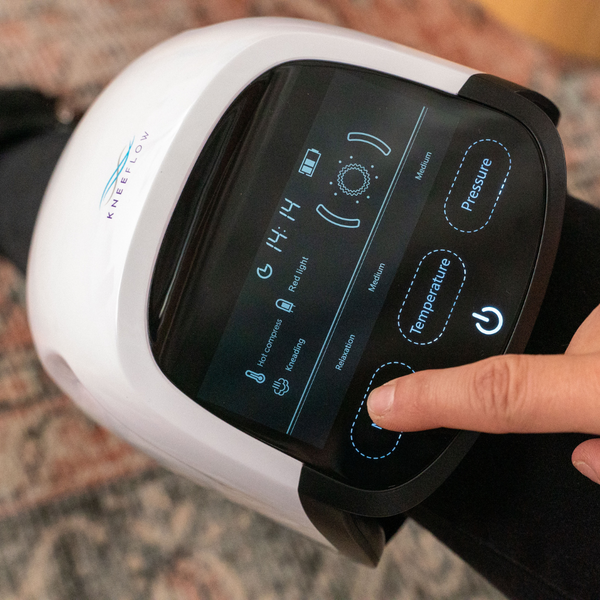
Kneeflow knee massager combines controlled warmth, red light support, and soft airbag massage in a wraparound design made for knee comfort. For someone recovering from mild irritation with guidance, it may support relaxation around the knee. It should not be used as a shortcut around swelling, infection concerns, or symptoms that need a clinician.
When Knee Bursitis Treatment Needs Medical Attention
Knee bursitis treatment should move from home care to medical care when the symptoms feel unusual, intense, or unsafe. Strong swelling, redness, warmth, fever, chills, increasing pain, drainage, inability to bear weight, or pain after a fall should be checked. These signs may point to infection, injury, or another issue that needs more than rest.
You should also get guidance if symptoms last longer than expected, keep returning, interfere with work, make stairs difficult, or prevent normal movement. Bursitis can be persistent when the original trigger stays in place. A clinician can help identify whether the issue is truly bursitis or something that only feels similar.
This is especially important for people who have diabetes, immune system concerns, inflammatory arthritis, gout, recent skin cuts near the knee, or repeated occupational kneeling. Those details can change the level of caution needed. Home care works best when the symptoms are mild, familiar, and clearly improving.
A Safer Way to Think About Knee Bursitis Relief
Knee bursitis treatment works best when it starts with respect for the swelling, not frustration with it. The knee may be asking for less pressure, less kneeling, less repeated irritation, and more time to calm down. That does not mean staying still forever. It means giving the irritated area a better chance to settle before asking it to handle normal stress again.
The most helpful plan is usually practical. Notice where the pain sits. Avoid the position that keeps provoking it. Use cold when swelling is active. Return to movement gradually. Ask for medical help when symptoms are hot, red, severe, persistent, or unclear. That balance keeps home care from turning into guesswork.
At Flow Knee, we believe knee comfort should feel supportive, not risky. Kneeflow may fit into a gentle routine when the knee has been assessed and the goal is warmth, relaxation, and daily comfort around the joint. If you are not sure whether a knee massager belongs in your bursitis comfort plan, contact Flow Knee and take the next step with more clarity.
FAQ
What is the best knee bursitis treatment?
The best approach depends on the cause and severity. Rest, ice, pressure avoidance, and medical care may all be needed.
Can knee bursitis home treatment work?
Mild bursitis may improve with rest, ice, elevation, and avoiding pressure. Redness, heat, fever, or worsening swelling needs medical care.
What is prepatellar bursitis treatment?
It often starts with avoiding kneeling, using ice, elevating the leg, and reducing pressure. Infection signs should be checked quickly.
Where does pes anserine bursitis hurt?
It usually causes tenderness on the inner side of the knee, below the joint, often worse with stairs or activity.
Should I massage knee bursitis?
Avoid direct massage over swelling, heat, redness, or tenderness. Ask a clinician before using massage near an inflamed bursa.
When should I see a doctor for knee bursitis?
See a doctor if swelling is hot, red, severe, feverish, injury-related, worsening, or not improving with careful home care.