IT band syndrome knee pain can feel especially frustrating because it often shows up in people who are trying to stay active. A runner may feel fine for the first mile, then notice a sharp or burning ache along the outside of the knee. A cyclist may feel discomfort after longer rides, hill work, or repeated knee bending. The pain can feel specific, stubborn, and different from general soreness.
That location matters. IT band syndrome is usually connected to irritation around the outside of the knee, where the iliotibial band moves near the lower thigh and knee joint. It is different from runner’s knee, which more often describes pain around or behind the kneecap. Both can affect active people, but they do not feel the same or respond to the same plan.
At Flow Knee, we approach knee comfort with caution and clarity. A knee massager may support warmth, relaxation, and daily comfort around the knee, but IT band syndrome should not be reduced to simple tightness. Persistent, sharp, worsening, swollen, or injury-related knee pain should be evaluated by a healthcare professional.
What IT Band Syndrome Knee Pain Usually Means
IT band syndrome knee pain usually refers to irritation along the outside of the knee, often linked to repeated bending and straightening during running or cycling. The iliotibial band runs from the outside of the hip down toward the shin. When the area becomes irritated, the outer knee can start to feel sharp, hot, tight, or sensitive during repetitive movement.
The pain often follows a pattern. It may not appear immediately at the start of a run or ride. Instead, it may build after a certain distance, pace, hill, or training load. Some people can almost predict when it will start. That predictability is one reason runners and cyclists often recognize IT band pain before they understand what is causing it.
This condition is not just about a “tight band.” Hip strength, training volume, running mechanics, bike fit, footwear, terrain, recovery habits, and sudden workload changes can all play a role. The knee may be where the pain shows up, but the problem often involves how the leg is handling repeated load.
How IT Band Knee Pain Feels Different From Runner’s Knee
IT band knee pain usually sits on the outside of the knee. Runner’s knee, often called patellofemoral pain, usually feels more centered around the front of the knee or behind the kneecap. That difference can help people describe symptoms more clearly when they speak with a clinician or physical therapist.
IT band pain may feel sharp, burning, or rubbing-like near the outer knee. It may become worse with downhill running, longer distances, repeated cycling strokes, or activities that keep the knee moving through the same range again and again. Some runners notice the pain is manageable at first, then suddenly it becomes hard to ignore.
Runner’s knee may be more noticeable with stairs, squats, sitting with bent knees, or kneecap loading. There can be overlap, and self-diagnosis can be tricky, but location gives an important clue. Outer-knee pain in a runner or cyclist deserves a different lens than front-knee pain.
Why Runners and Cyclists Often Develop IT Band Syndrome Knee Issues
IT band syndrome knee issues often appear when training changes faster than the body can adapt. A runner may add mileage too quickly, increase speed sessions, switch surfaces, run more hills, or return after time off with the old routine in mind. A cyclist may increase ride length, adjust intensity, change saddle height, or spend more time climbing.
The knee is not always the only area under stress. Weakness or fatigue around the hips can change how the leg tracks with each step or pedal stroke. Tightness around the hip, thigh, or outer leg can also make the knee feel more irritated during repetitive motion. Over time, small mechanical stresses can become a very noticeable outside-knee complaint.
This is why the answer is rarely just “stretch more.” Stretching may help some people feel looser, but IT band pain often needs a broader plan. Load management, hip and glute strength, gradual return to activity, and technique review can matter more than one stretch done aggressively.
IT Band Tightness Knee Symptoms: What to Watch For
IT band tightness knee symptoms can show up as outer-knee pain, tightness along the outside of the thigh, discomfort near the hip, or a sense of tension pulling down the side of the leg. Some people feel the tightness before the knee pain starts. Others only notice it after the knee becomes irritated.
The discomfort may be activity-specific. Walking around the house may feel fine, while running downhill becomes painful. A short spin on the bike may be manageable, while a long ride creates a sharper outer-knee ache. That activity-specific pattern is common in overuse conditions because the tissue becomes irritated under repeated demand.
Warning signs still matter. Pain with swelling, instability, locking, numbness, inability to bear weight, or pain after a fall should not be treated as simple IT band tightness. Those symptoms may point to another knee issue that deserves medical evaluation.
Iliotibial Band Syndrome Treatment Starts With Reducing the Trigger
Iliotibial band syndrome treatment usually starts by reducing the activity that keeps provoking the pain. That may mean temporarily cutting mileage, avoiding downhill routes, easing intensity, shortening rides, adjusting training frequency, or pausing the specific motion that keeps causing symptoms. This is not the same as giving up activity forever. It is a way to stop feeding the irritation.
For many runners and cyclists, this part is mentally hard. The pain may only appear during the activity they care about most, so it feels tempting to keep testing it. Repeated testing can slow recovery because the knee never gets a true chance to calm down.
A better approach is to treat pain as feedback. If the outside of the knee complains at mile three, the current load may be too much. If cycling pain appears only after longer hill work, the body may need a more gradual build. The goal is to return stronger, not to prove the knee can tolerate another irritated session.
Strength, Mobility, and Form Matter More Than One Quick Fix
IT band syndrome knee recovery often depends on improving how the whole leg manages load. Hip and glute strength can be especially important because these muscles help control leg alignment during running and cycling. When they fatigue, the knee may absorb more stress than it should.
Mobility can also help when surrounding muscles feel guarded. Gentle work around the hips, quads, hamstrings, and calves may make movement feel smoother. The key word is gentle. Aggressive stretching, hard foam rolling over painful tissue, or forcing a tight area can irritate symptoms instead of calming them.
A physical therapist can help identify what matters most for the individual. One runner may need hip stability. Another may need training changes. A cyclist may need bike fit adjustments. Someone else may have pain that looks like IT band syndrome but is actually another lateral knee condition.
Where Home Comfort Support Can Fit
IT band syndrome knee discomfort may leave the outside of the knee and surrounding muscles feeling tense after activity. In mild, non-urgent situations, home comfort support can help the area feel calmer. Warmth, rest, and gentle relaxation may be useful after the knee has settled and when there is no swelling, redness, heat, or acute injury.
A knee massager should not be viewed as an IT band syndrome treatment by itself. It cannot correct training errors, replace strengthening, change running form, or evaluate the cause of pain. It may, however, support comfort around the knee when used carefully and appropriately.
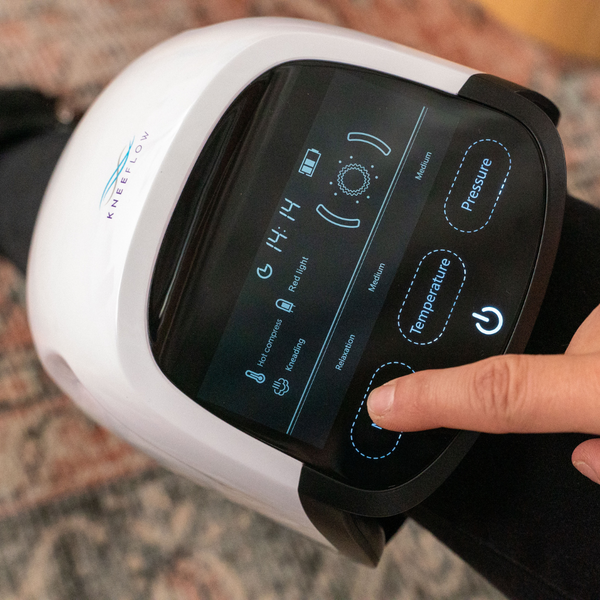
Kneeflow knee massager combines controlled warmth, red light support, and soft airbag massage in a wraparound design made for knee comfort. For runners and cyclists, that may fit into a recovery routine when the goal is relaxation and daily support, not pushing through pain or masking symptoms that need care.
What Not to Do With IT Band Syndrome Knee Pain
IT band syndrome knee pain should not be treated by repeatedly running or riding until the pain becomes severe. That pattern can turn a manageable overuse issue into a longer interruption. Pain that reliably appears during activity is information, not an obstacle to ignore.
It is also risky to assume every outer-knee pain is IT band syndrome. Meniscus irritation, ligament issues, tendon problems, nerve symptoms, arthritis, and referred pain can sometimes overlap in confusing ways. If the pain is sharp, worsening, swollen, unstable, or linked to a specific injury, guessing is not enough.
Another common mistake is relying only on pressure. Foam rolling and massage may feel temporarily helpful for some people, but direct, aggressive pressure over a painful outer knee can make symptoms more sensitive. Recovery should feel steady, not like a contest of pain tolerance.
When to See a Doctor or Physical Therapist
IT band syndrome knee symptoms should be checked if they do not improve with rest, training changes, and gentle care. A clinician or physical therapist can help confirm whether the pain is truly IT band related and rule out other causes of lateral knee pain.
Medical guidance is especially important if pain started after a fall, twist, collision, or sudden movement. Swelling, locking, giving way, numbness, redness, heat, fever, or trouble bearing weight are also reasons to seek care rather than continue home treatment.
For runners and cyclists, early evaluation can save time. A professional can help identify whether the issue is training load, hip control, cadence, footwear, bike fit, strength imbalance, or another pattern. That makes the recovery plan more specific than simply resting and hoping the pain disappears.
A Smarter Way to Return to Running or Cycling
Returning after IT band syndrome knee pain should feel gradual and measured. The first successful session is not a full return to normal training. It is a test of whether the knee can tolerate a smaller, calmer version of the activity without flaring afterward.
Runners may need shorter distances, flatter routes, slower pace, or run-walk intervals. Cyclists may need reduced intensity, less climbing, bike fit review, or shorter rides. Strength work and recovery time should stay part of the plan rather than disappearing as soon as pain improves.
The goal is not just to get through one pain-free session. The goal is to rebuild tolerance so the knee is not irritated by the same pattern again. That usually takes patience, but it gives athletes a better chance of returning with confidence.
Supporting the Knee Without Ignoring the Cause
IT band syndrome knee pain can make an active person feel stuck between rest and frustration. The knee may feel normal during daily life, then become painful during the exact activity that matters most. That can make the problem feel small one day and limiting the next.
The better path is to respect the pattern. Reduce the trigger. Rebuild strength. Look at training habits. Get professional help when pain persists or warning signs appear. Use comfort support as part of a thoughtful routine, not as a way to hide symptoms.
At Flow Knee, we know recovery is easier to respect when it feels simple enough to repeat. Kneeflow can support a quieter post-run or post-ride routine with controlled warmth, red light support, and soft airbag massage around the knee. When the outside of the knee feels tense after training, give your recovery routine a calmer place to start with Kneeflow.
FAQ
What does IT band syndrome knee pain feel like?
IT band syndrome knee pain usually feels like sharp, burning, or tight discomfort on the outside of the knee. It often appears during repetitive activity, especially running, cycling, downhill movement, or longer training sessions. Some people feel fine at the start, then notice pain building at a predictable point.
Is IT band knee pain the same as runner’s knee?
No, IT band knee pain and runner’s knee are not the same thing. IT band syndrome usually causes pain on the outside of the knee. Runner’s knee usually refers to pain around or behind the kneecap. Both can affect runners, but they involve different patterns and often need different recovery strategies.
What causes IT band tightness knee symptoms?
IT band tightness knee symptoms can come from overuse, sudden training increases, weak hip muscles, poor recovery, downhill running, cycling mechanics, or repetitive stress. The knee may be where the pain appears, but the underlying issue often involves how the hip, thigh, and lower leg manage repeated load.
What is the best iliotibial band syndrome treatment?
The best iliotibial band syndrome treatment depends on the person, but it often includes reducing aggravating activity, improving hip and glute strength, gentle mobility work, and a gradual return to running or cycling. A physical therapist can help identify whether training load, form, bike fit, or strength imbalance is driving the pain.
Can I keep running with IT band syndrome?
You should avoid running through pain that keeps building or changes your stride. Some people can continue modified training if symptoms are mild and improving, but repeated painful runs can delay recovery. Shorter, flatter, easier sessions may be safer after symptoms calm, ideally with guidance if the pain keeps returning.
Can cyclists get IT band syndrome knee pain?
Yes, cyclists can develop IT band syndrome knee pain because cycling repeats knee bending thousands of times in one ride. Saddle height, cleat position, training volume, hill work, and hip control can all influence symptoms. If pain appears during rides, a bike fit review and load adjustment may help.
Should I stretch or foam roll IT band tightness knee pain?
Gentle mobility work may help some people, but aggressive stretching or hard foam rolling over painful tissue can make symptoms feel worse. The IT band itself is a tough structure, so recovery usually requires more than trying to loosen it. Strength, load management, and movement quality often matter more.
Can a knee massager help IT band syndrome?
A knee massager may support comfort around the knee when symptoms are mild and not swollen, hot, red, unstable, or injury-related. It should not be used as the main treatment for IT band syndrome. Strength work, activity modification, and proper evaluation are more important for addressing the cause.
When should I see a doctor for IT band syndrome knee pain?
See a doctor or physical therapist if the pain persists, worsens, stops you from training, affects walking, or comes with swelling, locking, instability, numbness, redness, heat, or injury. Outer-knee pain can have more than one cause, so an evaluation helps avoid treating the wrong problem