A Baker’s cyst behind knee can feel alarming because it is not just pain you notice. It may feel like a visible or touchable lump, pressure, fullness, or tightness in a place most people do not normally think about. You may feel it when you bend the knee, straighten the leg, squat, climb stairs, or simply notice that one knee looks different from the other.
That does not automatically mean something dangerous is happening. A Baker’s cyst, also called a popliteal cyst, is usually a fluid-filled swelling that forms behind the knee. It often appears when something inside the knee is producing extra joint fluid, such as arthritis, irritation, inflammation, or a past knee problem.
At Flow Knee, we approach this topic with care because a lump behind knee should not be guessed at casually. A knee massager may support comfort around mild, familiar knee tension, but it should not be used directly over unexplained swelling, a new lump, redness, warmth, calf swelling, severe pain, or symptoms that have not been evaluated.
What a Baker’s Cyst Behind Knee Usually Means
A Baker’s cyst behind knee forms when excess fluid collects in the back part of the knee. The knee naturally contains fluid that helps the joint move smoothly. When the joint becomes irritated, it may produce more fluid than usual, and that fluid can push into a small space behind the knee.
The result may feel like a soft swelling, a rounded bulge, or a sense of tightness. Some people notice it only when standing or fully straightening the knee. Others feel pressure when bending the knee deeply, walking, kneeling, or moving after sitting for a while.
The cyst itself is often connected to another knee issue. That is why the goal is not only to make the lump smaller. The bigger question is why the knee is producing extra fluid in the first place. Arthritis, cartilage irritation, inflammation, or injury can all contribute to the pattern.
Why a Lump Behind Knee Should Be Taken Seriously
A lump behind knee may be a Baker’s cyst, but it should still be treated thoughtfully. The back of the knee is a sensitive area with tendons, blood vessels, nerves, and soft tissue structures close together. Swelling in that area can feel simple, but the cause is not always obvious without a proper exam.
A Baker’s cyst behind knee may feel tight rather than painful. It may come and go, grow after activity, or feel more noticeable when the leg is straight. Some cysts cause very little discomfort. Others make bending and straightening the knee feel restricted.
The reason caution matters is that other issues can sometimes mimic or complicate the symptoms. Calf swelling, redness, warmth, sudden pain, or discoloration should be checked promptly. A ruptured cyst can sometimes create calf symptoms, and those symptoms may resemble more urgent conditions that need medical attention.
Common Causes of a Baker’s Cyst Behind Knee
A Baker’s cyst behind knee usually develops because the knee joint is reacting to something. Osteoarthritis is one common reason, especially when the joint becomes irritated and produces extra fluid. Meniscus tears, inflammatory arthritis, cartilage problems, or past knee injuries may also contribute.
This is why a Baker’s cyst can feel like a symptom rather than the whole diagnosis. The lump may be what you notice first, but the source may be deeper inside the knee. If the underlying irritation continues, the cyst may shrink and return, or it may stay bothersome even after short-term relief.
Daily activity can also make the cyst more noticeable. Long walks, stairs, squatting, kneeling, yard work, exercise, or standing for extended periods may increase the feeling of pressure behind the knee. That does not mean the activity caused the cyst by itself, but it may reveal how irritated the joint already is.
How Baker’s Cyst Pain Relief Usually Starts at Home
Baker’s cyst pain relief often begins with reducing irritation around the knee. If the cyst is mild and a clinician has ruled out urgent concerns, simple steps may help the knee feel less pressured. Rest from aggravating activity, gentle movement, elevation, and avoiding deep bending can all support a calmer routine.
Cold therapy may be useful when the knee feels swollen or irritated after activity. Some people also use over-the-counter pain relievers, but those are not right for everyone. People with stomach issues, kidney concerns, bleeding risks, heart conditions, medication interactions, or other medical factors should ask a healthcare professional before using them.
A Baker’s cyst behind knee should not be squeezed, pressed, drained at home, or aggressively massaged. The back of the knee is not a place for forceful self-treatment. Relief should feel cautious and controlled, especially if the lump is new, changing, or painful.
Popliteal Cyst Treatment May Need More Than Home Care
Popliteal cyst treatment depends on the size of the cyst, the level of pain, and the underlying knee problem. Some cysts improve when the irritation inside the knee improves. Others persist because the joint continues producing extra fluid.
A healthcare professional may examine the knee and ask about swelling, stiffness, injury history, arthritis symptoms, activity patterns, and calf symptoms. Imaging such as ultrasound or MRI may be used when the diagnosis is unclear or when another condition needs to be ruled out.
Medical treatment may include physical therapy, medication guidance, aspiration to remove fluid, or steroid injection in some cases. Surgery is not usually the first option, but it may be considered in select situations when symptoms are severe or tied to another knee issue that needs repair. The best plan depends on what is feeding the cyst.
When a Baker’s Cyst Behind Knee Can Affect Movement
A Baker’s cyst behind knee can make movement feel limited because the swelling sits in a spot that changes with bending and straightening. The knee may feel full when you bend it. It may feel tight when you straighten it. Some people describe the sensation as if something is blocking comfortable motion behind the joint.
This can affect normal routines more than expected. Getting out of a car, walking downhill, climbing stairs, squatting, or sitting with the knee bent may all feel different. The discomfort may not be sharp, but the pressure can make the knee feel less trustworthy.
The right response depends on the symptoms. If the knee feels mildly tight and stable, gentle pacing and medical guidance may be enough. If movement is suddenly limited, painful, swollen, or paired with calf symptoms, it is better to pause home care and get evaluated.
What Not to Do With a Lump Behind Knee
A lump behind knee can make people want to test it, press on it, or try to make it disappear. That is understandable, but it is not a good strategy. Pressing directly on a cyst can irritate the area, and trying to drain or reduce it at home can be unsafe.
It is also risky to cover up symptoms without knowing the cause. Heat, massage, or tight compression may feel comforting in some knee situations, but they are not always appropriate for swelling behind the knee. If the area is warm, red, increasingly painful, or associated with calf swelling, comfort routines should wait until a clinician has checked it.
A Baker’s cyst behind knee is best handled with patience and proper context. You are not only managing a bump. You are paying attention to a joint that may be producing extra fluid because something inside it is irritated.
Where Gentle Comfort Support May Fit
Baker’s cyst pain relief should always begin with caution. A knee massager should not be placed directly over a new, unexplained, swollen, hot, red, or painful lump behind the knee. It should also not be used to avoid medical care when symptoms are worsening or unusual.
Once a healthcare professional has evaluated the knee and ruled out urgent concerns, some people may still feel surrounding knee tension or general stiffness. In that case, gentle comfort support around the knee may have a place as part of a broader routine. The goal is not to treat or shrink the cyst. The goal is to support relaxation around the knee when it is safe to do so.
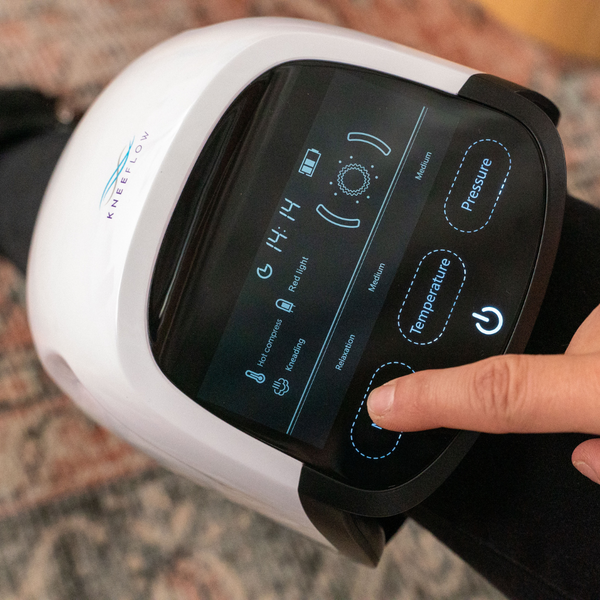
Kneeflow knee massager combines controlled warmth, red light support, and soft airbag massage in a wraparound design made for knee comfort. For someone managing mild knee discomfort with guidance, it may help create a calm routine around the joint. It should not be used as a substitute for popliteal cyst treatment or professional evaluation.
When to See a Doctor for a Baker’s Cyst Behind Knee
A Baker’s cyst behind knee should be checked if the lump is new, growing, painful, or making movement harder. It should also be evaluated if you are not sure whether the swelling is actually a cyst. A clinician can help confirm the cause and decide whether imaging is needed.
Seek prompt medical care if you notice calf swelling, redness, warmth, severe pain, sudden tightness, discoloration, numbness, fever, or trouble bearing weight. These symptoms may require faster attention because they can overlap with more serious conditions.
You should also consider care if the cyst keeps returning, limits daily activity, or appears alongside known arthritis or a previous knee injury. Treating the underlying knee issue often matters more than focusing only on the visible lump.
A Safer Way to Think About Relief Behind the Knee
A Baker’s cyst behind knee can make a simple movement feel unfamiliar. You may find yourself checking the back of the knee, wondering whether the lump is changing, or avoiding certain movements because the pressure feels strange. That concern is real, and it deserves more than guesswork.
The safest first step is to understand what is actually happening. Notice the size, location, and timing of the swelling. Pay attention to whether the knee is stiff, painful, hot, red, or unstable. Avoid squeezing or aggressively treating the area. Get medical guidance when symptoms are new, persistent, or paired with warning signs.
At Flow Knee, we believe knee comfort should feel careful, not careless. Kneeflow may support a gentle comfort routine when the knee has been properly assessed and the goal is relaxation around the joint. If a lump behind the knee has made you unsure about what kind of support is safe, contact Flow Knee and choose a calmer, more informed next step.
FAQ
What is a Baker’s cyst behind the knee?
A Baker’s cyst behind the knee is a fluid-filled swelling that forms in the back of the knee. It often develops when the knee joint produces extra fluid because of irritation, arthritis, inflammation, or an injury. The cyst may feel like a lump, pressure, tightness, or fullness behind the knee, especially when bending or straightening the leg.
Is a lump behind knee always a Baker’s cyst?
No, a lump behind knee is not always a Baker’s cyst. A Baker’s cyst is one common explanation, but other issues can create swelling or fullness behind the knee. Because the back of the knee contains important soft tissue, blood vessels, and nerves, a new or painful lump should be evaluated rather than assumed to be harmless.
What causes a Baker’s cyst behind knee to form?
A Baker’s cyst behind knee usually forms when the knee produces extra joint fluid. This can happen with osteoarthritis, inflammatory arthritis, cartilage irritation, meniscus problems, or previous injury. The cyst is often a sign that something inside the knee is irritated, which is why treating the underlying cause can matter.
What does Baker’s cyst pain feel like?
Baker’s cyst pain may feel like tightness, pressure, aching, or fullness behind the knee. Some people feel pain when bending the knee deeply or straightening it fully. Others feel discomfort after activity, stairs, squatting, or standing. If pain becomes sudden, severe, or spreads into the calf, it should be checked.
What is the best popliteal cyst treatment?
The best popliteal cyst treatment depends on the cause and severity. Mild cases may improve with rest, activity changes, ice, elevation, and medical guidance. More persistent or painful cases may need physical therapy, medication support, aspiration, steroid injection, imaging, or treatment for arthritis, meniscus issues, or another underlying knee problem.
Can Baker’s cyst pain relief happen at home?
Baker’s cyst pain relief may happen at home when symptoms are mild and no warning signs are present. Gentle rest, avoiding aggravating activity, cold therapy, elevation, and careful movement may help. However, home care should not replace medical evaluation if the lump is new, growing, painful, hot, red, or associated with calf swelling.
Can I massage a Baker’s cyst behind knee?
It is not a good idea to directly massage, press, squeeze, or try to break up a Baker’s cyst behind knee. The back of the knee is sensitive, and direct pressure can irritate the area or make symptoms worse. If you want to use massage around the knee, ask a healthcare professional whether it is safe for your specific situation.
Can a Baker’s cyst go away on its own?
Yes, some Baker’s cysts can shrink or become less noticeable, especially if the underlying knee irritation improves. Others may return or persist if the knee keeps producing extra fluid. If the cyst is painful, recurrent, or limiting movement, a healthcare professional can help identify why it is happening and what treatment options make sense.
When should I worry about swelling behind the knee?
Swelling behind the knee should be taken seriously if it is sudden, painful, red, warm, growing, or paired with calf swelling, discoloration, fever, numbness, or trouble walking. These symptoms may not be simple cyst symptoms and should be evaluated promptly to rule out more urgent conditions.